




Volvo Announces Electric Truck Range Breakthrough
Volvo has announced that its new FH Electric models in Europe can now go 600 km on a single battery charge.

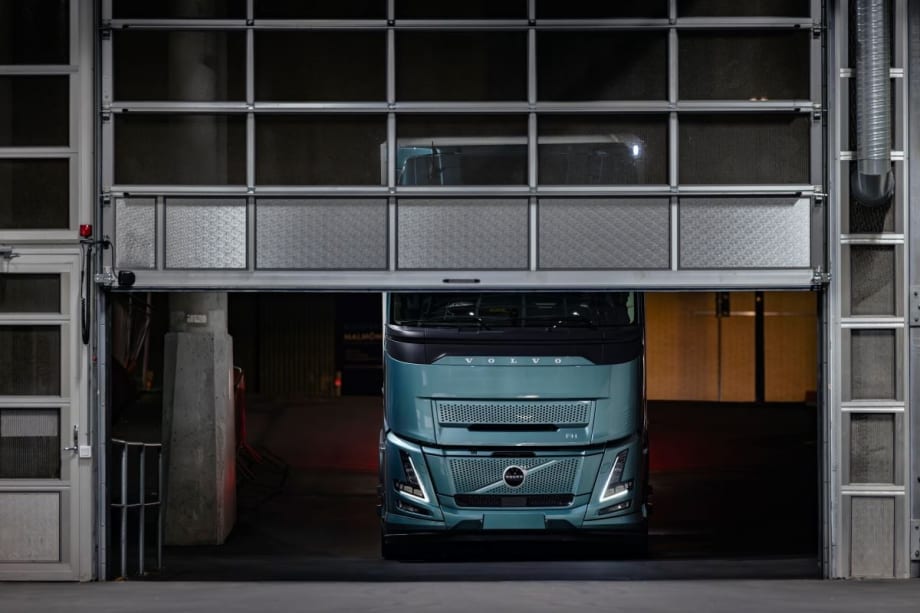
Volvo has unveiled a new FH Electric model truck in Europe capable of 600 km on a single battery charge.
Photo: Volvo Trucks
Volvo continues to push the envelope on electric truck range.
The Swedish OEM has a announced that next year, it will launch a new long-range version of its FH Electric that will be able to reach up to 600 km on one charge. For us Americans with non-metric brains, that translates to over 370-miles of range on a single battery charge.
The FH is Volvo’s Class 8 heavy truck cabover chassis in Europe.
Volvo said this breakthrough will allow transport companies to operate electric trucks on interregional and long-distance routes and to drive a full working day without having to recharge. The new Volvo FH Electric will be released for sale during the second half of 2025.
Volvo’s Electric Flagship in Europe
And the news regarding a longer-range FH is not insignificant for North America. In June, at a deep dive look at the new VNL Class 8 tractor, Volvo teased an electric variant of the truck, slated for launch sometime next year. And it stands to reason that these new range enhancements will figure into that electric truck as well.
“Our new electric flagship will be a great complement to our wide range of electric trucks and enable zero-exhaust emission transport also for longer distances,” said Roger Alm, president Volvo Trucks. “It will be a great solution for transport companies with a high annual mileage on their trucks and with a strong commitment to reduce CO2.”
The enabler for the 600 km range is Volvo’s new driveline technology. Centered on an e-axle, the design creates space for significantly more battery capacity onboard, according to Volvo. This powertrain is combined with more efficient batteries, a further improved battery management system and overall efficiency of the powertrain also contribute to the extended range.
Volvo Trucks is a global leader in medium- and heavy-duty electric trucks with eight battery-electric models in their portfolio, Alm added.
The wide product range makes it possible to electrify city and regional distribution, construction, waste management and, soon, long distance transport. Volvo has so far delivered more than 3,800 electric trucks to customers in 46 countries around the world.
“The transport sector represents seven percent of global carbon emissions. Battery-electric trucks are important tools to reduce the climate footprint. Besides the important environmental gains that electric trucks bring, they offer truck drivers a much better working environment, with much lower levels of noise and vibrations,” says Roger Alm.
Welcome News for a New Technology
Volvo’s BEV range enhancements will be welcome news for the electric truck market in North America, which took some hits earlier this year at the Advanced Clean Transportation Expo (ACT Expo) in Las Vegas in May.
J.B. Hunt CEO Shelley Simpson and Robert Sanchez, CEO and Chairman, Ryder System, told ACT Expo attendees in separate addresses, that thus far, battery-electric trucks are not performing on par with the diesel-powered units they are supposed to replace when E.P.A. Phase 3 Greenhouse Gas Emissions regulations become law in 2027. Issues include cost parity, as well as operational issues.
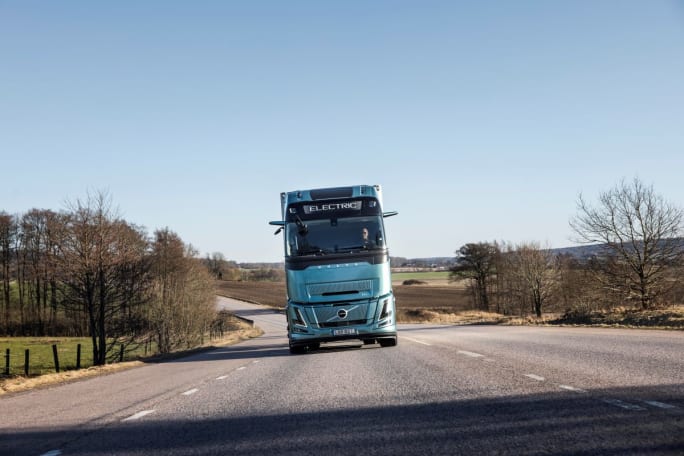
Volvo its range breakthrough on FH Electric models will allow transport companies to operate on interregional and long-distance routes and to drive a full working day without having to recharge.
Photo: Volvo Trucks
In fairness, both Simpson and Sanchez noted that BEV technology for trucks is still largely in the development stage. And both said they see tremendous potential for electric trucks in the future.
But they also said that some problems, including technical problems like limited range, are limiting BEV performance in real-world fleet operations.
Volvo seems to understand these problems and has been working overtime to educate the global trucking industry on zero-emission truck technologies.
The OEM is working on a host of new, green technologies for trucking. These efforts include everything from cleaner, renewable diesel power, work on liquid-hydrogen internal combustion engines as well as battery-electric and fuel-cell electric drivetrains.
Volvo has said repeatedly that it believes significant improvements in single-charge vehicle range are possible for battery-electric trucks. And this latest news is evidence that its engineers are working hard to push those performance boundaries out even further in the future.
More Fuel Smarts

How Volvo Updated Its D13 for EPA 2027 [Watch]
Volvo’s updated D13 promises lower emissions without sacrificing performance or fuel economy. Take a closer look at what changed inside the engine in this HDT Spotlight video.
Read More →
Diesel Price Spike Shortens Payback for Natural Gas Trucks, Report Says
Energy Vision estimates fleets could recover the higher purchase price of an RNG-fueled Class 8 tractor in 1.3 to 2.8 years under current fuel-price scenarios.
Read More →
Calstart Becomes Catalyst Mobility, Reflecting Broader Focus
Calstart is now Catalyst Mobility, reflecting the nonprofit’s growing national role in clean transportation, including zero-emission trucks, infrastructure and incentive programs.
Read More →

Record Diesel Prices Squeeze Trucking Fleets
Average U.S. diesel prices have climbed to nearly $6 a gallon, surpassing the 2022 record as tight refinery capacity and Middle East disruptions keep fuel costs elevated.
Read More →
How Fuel Delivery Shapes Engine Performance
Fuel delivery depends on more than what happens at the injector. For fleet, maintenance and technical professionals, looking at the full path from pump to injector can provide useful context for understanding engine performance.
Read More →
East Coast Port Launches $45M Electric Truck Push
The Port Authority of New York and New Jersey announced millions in incentives for zero-emission drayage trucks, yard tractors, and new charging hubs near the port.
Read More →
California Bill Could Shed Light on Electric Truck Prices
Why do battery-electric Class 8 trucks remain so expensive? A California bill headed to Gov. Gavin Newsom would give fleets and state agencies more visibility into what manufacturers charge.
Read More →
Detroit Opens Orders for EPA 2027 Engines
Detroit isn’t starting from scratch to meet EPA 2027 diesel emissions standards. Its Gen 6 DD13 and DD15 engines keep much of today’s platform while updating the fuel and aftertreatment systems.
Read More →
Zero-Emission Truck Corridor Planned for West Coast
California, Oregon, Washington, British Columbia and Baja California are coordinating plans for truck charging and hydrogen fueling from Canada to Mexico.
Read More →
A Closer Look at Kenworth’s Electric T880E Vocational Truck [Video]
Learn more about Kenworth's T880E battery-electric vocational truck at the Paccar Technical Center, including its range, applications, upfitting considerations, and PTO options, in this HDT Spotlight video.
Read More →