




Vieth: Private Fleets Sitting Pretty
At the National Private Truck Council annual meeting, economist Kenny Vieth declared private fleets are now “sitting in the catbird seat” because they are “poised for growth” as the economy keeps gaining speed and freight volumes keep rising.

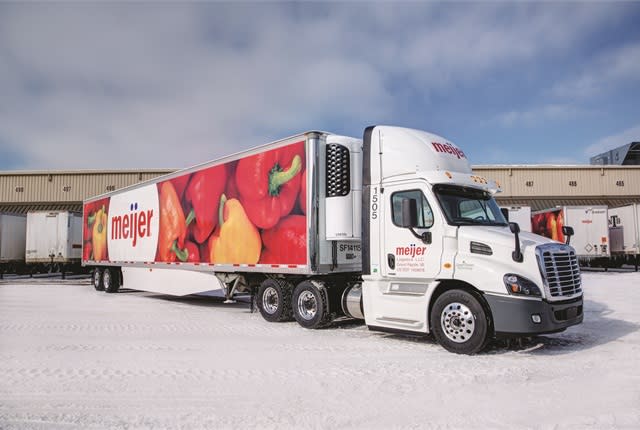
As ACT Research's Kenny Vieth sees it, private fleets in this economy are clearly in scoring position.
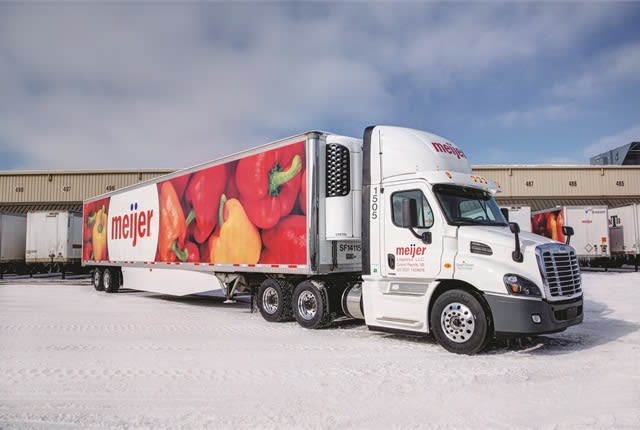
As ACT Research's Kenny Vieth sees it, private fleets in this economy are clearly in scoring position.
Economist Kenny Vieth declared private fleets are now “sitting in the catbird seat” because they are “poised for growth” as the economy keeps gaining speed and freight volumes keep rising.
Speaking on Tuesday at the National Private Truck Council annual meeting in Cincinnati, he detailed why private carriage is in this envious position.
But Vieth also cautioned fleet executives that they will have to work at staying on top over the next few years lest for-hire carriers overtake their lead in these “really good times for trucking in general.”
Biggest driver
The biggest driver of his optimism about private fleets is the healthy economy. While only a 1.2 to 1.3% rise in economic growth is expected for this year’s first quarter, the long-range economic picture will be “mostly happy” out to at least the second half of 2017 or even into early 2018, said Vieth, president and senior analyst of ACT Research, Columbus, Ind.
As for that weak Q1 performance, Vieth attributed it largely to two transient impacts—a “second consecutive winter of worse than average weather and the far-reaching impact of the West Coast ports’ labor impasse.”
On the other hand, he pointed out just how good the overall economy is looking as the year unfolds.
Among the factors he listed as moving the GDP needle up are rising consumer and business confidence, increasing disposable income and job creation, improved corporate cash flow and profitability, and the expectation that Federal Reserve policy on interest rates will remain “accommodative.”
Slick windfall
And that’s not counting the powerful push to the economy courtesy of what Vieth termed the “oil price windfall.” He said the drop-off in oil prices still has a ways to go — with diesel to fall perhaps another 25 cents. “Lower fuel costs provide a top-line offset to fleets,” he noted.
But Vieth also stressed that the impact of cheaper oil resonates far beyond trucking. “Oil price declines push up discretionary spending [by consumers]. One cent annually equals $2 billion more in spending — or over $200 billion in 2015.”
While it’s a given that a strong economy yields more freight, Vieth said that right now “there is more freight in the absence of fleet growth compared to 10 years ago. That brings higher rates.”
He said the problem for for-hire carriers in this market environment is that their equipment and driver capacity is more limited, as they are more impacted by the driver shortage than private fleets.
Driver differential
Vieth said the driver issue is “worse for for-hire because their lower driver wages result in higher recruiting costs. Plus more rookie drivers on the road means more accidents and greater liability.
“Private fleet drivers make $20,000 to 25,000 more per year than those at for-hire fleets,” he added. “And they get home more regularly.”
Vieth praised private fleet management for having set their operations apart in recent years by providing “higher service levels, greater utilization of technology, superior safety and by viewing their drivers as team members.”
However, he advised that even if it’s taken for-hire fleets 10 years, they are catching up to the heights that private fleets have reached.
“For-hire will keep getting dragged kicking and screaming into the technology world [by regulations and market demand],” Vieth said. “So, the challenge ahead for private fleets is to stay ahead.”
More Drivers

Truck Drivers Need More Than Another Alert
Fleets have more visibility into truck health, safety events, and driver activity than ever. The next challenge is turning all that information into useful guidance for the person who has to decide what to do next.
Read More →
FMCSA Removes 110 Truck Driver Training Schools from Certified ELDT List
Federal regulators also are targeting more than 160 additional training providers and launching a nationwide audit of third-party CDL skills testers as part of a broader crackdown on trucking fraud.
Read More →
Hours of Service Pilot Programs: FMCSA Readies for 2027 Rollout
Two pilot programs could eventually reshape hours-of-service rules, giving truck drivers options to pause their 14-hour clock or use longer split sleeper rest periods.
Read More →
Medical Cards, English Proficiency Reshape Roadcheck Violations
Medical-card violations jumped to the top of the driver out-of-service list during CVSA’s 2026 International Roadcheck, while English-language proficiency violations appeared among the leading violations for the first time.
Read More →
Driver Trust Can Make or Break the Success of Fleet Safety Technology
New Teletrac Navman research suggests that onboarding, transparency about driver data, and positive feedback can play a significant role in how commercial drivers respond to safety and coaching technology.
Read More →
EEOC Sues KLLM Over Alleged Sex Discrimination in Driver Training
KLLM is facing a federal sex-discrimination lawsuit over policies the EEOC alleges put female truck driver trainees at a disadvantage.
Read More →
FMCSA Moves to Codify English Language Requirements for Commercial Drivers
By changing regulations on English-language proficiency requirements for commercial drivers, rather than relying on a guidance memo, the FMCSA said future administrations won't be able to walk back the Trump administration's stricter enforcement with just a memo.
Read More →
Drivers Put Western Star Trucks to the Test at Star Nation Experience
Watch to get an inside look at the Western Star trucks, technology, and community behind the Star Nation Experience 2026!
Read More →
Trump Administration Looks to Put More Veterans Behind the Wheel
The Freedom Haulers program pulls together existing and expanded programs at several federal agencies to recruit veterans to drive commercial heavy-duty trucks and cut the red tape for them to get a CDL, training, and employment.
Read More →
Putting Mack’s Command Steer to the Test
A test drive of Mack’s Command Steer active steering system evaluates how it can make truck driving easier and less tiring.
Read More →