




Utilities Urged to Double EV Investment
Edison Electric Institute (EEI) and a few private utilities are urging other electric utilities to more than double their current investments in electric fleet vehicles. Both groups have taken steps to support utilities working to achieve this goal.
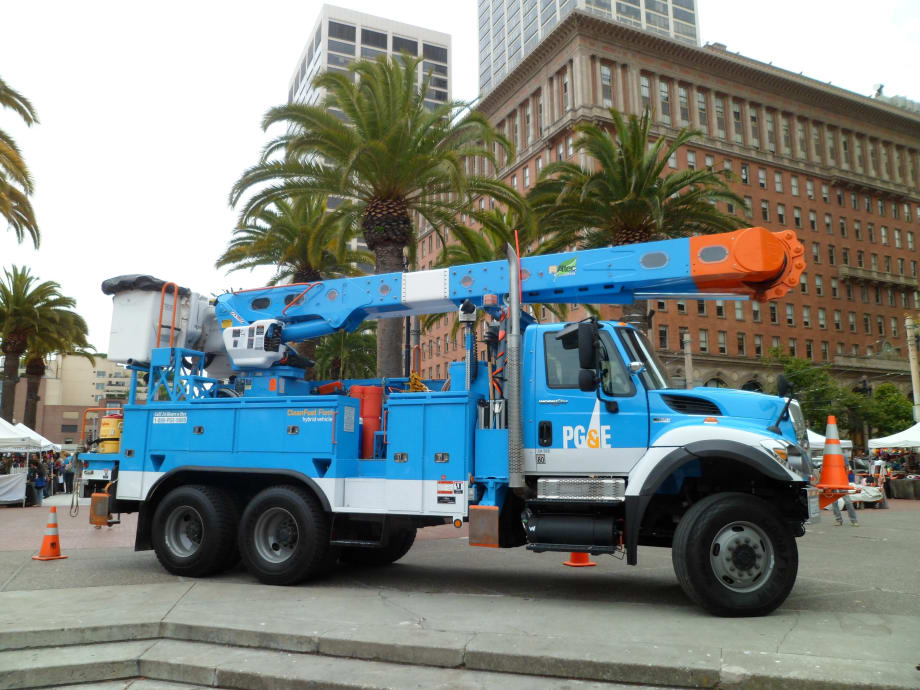
Photos courtesy of PG&E.
A Peterbilt/Allison Transmissions Class 8 electric hybrid material handler truck.
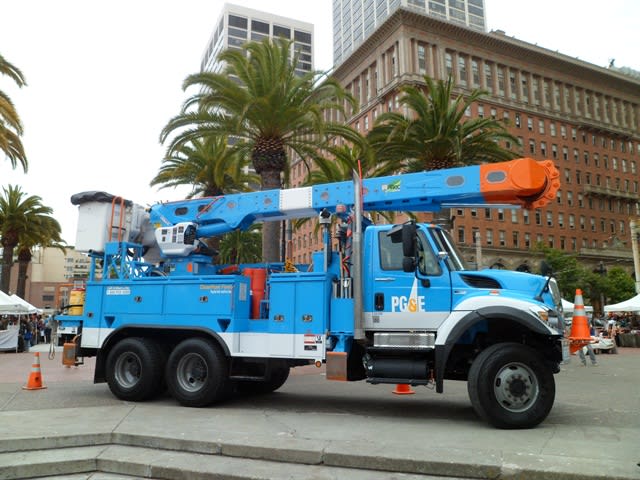
Photos courtesy of PG&E.
A Peterbilt/Allison Transmissions Class 8 electric hybrid material handler truck.
Edison Electric Institute (EEI), an electric utility industry association, along with Pacific Gas and Electric Company (PG&E) and Portland General Electric, is urging utilities to more than double their current investments in electric utility fleet vehicles — a goal that represents an estimated $50 million of new investment in electric vehicles across the industry.
Over the past five years, the industry has invested approximately $85 million incorporating plug-in electric vehicle (PHEV) technologies into utility fleets, or about 1.7% of overall utility fleet spending. EEI is calling on electric utilities to raise that investment to 5% of their total fleet investment, or approximately $1 billion, starting next year.
A newly published whitepaper from EEI's Fleet Electrification Committee, Utility Fleets Leading the Charge, provides a breakdown for utility fleet electrification and information on the full range of PHEVs available for adoption in fleets. The whitepaper is part of an effort to accelerate the adoption of PEVs and plug-in technologies by utilities and was written by a steering committee comprised of utility fleet directors from across the country.
“The electric power industry is a tremendous leader in supporting electric transportation, but we must continue to strengthen our efforts and lead by example. One way we can do that is by leveraging our industry’s buying power to purchase more PEVs for our fleets,” said EEI President Tom Kuhn. “The whitepaper released is a road map for a long-term, coordinated effort to further spur the development of electric vehicle technologies in the electric transportation market.”
According to the paper, electrification of the transportation sector is a potential “quadruple win” for electric utilities and society, stating that the expansion of electric-based vehicles in utility fleets will help utilities:
Reduce operating costs for fuel and maintenance;
Extend useful lives of the units based on their mechanical simplicity;
Improve crew safety through noise reduction (i.e., the ability to operate a bucket truck at height and still communicate with crew members on the ground);
Extend work hours of crews performing non-emergency work in communities with noise restrictions;
Reduce carbon emissions;
Provide another avenue to engage customers about the products and services electric utilities provide.
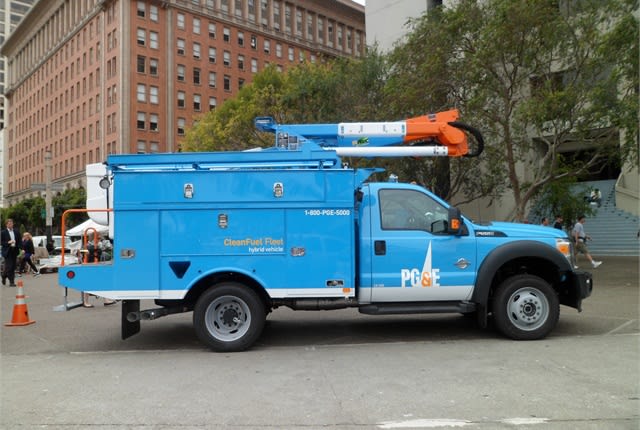
An Altec ePTO Class 5 bucket truck.
To help guide the effort, investor-owned electric utility CEOs designated Tony Earley, chairman, CEO and president of PG&E Corporation, and Jim Piro, CEO and president of Portland General Electric, as co-chairs of the EEI Electric Transportation Task Force. The mission of the task force is to champion the issue of electrification by increasing the awareness, opportunities, and activities related to electrification within the utility industry; collaborating with automakers and other stakeholders; and educating the public at large about the benefits of electric vehicles and technologies.
PG&E has been a long-time leader in incorporating PHEV technology in its own fleet, including pioneering electric power takeoff systems (ePTO) on the utility’s bucket trucks. This technology allows crews to operate all on-board equipment, including the aerial device and auxiliary systems, via a series of batteries, eliminating the need to idle the trucks at worksites. In addition, last year PG&E acquired the utility industry's first plug-in electric Class 5 utility work trucks from Electric Vehicles International and is moving to electrify an even larger portion of its fleet.
"Our experience has confirmed that the business case for fleet electrification is solid," said Dave Meisel, senior director of transportation services for PG&E. "We are seeing full payback on the increased initial investment in less than five years in most cases. In addition to the fuel savings, we’re seeing dramatically lower vehicle emissions and a better on-the-job experience for our crews."
The industry is also stepping up direct efforts to engage fleet operators. EEI will be offering a webinar for fleet leaders on August 6 to review the available technologies and the business benefits. In addition, operators will have access to a new calculator, developed by University of California, Davis staff based on an Argonne National Lab model, that will help them analyze the total cost of ownership for electric vehicles. (Information for the cost calculator and the webinar is available here.)
“Plug-in cars and trucks can make good business sense whether you’re a utility or any other business that operates a fleet of vehicles,” said Portland General Electric's Jim Piro. “At PGE, we’ve been working hard to support electric vehicle policy and infrastructure in Oregon, but we’ve also done the internal analysis and piloting needed to confirm it’s time to build fleet electrification into our own budget. We encourage other utilities to do the same.”
This article was updated Aug. 4, 2014 at 10:29 a.m. Pacific to include additional information from EEI.
More Fuel Smarts

How Volvo Updated Its D13 for EPA 2027 [Watch]
Volvo’s updated D13 promises lower emissions without sacrificing performance or fuel economy. Take a closer look at what changed inside the engine in this HDT Spotlight video.
Read More →
Diesel Price Spike Shortens Payback for Natural Gas Trucks, Report Says
Energy Vision estimates fleets could recover the higher purchase price of an RNG-fueled Class 8 tractor in 1.3 to 2.8 years under current fuel-price scenarios.
Read More →
Calstart Becomes Catalyst Mobility, Reflecting Broader Focus
Calstart is now Catalyst Mobility, reflecting the nonprofit’s growing national role in clean transportation, including zero-emission trucks, infrastructure and incentive programs.
Read More →

Record Diesel Prices Squeeze Trucking Fleets
Average U.S. diesel prices have climbed to nearly $6 a gallon, surpassing the 2022 record as tight refinery capacity and Middle East disruptions keep fuel costs elevated.
Read More →
How Fuel Delivery Shapes Engine Performance
Fuel delivery depends on more than what happens at the injector. For fleet, maintenance and technical professionals, looking at the full path from pump to injector can provide useful context for understanding engine performance.
Read More →
East Coast Port Launches $45M Electric Truck Push
The Port Authority of New York and New Jersey announced millions in incentives for zero-emission drayage trucks, yard tractors, and new charging hubs near the port.
Read More →
California Bill Could Shed Light on Electric Truck Prices
Why do battery-electric Class 8 trucks remain so expensive? A California bill headed to Gov. Gavin Newsom would give fleets and state agencies more visibility into what manufacturers charge.
Read More →
Detroit Opens Orders for EPA 2027 Engines
Detroit isn’t starting from scratch to meet EPA 2027 diesel emissions standards. Its Gen 6 DD13 and DD15 engines keep much of today’s platform while updating the fuel and aftertreatment systems.
Read More →
Zero-Emission Truck Corridor Planned for West Coast
California, Oregon, Washington, British Columbia and Baja California are coordinating plans for truck charging and hydrogen fueling from Canada to Mexico.
Read More →
A Closer Look at Kenworth’s Electric T880E Vocational Truck [Video]
Learn more about Kenworth's T880E battery-electric vocational truck at the Paccar Technical Center, including its range, applications, upfitting considerations, and PTO options, in this HDT Spotlight video.
Read More →