




Related: Uber, Amazon, and What the Sharing Economy Means for Freight Hauling
UShip Signs Exclusive Contract with DB Schenker to Automate Road Freight
Online shipping and freight automation provider uShip has partnered with Germany-based global logistics company DB Schenker to power an online trucking platform launching later this year in Europe.
by Staff
July 4, 2016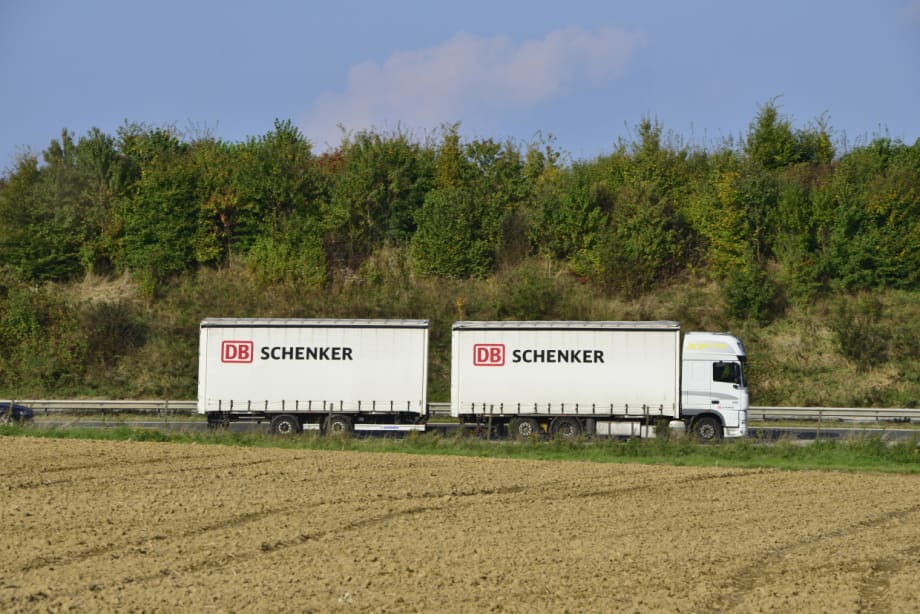
2 min to read
Online shipping and freight automation provider uShip has partnered with Germany-based global logistics company DB Schenker to power an online trucking platform launching later this year in Europe.
The move helps uShip stand out in an increasingly crowded competitive arena, as high-visibility investors have helped launch so-called “uber of trucking” startups in the past year.
In the five-year deal, DB Schenker will use uShip Pro — uShip’s enterprise technology backbone — to automate and optimize the management of 25,000 approved carriers and execution of up to 10,000 loads per day through Europe’s largest over-the-road trucking business.
UShip Pro lets any business with freight (enterprise shippers, brokers, third-party logistics companies (3PLs), e-commerce merchants, retailers, parts distributors, vehicle manufacturers, etc.) create their own private network of vetted carriers that compete to win the shipper’s business.
The private network feature provides carrier reviews, uses shipment-level offer price, along with mobile shipment acceptance and tracking. Pro lets 3PLs and direct shippers access more carriers, real-time tracking, lower freight expenditures and more truck capacity, according to uShip.
“UShip Pro works like a TMS for covering loads, but is far more efficient because it’s automated, transparent and mobile,” explains Matt Chasen, CEO and founder of uShip. “Studies show less than a third of shippers use a TMS today, which means a majority of shippers book freight through horribly inefficient means like phone calls, emails and fax machines.”
The Wall Street Journal notes that “Logistics companies worldwide have been racing to develop technology to make it easier for shippers to book freight transportation.” Some companies, such as XPO Logistics, are spending millions to develop in-house platforms. In Europe, “Deutsche Post AG took a €345 million ($383 million) write-off on a failed effort to create its own global freight forwarding technology platform.” And other companies are making acquisitions in order to gain the needed technology, as in the case of UPS buying Coyote Logistics last year.
Based in Austin, Texas, and Amsterdam, uShip operates globally with localized sites in 19 countries and regions on six continents. Chasen said, "DB Schenker has a clear vision of how technology and innovation can create a more efficient, higher-quality digital freight network.”
Headquartered in Essen, Germany, DB Schenker global operations comprise land, air, ocean freight, contract logistics and supply chain management.
"To keep innovating faster, we partner with companies that use promising digital business models," said Markus Sontheimer, Board Member for IT and Digitalization at DB Schenker.
More Fleet Management

Sponsored•September 16, 2026
Color Match Smarter: Tools That Restore & Perform
For fleet managers and collision repair professionals keeping heavy-duty trucks on the road, getting the color right the first time isn't just about appearance — it's about efficiency, turnaround time, and bottom-line results. Discover how today's digital color tools are transforming the repair process from guesswork to precision.
Read More →
FMCSA Pauses Biennial-Update Enforcement Amid Motus Transition
Carriers whose updates were due on or after June 1 have more time, while FMCSA works to stabilize its new registration system and warns of phishing sites impersonating its new carrier registration system, Motus.
Read More →
Sponsored•September 14, 2026
2026 Blueprint for Countering Smarter Supply Chain Theft
Cargo theft is no longer just the cost of doing business. It's a multi-billion-dollar criminal enterprise exploiting vulnerabilities across your fleet, drivers, and supply chain.
Read More →


Sponsored•September 1, 2026
How Telematics Improves Visibility, Control, and Performance in Refrigerated Fleets
Explore how telematics help refrigerated fleets improve visibility, uptime, efficiency, compliance, and cargo protection across connected cold chain operations.
Read More →
What the U.S.-Canada Trade War Means for Trucking
Escalating U.S.-Canada tariffs could disrupt cross-border freight, reduce truck volumes, raise costs, and create new uncertainty for carriers on both sides of the border.
Read More →
What Are Trucking’s Top Concerns for 2026?
The American Transportation Research Institute wants to know what's worrying trucking fleet managers, drivers, and other stakeholders in its annual Industry Issues survey.
Read More →
American Trucking Associations Looks for a New Leader
ATA President and CEO Chris Spear abruptly left his job at the association on August 21, at a pivotal time for the trucking industry.
Read More →
Public Wi-Fi Cybersecurity Risks: How Truck Drivers and Fleets Can Protect Their Data
Public Wi-Fi can expose truck drivers and fleets to credential theft, malware, and other cyber threats. Here’s how to reduce the risk on the road.
Read More →
For Nicky Cupp, Fleet Innovation Starts With Frustration
HDT Truck Fleet Innovator Nicky Cupp turns everyday pain points at Fraley & Schilling into opportunities for better technology and smarter processes.
Read More →
Adam Buttgenbach’s Approach to Electric Trucks: Start With Where They Fit
HDT Truck Fleet Innovator Adam Buttgenbach helped PepsiCo build one of North America’s largest EV fleets by focusing on where electric trucks make operational sense.
Read More →