




U.S. Cross-Border Freight Declines More Than 8%
The value of trans-border freight movements between the U.S. and its neighbors took a steep decline, according to new U.S. Transportation Department numbers, while Canada regained its historical rank as top North America trade partner after falling behind Mexico.

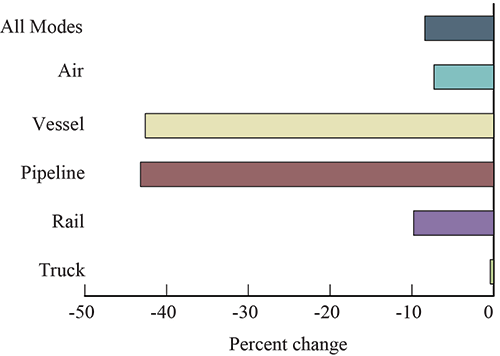
Percent change in value of U.S.-Canada/Mexico freight
flows by mode: November 2014 - 2015. Graphic: U.S. DOT
Percent change in value of U.S.-Canada/Mexico freight
flows by mode: November 2014 - 2015.Graphic: U.S. DOT
The value of trans-border freight movements between the U.S. and its neighbors took a steep decline, according to new U.S. Transportation Department numbers, while Canada regained its historical rank as top North America trade partner after falling behind Mexico.
The value of freight moved between the U.S. and Canada and Mexico freight totaled $88.2 billion in November 2015, down 8.4% from a year earlier, as all modes of transportation carried a lower total value of freight.
Large decreases in the value of commodities moved by pipeline and vessel in November were due to the reduced prices for crude oil, according to the department. Also, increases in the value of the U.S. dollar against foreign currencies, including the Mexican peso hitting a historic low against the greenback recently and the Canadian dollar also falling in value, has contributed to year-over-year declines each month through 2015’s reported numbers.
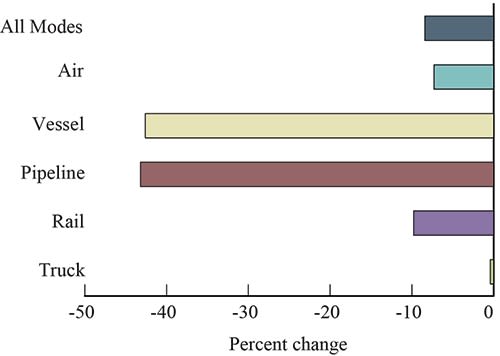
In November 2015 compared to November 2014, the value of commodities moving by truck decreased by 0.4%, while the value of air freight decreased by 7.3% and rail by 9.8%. Decreases of more than 40% each were reported for vessel and pipeline freight.
Trucks carried 66.2% of U.S.-Canada/Mexico freight and continue to be the most heavily used mode for moving goods to and from U.S.
Trucks accounted for $30 billion of the $46.8 billion of imports, or 64.1%, and $28.3 billion of the $41.3 billion of exports, or 68.5% Rail remained the second largest mode by value, moving 15.1% of all U.S. trans-border freight.
The value of U.S.-Canada freight totaled $45.1 billion in November 2015, down 13.8% from a year earlier as all modes of transportation also carried a lower value.
Lower crude oil prices contributed to the year-over-year decrease, according to the department. Crude oil is a large share of freight carried by vessel and pipeline, which were down 46.1 percent and 43.5 percent, respectively, year-over-year.
Trucks carried 60.4% of the freight to and from Canada, followed by rail at 16.3%.
In November 2015, the top commodity category transported between the U.S. and Canada by all modes was vehicles and parts, of which $5.4 billion, or 59%, moved by truck.
The value of U.S.-Mexico freight totaled $43 billion in November 2015, down 1.9% from November 2014, as two out of the five transportation modes, air and truck, carried more freight value than in November 2014.
Freight carried by truck increased by 4.9%, led by shipments of electrical machinery, which were up 10.5%. Air freight value rose 2.7% while rail freight value declined 4.3%.
Trucks carried 72.3% of the the value of freight transported to and from the U.S. and Mexico, followed by rail at 13.8%.
The top commodity category for all modes transported between the U.S. and Mexico in November 2015 was electrical machinery, of which $8.3 billion, or 92.3%, moved by truck
More Fleet Management
Why This Trucking Recovery Is Different
Freight demand remains sluggish, but rising costs and tougher enforcement have taken enough capacity out of the market to change the outlook for motor carriers.
Read More →
Platform Science Adds Dispatch and Safety Tools
Four additions to PS Fleet help fleets monitor loads, manage driver coaching, share truck locations and adjust video system settings.
Read More →
PrePass Intelligence Mines Fleet Bypass, Toll and Safety Data
PrePass Intelligence helps fleets measure bypass savings, flag potential toll overcharges, and spot suspicious transactions by combining data from separate systems.
Read More →
Motive Adds AI Agents for Fleet Operations
New tools automate follow-up on fleet data, from maintenance work orders to driver alerts, with two-way voice conversations planned for later this year.
Read More →
Can You Beat Our Trucking Trivia Challenge?
Test your truck knowledge with 19 trivia questions from Heavy Duty Trucking Exchange. Can you keep up with the fleet pros?
Read More →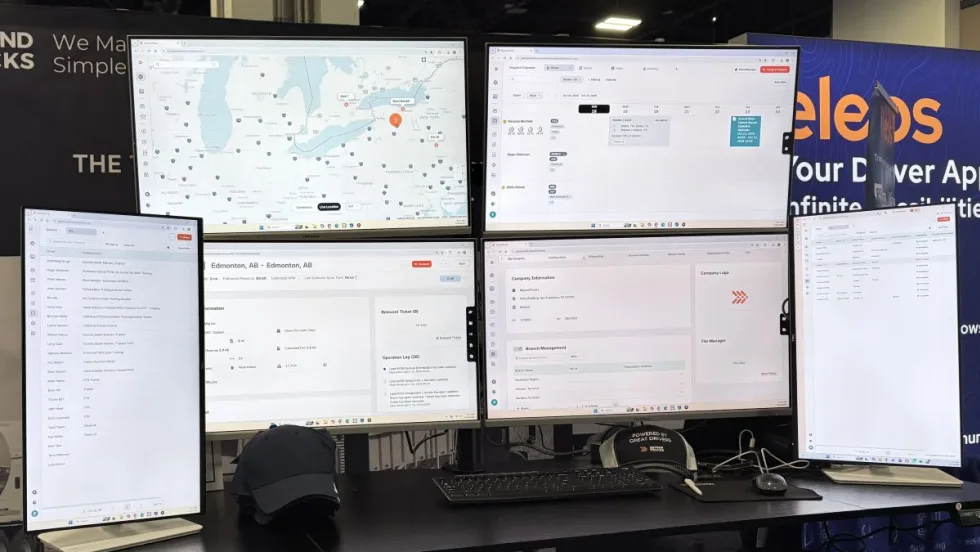
BeyondTrucks Adds Rules Checks to Dispatch
New Compatibility Engine checks driver qualifications, equipment requirements and fleet policies before loads are dispatched.
Read More →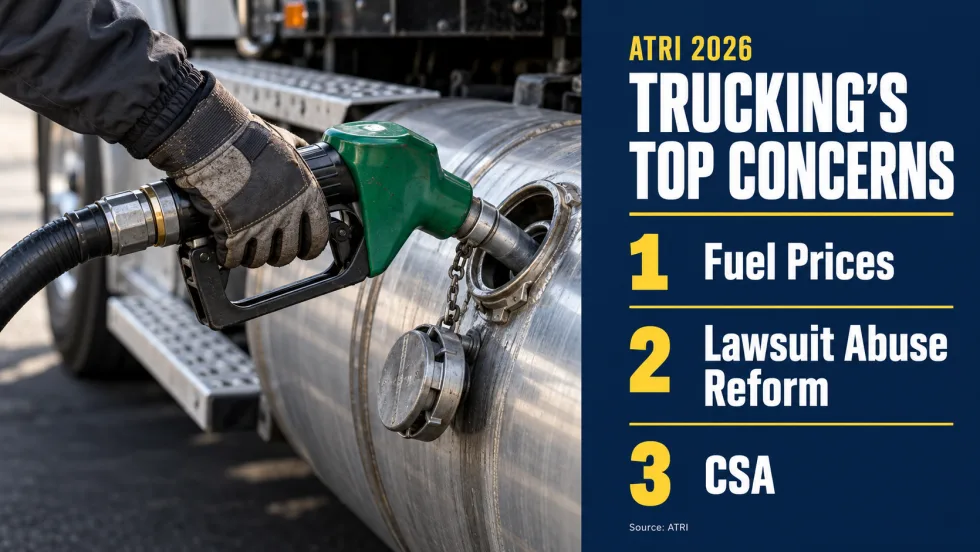
Diesel Prices Hijack Trucking’s Worry List
ATRI’s annual survey finds cautious optimism about freight, but diesel costs, litigation, and insurance continue to squeeze fleets. Drivers have different priorities on several issues.
Read More →
Nomination Deadline Extended for HDT Emerging Leaders
Just a few more days to nominate accomplished trucking fleet professionals under 40 who are making an impact and helping lead the industry forward for the HDT Emerging Leaders award. Deadline extended to October 20!
Read More →
What Will ATA’s New Leader Bring to Trucking's Table?
Incoming President and CEO Mark Colson’s record in Alabama offers clues about his priorities and approach following Chris Spear’s abrupt departure as the head of the American Trucking Associations.
Read More →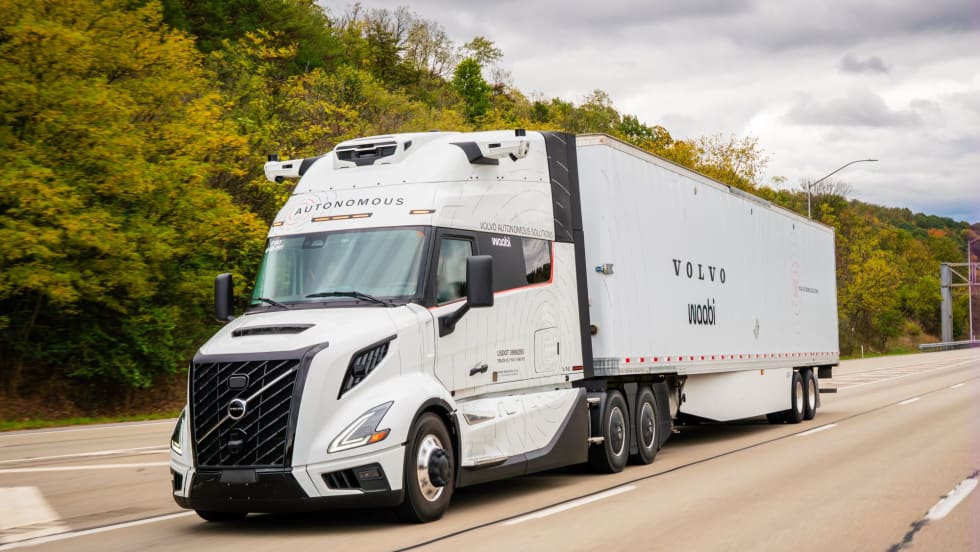
Volvo, Waabi Start Commercial Autonomous Operations in Texas
Volvo VNL Autonomous trucks, powered by the Waabi Driver, are hauling freight directly to third-party facilities for a customer in Texas.
Read More →