




Truckload Linehaul, Intermodal Rates Post Solid Gains
Truckload linehaul rates for North America maintained their ongoing climb in August, with the Cass Truckload Linehaul Index gaining a solid 7% over August 2013.
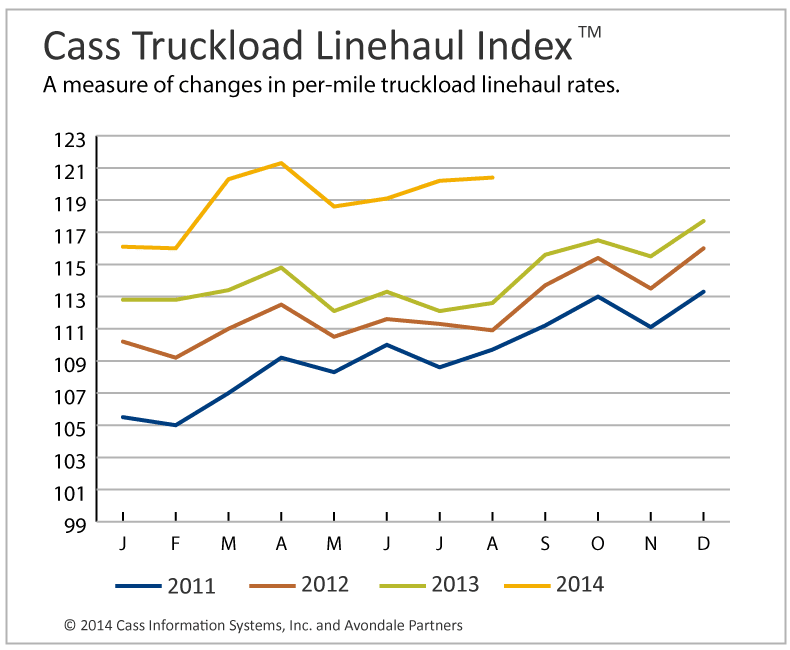
Truckload linehaul rates for North America maintained their ongoing climb in August, with the Cass Truckload Linehaul Index gaining a solid 7% over August 2013.
The primary factors driving the increase, growing demand and declining capacity, have resulted in “higher contract prices after a drawn-out bid season,” according to Cass.
It said spot market pricing also appears to remain strong while capacity continues to exit the marketplace as increased regulatory pressures, namely EOBRs and hours of service changes, push marginally profitable carriers into failure.
The investment firm Avondale Partners, which provides analysis for the report, said its outlook remains unchanged but positive. “We continue to expect contract truckload pricing to rise 4% to 6% in 2014, with the higher end looking increasingly likely.”
Cass Intermodal Price Index
Continued strength in intermodal volumes pushed the Cass Intermodal Price Index up 3.5% over last August’s levels.
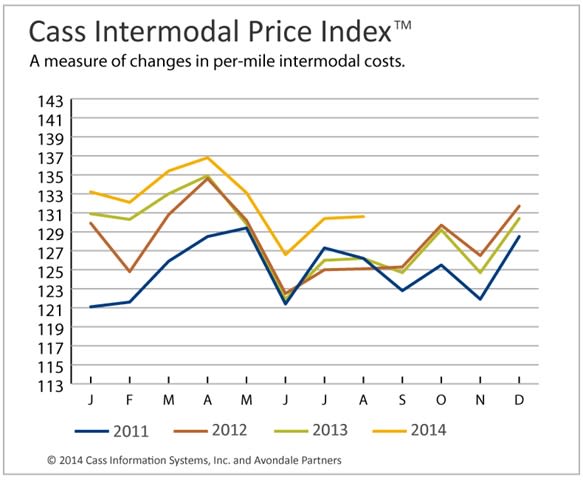
As long-haul intermodal carriers move into shorter lengths of haul and the truckload market continues to tighten, it appears that pricing in the intermodal space will continue to be strong, according to the report.
With diesel prices easing in recent weeks, the index could fall in the near term, despite indication that bases rates are improving, said Avondale Partners. It expects intermodal rates to increase at a low single digit pace in 2014 as a tighter truckload environment offers an umbrella for higher pricing.
The Cass Intermodal Price Index is indicator of market fluctuations in per-mile U.S. domestic intermodal costs, including all costs associated with the move such as linehaul, fuel and accessorials.
The Cass Truckload Linehaul Index is an indicator of market fluctuations in per-mile truckload pricing that isolates the linehaul component of full truckload costs from other components, such as fuel and accessorials.
Data within both are derived from actual freight invoices paid on behalf of Cass’ clients, which totaled over $23 billion in 2013.
More Fleet Management

How Telematics Improves Visibility, Control, and Performance in Refrigerated Fleets
Explore how telematics help refrigerated fleets improve visibility, uptime, efficiency, compliance, and cargo protection across connected cold chain operations.
Read More →
What the U.S.-Canada Trade War Means for Trucking
Escalating U.S.-Canada tariffs could disrupt cross-border freight, reduce truck volumes, raise costs, and create new uncertainty for carriers on both sides of the border.
Read More →
What Are Trucking’s Top Concerns for 2026?
The American Transportation Research Institute wants to know what's worrying trucking fleet managers, drivers, and other stakeholders in its annual Industry Issues survey.
Read More →

American Trucking Associations Looks for a New Leader
ATA President and CEO Chris Spear abruptly left his job at the association on August 21, at a pivotal time for the trucking industry.
Read More →
Public Wi-Fi Cybersecurity Risks: How Truck Drivers and Fleets Can Protect Their Data
Public Wi-Fi can expose truck drivers and fleets to credential theft, malware, and other cyber threats. Here’s how to reduce the risk on the road.
Read More →
For Nicky Cupp, Fleet Innovation Starts With Frustration
HDT Truck Fleet Innovator Nicky Cupp turns everyday pain points at Fraley & Schilling into opportunities for better technology and smarter processes.
Read More →
Adam Buttgenbach’s Approach to Electric Trucks: Start With Where They Fit
HDT Truck Fleet Innovator Adam Buttgenbach helped PepsiCo build one of North America’s largest EV fleets by focusing on where electric trucks make operational sense.
Read More →
Deen Albert: Let Automation Do the Math, People Make the Decisions
HDT Truck Fleet Innovator Deen Albert makes sure people are still at the heart of operations at Grand Island Express, even while adopting artificial intelligence tools. AI-assisted dispatch helped boost revenue 25% with the same number of trucks.
Read More →
Trimble’s New AI Agent Takes Aim at Fleet Back-Office Busywork
Arc Agent works across Trimble TMS products to automate repetitive tasks such as freight orders, maintenance, invoices, fuel costs and more.
Read More →
How HDT’s 2026 Truck Fleet Innovators Are Rethinking Fleet Operations
Meet five trucking leaders who are challenging assumptions, solving operational problems, and putting innovative ideas to work.
Read More →