




Trucking Raises Concern About Cost of Cap-and-Trade
The effort to create a cap-and-trade system to limit carbon emissions is generating more questions than answers right now, including whether or not Congress will be able to actually pass a bill
The effort to create a cap-and-trade system to limit carbon emissions is generating more questions than answers right now, including whether or not Congress will be able to actually pass a bill.
One thing is sure, though. If a bill does pass, diesel fuel will become more expensive, and that was a key issue during a Senate hearing yesterday.
Of course, that's the whole idea: Raise the cost of carbon-based energy to encourage investment in cleaner energy and promote more efficient use of energy, with the long-term objective of slowing global warming and decreasing U.S. dependence on foreign oil.
There are a host of arguments for and against this idea, all of which are being debated at length on Capitol Hill as Congress considers climate change legislation. But the possibility of a steep jump in diesel prices is first on trucking's list of concerns.
At a hearing before the Senate Environment and Public Works Committee yesterday, American Trucking Associations spokesman Ray Kuntz, Chairman and CEO of Watkins and Shepard Trucking, warned that the fuel cost increases arising from a cap-and-trade program would harm the industry and ripple through the economy.
Petroleum suppliers have said diesel fuel could go up as much as 88 cents a gallon under the cap-and-trade bill recently passed by the House, Kuntz said.
"Constraining the country's freight delivery system would change our way of life for the worse by significantly increasing the cost of everything we buy," said Kuntz.
The industry supports efforts to reduce greenhouse gas emissions and improve fuel efficiency, he added. Watkins and Shepard, for example, has reduced fuel consumption by 14 percent over the past two years by limiting speed to below 65 mph, using idling reduction technology, rolling on fuel efficient tires and training drivers to be fuel conscious.
"It's very simple," Kuntz said. "We reduce our fuel consumption, we reduce our cost and we reduce our carbon output. But here's our challenge: we don't build engines, we don't refine fuel, but we do pay the price of any increased fuel cost due to climate change legislation."
The chairman of the panel, Sen. Barbara Boxer, D-Calif., said the committee is working with the House bill as a starting point and will draft its own legislation. She supports the cap-and-trade approach, and challenged the prediction of steep increases in fuel prices.
For in-depth coverage of climate change legislation, see the August issue of Heavy Duty Trucking.
More Drivers

From One Generation to the Next: How Mentorship Builds Safer Truck Drivers
After three decades in trucking, Harold Perry shares what he's learned about driver safety, mentorship, and helping the next generation build confidence behind the wheel.
Read More →
Truck Drivers Need More Than Another Alert
Fleets have more visibility into truck health, safety events, and driver activity than ever. The next challenge is turning all that information into useful guidance for the person who has to decide what to do next.
Read More →
FMCSA Removes 110 Truck Driver Training Schools from Certified ELDT List
Federal regulators also are targeting more than 160 additional training providers and launching a nationwide audit of third-party CDL skills testers as part of a broader crackdown on trucking fraud.
Read More →
Hours of Service Pilot Programs: FMCSA Readies for 2027 Rollout
Two pilot programs could eventually reshape hours-of-service rules, giving truck drivers options to pause their 14-hour clock or use longer split sleeper rest periods.
Read More →
Medical Cards, English Proficiency Reshape Roadcheck Violations
Medical-card violations jumped to the top of the driver out-of-service list during CVSA’s 2026 International Roadcheck, while English-language proficiency violations appeared among the leading violations for the first time.
Read More →
Driver Trust Can Make or Break the Success of Fleet Safety Technology
New Teletrac Navman research suggests that onboarding, transparency about driver data, and positive feedback can play a significant role in how commercial drivers respond to safety and coaching technology.
Read More →
EEOC Sues KLLM Over Alleged Sex Discrimination in Driver Training
KLLM is facing a federal sex-discrimination lawsuit over policies the EEOC alleges put female truck driver trainees at a disadvantage.
Read More →
FMCSA Moves to Codify English Language Requirements for Commercial Drivers
By changing regulations on English-language proficiency requirements for commercial drivers, rather than relying on a guidance memo, the FMCSA said future administrations won't be able to walk back the Trump administration's stricter enforcement with just a memo.
Read More →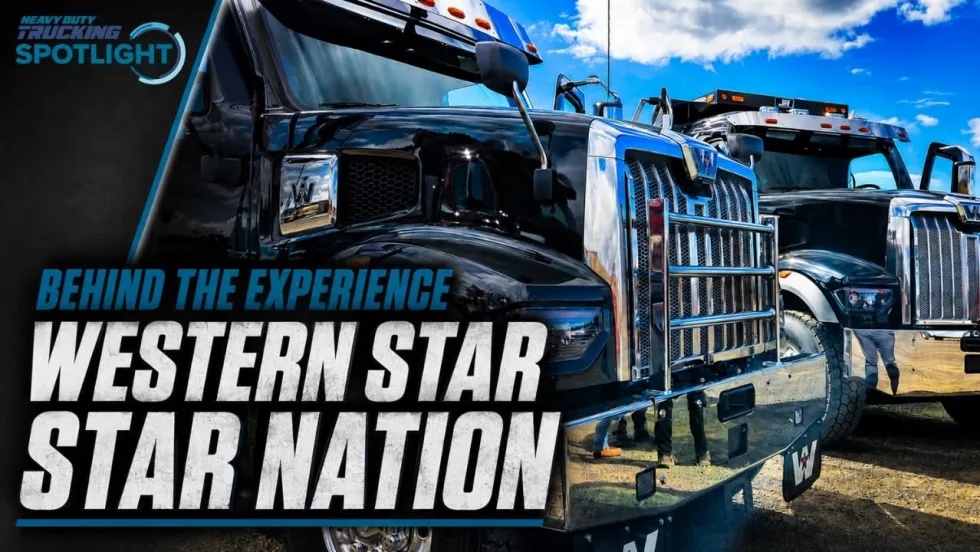
Drivers Put Western Star Trucks to the Test at Star Nation Experience
Watch to get an inside look at the Western Star trucks, technology, and community behind the Star Nation Experience 2026!
Read More →
Trump Administration Looks to Put More Veterans Behind the Wheel
The Freedom Haulers program pulls together existing and expanded programs at several federal agencies to recruit veterans to drive commercial heavy-duty trucks and cut the red tape for them to get a CDL, training, and employment.
Read More →