




Trucking Industry Warns D.C. Diesel Registration Proposal Will Hurt City
A proposed ban on diesel-powered vehicles in the District of Columbia has drawn a strong response from a coalition of trucking industry groups. The coalition warned the D.C. Council that provisions in the recently introduced Sustainable D.C. Omnibus Act of 2013 would have “significantly harmful effects on the District’s economy and on the quality of life of District residents.”
A proposed ban on diesel-powered vehicles in the District of Columbia has drawn a strong response from a coalition of trucking industry groups. The coalition warned the D.C. Council that provisions in the recently introduced Sustainable D.C. Omnibus Act of 2013 would have “significantly harmful effects on the District’s economy and on the quality of life of District residents.”
The provision would ban registrations of new diesel-powered vehicles: commercial trucks, buses, automobiles and fire trucks after 2017. Because of interstate registration compacts, this would effectively outlaw any new diesel-powered vehicles from crossing the District line, according to groups opposed to the plan.
“We’re very concerned that this provision, which is unnecessary to achieve the goals of the overall bill, would have a number of adverse effects on the residents and businesses in our nation’s capital,” said Bob Pitcher, vice president of state laws for the American Trucking Associations. “If enacted as written, there will be serious disruptions to the supply chain for DC, which receives the vast majority of its good via truck.”
Supporters argue the legislation, which is a package of 11 bills, would make D.C. one of the “greenest” cities in the country and provide tax rebates to vehicle owners who convert a gasoline or diesel-powered vehicle to run on alternative fuels. It would also provide tax rebates to promote installation of cleaner fuel fueling stations for compressed or liquefied natural gas, propane, or electric recharging when the site is accessible to the public.
In a letter to the Council, ATA, along with the American Moving and Storage Association, Truck Renting and Leasing Association, Maryland Motor Truck Association and Virginia Trucking Association, warned that there are several possible outcomes of the proposal, all of them negative.
“Most likely, the District will find itself not benefitting from advances in safety and emissions technology more found on newer trucks, meaning progressively older and older vehicles will be delivering to the city,” Pitcher said. “Shippers may also choose to receive smaller, more frequent deliveries in smaller gasoline-powered vehicles … many, many gasoline-powered vehicles to add to one of the nation’s already most congested cities.
“However, it may be as time goes on that carriers may simply choose not to send trucks into the District at all,” he added. “While inconvenient for District residents, the ban on diesel trucks will certainly be a boon for the economies of Maryland and Virginia who stand to benefit from D.C. residents looking elsewhere for essential goods.”
“We encourage the D.C. Council to drop this provision in order to safeguard the economy and quality of life of their city,” Pitcher said.
More Fleet Management

How Telematics Improves Visibility, Control, and Performance in Refrigerated Fleets
Explore how telematics help refrigerated fleets improve visibility, uptime, efficiency, compliance, and cargo protection across connected cold chain operations.
Read More →
What the U.S.-Canada Trade War Means for Trucking
Escalating U.S.-Canada tariffs could disrupt cross-border freight, reduce truck volumes, raise costs, and create new uncertainty for carriers on both sides of the border.
Read More →
What Are Trucking’s Top Concerns for 2026?
The American Transportation Research Institute wants to know what's worrying trucking fleet managers, drivers, and other stakeholders in its annual Industry Issues survey.
Read More →

American Trucking Associations Looks for a New Leader
ATA President and CEO Chris Spear abruptly left his job at the association on August 21, at a pivotal time for the trucking industry.
Read More →
Public Wi-Fi Cybersecurity Risks: How Truck Drivers and Fleets Can Protect Their Data
Public Wi-Fi can expose truck drivers and fleets to credential theft, malware, and other cyber threats. Here’s how to reduce the risk on the road.
Read More →
For Nicky Cupp, Fleet Innovation Starts With Frustration
HDT Truck Fleet Innovator Nicky Cupp turns everyday pain points at Fraley & Schilling into opportunities for better technology and smarter processes.
Read More →
Adam Buttgenbach’s Approach to Electric Trucks: Start With Where They Fit
HDT Truck Fleet Innovator Adam Buttgenbach helped PepsiCo build one of North America’s largest EV fleets by focusing on where electric trucks make operational sense.
Read More →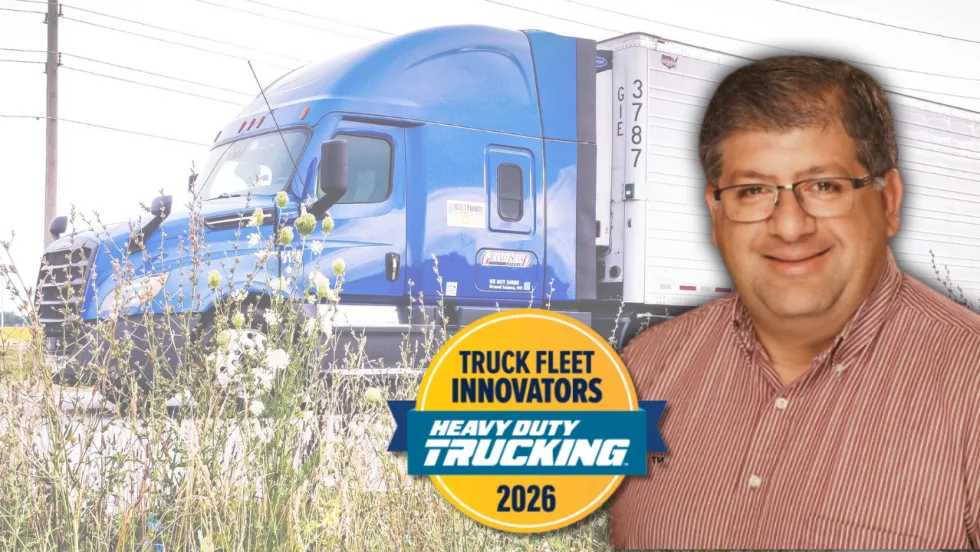
Deen Albert: Let Automation Do the Math, People Make the Decisions
HDT Truck Fleet Innovator Deen Albert makes sure people are still at the heart of operations at Grand Island Express, even while adopting artificial intelligence tools. AI-assisted dispatch helped boost revenue 25% with the same number of trucks.
Read More →
Trimble’s New AI Agent Takes Aim at Fleet Back-Office Busywork
Arc Agent works across Trimble TMS products to automate repetitive tasks such as freight orders, maintenance, invoices, fuel costs and more.
Read More →
How HDT’s 2026 Truck Fleet Innovators Are Rethinking Fleet Operations
Meet five trucking leaders who are challenging assumptions, solving operational problems, and putting innovative ideas to work.
Read More →