




Trucking Industry Faces Up to Changes in Health Care
Carriers are gradually coming to terms with the effects of the new health care law, and what they must do to comply, according to the Transport Capital Partners Third Quarter Survey.
Carriers are gradually coming to terms with the effects of the new health care law, and what they must do to comply, according to the Transport Capital Partners Third Quarter Survey.
Open enrolment under the Affordable Care Act begins today, Oct. 1, and deadlines for businesses are fast approaching. The trucking industry has gradually learned more about this major change through press coverage, health insurers, and new government-sponsored websites.
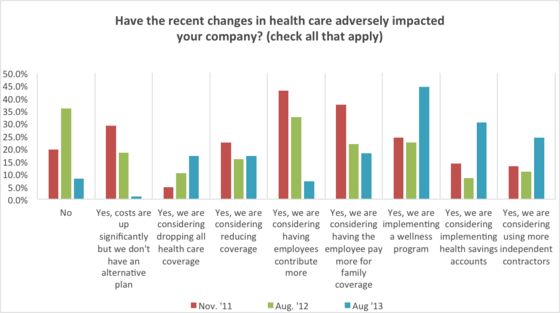
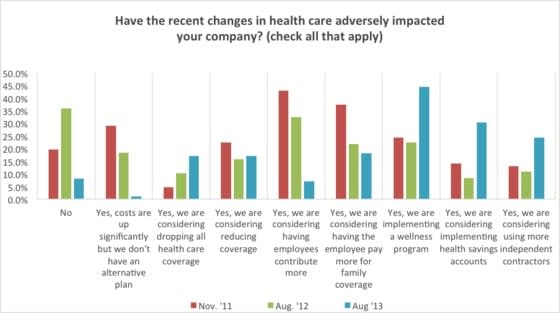
As implementation of the new health law draws near, the number of carriers reporting the law has made no difference to their business dropped from 36% a year ago to 8% this quarter. Carriers are taking various steps in order to comply, and strategies for dealing with the increased costs have shifted.
In November 2011, 43% of carriers indicated they were likely to have employees contribute more toward health costs. Today, carriers are more likely to implement wellness programs (44%) and health savings plans (30%). The number who anticipate opting out of the program all together by using independent contractors has grown from 13% two years ago to 24% this quarter.
Smaller Carriers at a Disadvantage
The response to the new health care law varies dramatically by size of business. Smaller carriers are more likely than larger carriers to consider dropping all coverage (30% vs. 10%). They are also more likely to reduce coverage (12% vs. 4%), and to have their employees contribute more (24% vs. 15%).
This, in part, reflects the fact that small employers - with fewer than 50 employees - have a different set of options under the new law.
”Smaller carriers are at a disadvantage to find and retain drivers if they cannot compete with the health packages offered by larger carriers,” noted Richard Mikes, TCP partner.
Larger carriers are more likely to have employees pay more for family coverage (48% vs. 36%), or to institute a health saving account (35% vs. 21%).
More Fleet Management

Why Private Fleets Are Taking More Freight
Private fleets are putting their own trucks on demanding customers and high-cost lanes as companies seek greater control over service, costs, and capacity.
Read More →
Color Match Smarter: Tools That Restore & Perform
For fleet managers and collision repair professionals keeping heavy-duty trucks on the road, getting the color right the first time isn't just about appearance — it's about efficiency, turnaround time, and bottom-line results. Discover how today's digital color tools are transforming the repair process from guesswork to precision.
Read More →
FMCSA Pauses Biennial-Update Enforcement Amid Motus Transition
Carriers whose updates were due on or after June 1 have more time, while FMCSA works to stabilize its new registration system and warns of phishing sites impersonating its new carrier registration system, Motus.
Read More →


2026 Blueprint for Countering Smarter Supply Chain Theft
Cargo theft is no longer just the cost of doing business. It's a multi-billion-dollar criminal enterprise exploiting vulnerabilities across your fleet, drivers, and supply chain.
Read More →
How Telematics Improves Visibility, Control, and Performance in Refrigerated Fleets
Explore how telematics help refrigerated fleets improve visibility, uptime, efficiency, compliance, and cargo protection across connected cold chain operations.
Read More →
What the U.S.-Canada Trade War Means for Trucking
Escalating U.S.-Canada tariffs could disrupt cross-border freight, reduce truck volumes, raise costs, and create new uncertainty for carriers on both sides of the border.
Read More →
What Are Trucking’s Top Concerns for 2026?
The American Transportation Research Institute wants to know what's worrying trucking fleet managers, drivers, and other stakeholders in its annual Industry Issues survey.
Read More →
American Trucking Associations Looks for a New Leader
ATA President and CEO Chris Spear abruptly left his job at the association on August 21, at a pivotal time for the trucking industry.
Read More →
Public Wi-Fi Cybersecurity Risks: How Truck Drivers and Fleets Can Protect Their Data
Public Wi-Fi can expose truck drivers and fleets to credential theft, malware, and other cyber threats. Here’s how to reduce the risk on the road.
Read More →
For Nicky Cupp, Fleet Innovation Starts With Frustration
HDT Truck Fleet Innovator Nicky Cupp turns everyday pain points at Fraley & Schilling into opportunities for better technology and smarter processes.
Read More →