




Truckers Jam KC Hours Hearing
It was standing-room only at the Wagstaff Theater in Kansas City, Mo., yesterday as the Federal Motor Carrier Safety Administration got into gear in the fourth of its public hearings on the controversial proposed hours of service rules
It was standing-room only at the Wagstaff Theater in Kansas City, Mo., yesterday as the Federal Motor Carrier Safety Administration got into gear in the fourth of its public hearings on the controversial proposed hours of service rules.
Officials said this was the largest turnout they have had so far. They admonished witnesses to stick to the 10-minute limit, and took no lunch break in order to try to have time for everyone to testify.
During a short mid-morning break, a convoy of about 30 trucks rolled into the Kemper Arena/American Royal complex, blowing their horns and waving to onlookers as they paraded in front of the meeting hall. The convoy was organized by the Iowa Motor Truck Assn. and included drivers, owner-operators, company owners and shippers riding in the trucks.
Witness after witness, some nervous, some emotional, some extremely compelling, made the same points that have been made in the other hearings so far. Occasionally some drew laughter or spontaneous applause from the audience.
Trucking company executives gave officials hard numbers as to what an estimated 25% decrease in production would mean to their bottom line - and cautioned that there was no way they could absorb those costs. The end result could be devastation to the economy, they said.
Fleets, drivers and owner-operators gave specific instances of trips they had calculated under the new rules and the old. Tim Jenkins, safety director at O&S Trucking in Springfield, Mo., applied the new rules to a real driver's trips in May. Under current rules, the trip took seven days. Under the proposal, it would take over nine. The change would cost this particular owner-operator $27,300 a year in revenue.
Fleet executives talked about how hard it would be to find the additional drivers needed to deliver the same amount of freight, how those drivers would likely be more inexperienced and therefore less safe, and how the proposal would erode morale and drive existing truckers out of the industry.
One driver said, "No amount of compensation will entice me to stay on the road if I have to be stuck in places like Lincoln, Neb., or Scranton, Pa., at the expense of being home in Tucson with my family."
Witnesses urged officials to give drivers back the flexibility of being able to split their sleeper time. Many drivers testified that they use this feature of current regulations to sleep through rush hours or through sluggish times of their circadian cycle.
"The trucking industry does not need the government tucking our drivers into bed," said Alan Hingst, executive vice president of contractor programs for U.S. Xpress. Hingst noted that U.S. Xpress has had no major accidents occur in the last several years during the midnight-to-6 a.m. time period the government is trying to restrict. However, 70% of their major accidents occurred during the 6 a.m.-6 p.m. time frame.
Witnesses complained that loading and unloading, or waiting to do so, is a major cause of fatigue not addressed in the proposal. "If the government were truly concerned, they would force the shipper to load and unload in a timely manner," testified Elizabeth Whitener, safety director for a 200-truck fleet in Springfield, Mo., owned by her husband.
Some witnesses tried to put a human face on the problem. "How would you like it if you had to be at work four hours before you had to start work, unpaid, and had to sit there and wait to go to work," asked Ron Hoffman, a 36-year driver for GSTC in Lawford, Iowa, of the panelists.
"I lost my leg, and DOT helped me get a waiver so I could drive again," said Bill Daniels, an owner-operator for Prime Inc. in Springfield, Mo. "With this proposal, all my hard work to get back to what I love to do would be in vain."
Based on their questioning, the DOT panel seems to be getting the message. What they are asking for now are specific suggestions for better regulations. One of the most common ones given them by witnesses was a 24-hour "restart" instead of the cumbersome and detested "weekend" provision in the proposal. "You can't store sleep," noted Herbert Schmidt, president of Contract Freighters Inc. in Joplin, Mo.
One of the prevailing themes of the testimony was the feeling that the government never really consulted with people who know trucking when developing the new rules. "You've never really asked the real expert, and that's the truck driver," Whitener testified.
Photo: A convoy of trucks roll in to the hours of service hearing in Kansas, City, Mo.
More Drivers

Competition Heating Up for Truck Drivers
New report reveals rising driver hiring costs, the return of sign-on bonuses, growing AI advantages, and the operational factors shaping driver retention.
Read More →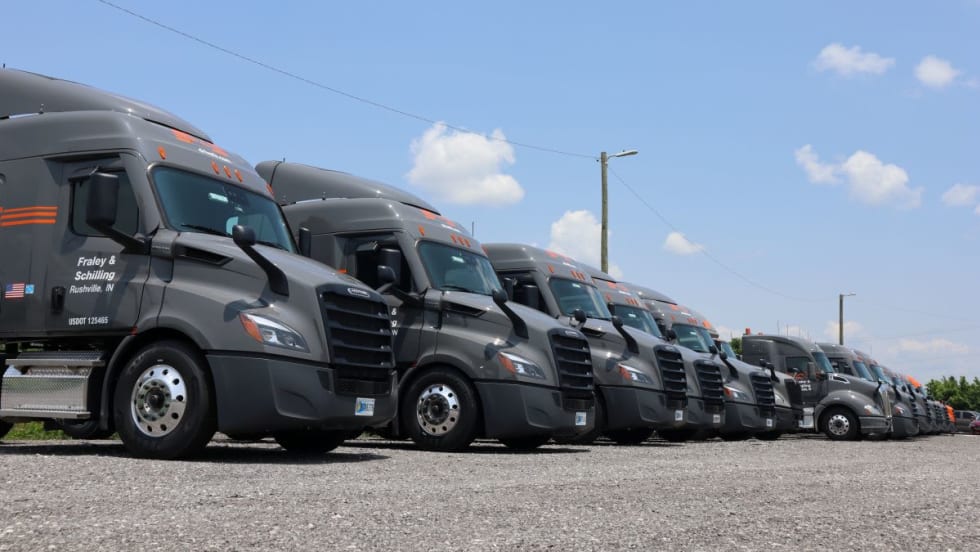
How Fraley & Schilling Improved Logbook Compliance by Over 50%
Fraley & Schilling needed a way to close a compliance workflow gap in its ELD system without adding more work from driver training, reminders, and back-office follow-ups. It found the answer in a custom driver app.
Read More →
Volvo Goes Gaming
Volvo has roared into American Truck Simulator with two new flagship trucks.
Read More →
What the Best Fleets to Drive For Teach About Driver Retention
Survey fatigue, AI-powered routing, owner-operator expectations, and the decline of social media all emerged as themes from this year's Best Fleets to Drive For program.
Read More →
Driver Retention Lessons From the Best Fleets to Drive For
What separates trucking's best workplaces from the rest? Jane Jazrawy shares the biggest lessons from this year's Best Fleets to Drive For program on driver retention, communication, AI, and workforce trends on the HDT Talks Trucking podcast.
Read More →
Farewell, CDL: Why I'm Giving Up My Commercial Driver's License
After more than 20 years as a CDL holder, HDT Executive Editor Jack Roberts is letting his commercial license expire. Not because he wants to — but because trucking's nuclear verdict crisis has made the risks of public-road test drives too great for editors, manufacturers, and everyone involved.
Read More →
How Top Trucking Fleets Improve Driver Retention [Video]
What do healthy snacks, optimized routing, and just picking up the phone have in common? They're all strategies the Best Fleets to Drive For are using to retain truck drivers.
Read More →
Trucker Path Adds Verisk CargoNet Theft Data to Navigation Platform
Trucker Path’s new cargo theft risk overlays give drivers and fleets visibility into high-risk areas, stolen commodity trends, and theft hotspots.
Read More →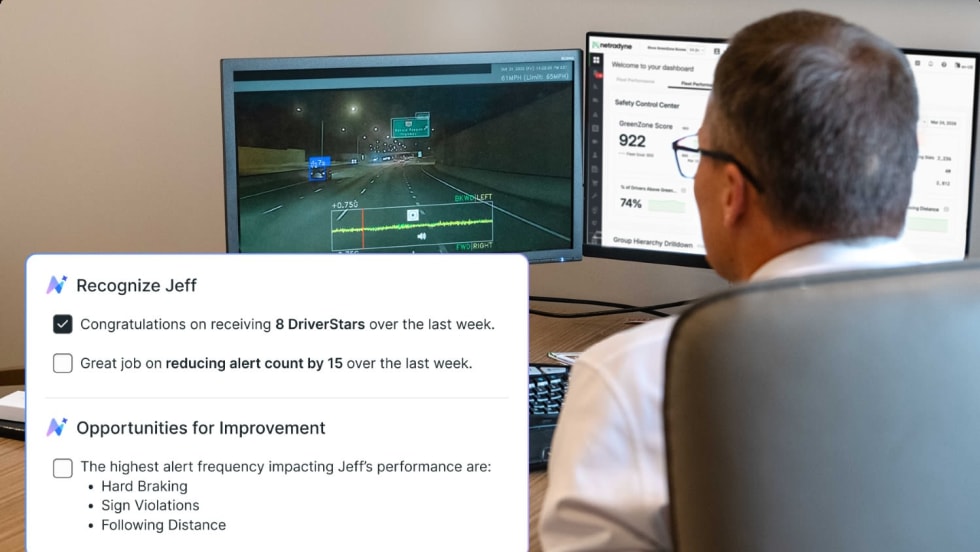
Netradyne Intelligence Uses New AI Agents to Automate Response to In-Cab Camera Data
The company called the next-generation in-cab camera safety platform "a fundamental shift from systems that report on what happened to systems that actively drive what should happen next."
Read More →
Why Truck Detention Keeps Costing Fleets Time and Money
A 2024 ATRI study found detention affects nearly 40% of truckload stops and costs the industry more than $15 billion annually. Despite the toll on drivers, fleets, and supply chains, the problem remains stubbornly persistent.
Read More →