




Related: State of the Commercial Truck Tire Industry in 2019
Toyo Truck Tire Exec Talks Distribution, the Amazon Effect, and More
When it comes to its commercial truck tire business, Toyo Tire U.S.A. Corp. has traveled a slightly different route than some of its competitors – sometimes due to necessity and in other cases, by choice.
by Mike Manges
December 18, 2019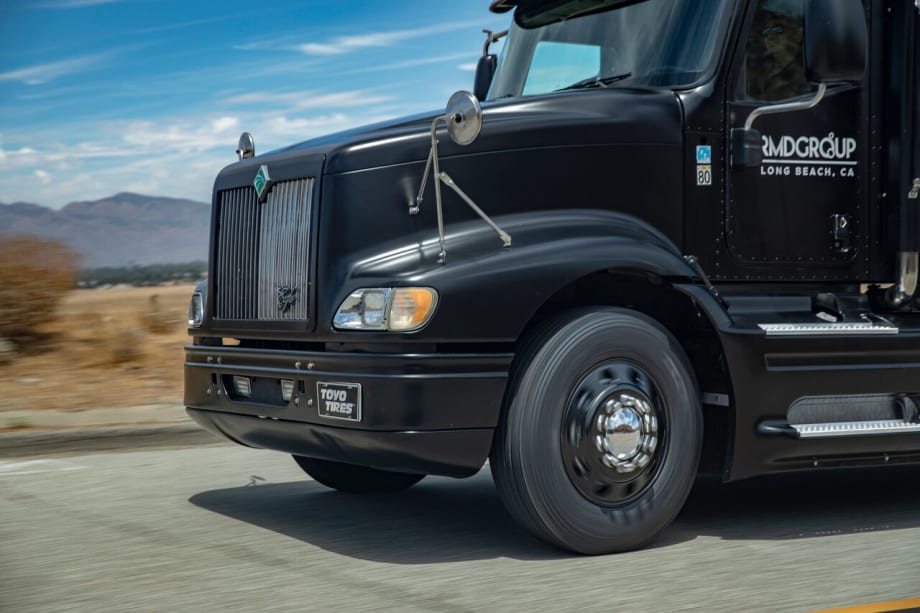
"Toyo leadership, both in the U.S. and in Japan, recommitted to the U.S. market in 2013 and we’ve made excellent progress rebuilding our commercial business in the U.S. since then," says Michael Graber, Toyo's director of sales, commercial tires.
Photo: Toyo Tire
4 min to read
When it comes to its commercial truck tire business, Toyo Tire U.S.A. Corp. has traveled a slightly different route than some of its competitors – sometimes due to necessity and in other cases, by choice.
Fewer than 10 years ago, Toyo also was bundled into a domestic manufacturing joint venture, the Mount Vernon, Ill.-based GTY plant, with Continental Tire the Americas LLC and Yokohama Tire Corp. Toyo formally exited the arrangement in early 2011. (The factory had the capacity to produce 7,300 truck tires per day, according to MTD research.)
“In that plant, we had a lot of production,” Michael Graber, the company’s director of sales for commercial tires, told MTD during the latest Specialty Equipment Market Association (SEMA) Show. “We had big volumes. After that venture went away, there was a big dip in our commercial tire sales.”
A multi-year “rebuild” of Toyo’s North American commercial truck tire business ensued.
Fast forward to early 2019, and Toyo opened up distribution and sales of its consumer products in the northwestern U.S. Les Schwab Tire Centers has retained exclusive rights to Toyo brand truck tire distribution in Oregon and Washington. But Toyo brand truck tires are now open to other dealers in that part of the country.
And all the while, Toyo has stayed away from pursuing national accounts, preferring to sell through its dealer network. “We’re squarely in the local fleet segment.”
In this exclusive interview, Graber, who joined Toyo in 2013 and will become the company’s vice president of sales next month, discusses the tiremaker’s dealer strategy, life after GTY, and one challenge that all truck tire manufacturers are facing: how to adapt to the rise in last-mile deliveries generated by the “Amazon effect.”
MTD: Les Schwab Tire Centers has retained exclusive rights to Toyo brand truck tire distribution in Oregon and Washington. What is Toyo doing to expand its truck tire dealer network in other parts of the northwest, and across the U.S., in general?
Graber: We’d prefer not to talk about the specifics of our commercial channels of distribution strategy, but broadly speaking, we have sought to partner throughout the United States with outstanding independent commercial servicing dealers and the distributors who supply them. We position our truck tire offering as the “leading value alternative” for both dealers and the fleets they serve, providing excellent products that consistently perform and retread well. Moreover, we want our dealers to be able to sell their customers Toyo tires at a fair price while earning strong margins, and for our sales team to be regarded as assets for our dealers in servicing these customers.
MTD: During the 2019 SEMA Show, you mentioned that Toyo’s truck tire business has returned to levels the company has not seen since 2011, when Toyo was still part of the GTY plant with Continental and Yokohama (Note: Toyo exited the joint venture in early 2011.) How did Toyo rebuild its commercial tire business, post-GTY?
Graber: Toyo leadership, both in the U.S. and in Japan, recommitted to the U.S. market in 2013 and we’ve made excellent progress rebuilding our commercial business in the U.S. since then. We’ve historically been known for our excellent technology and high manufacturing quality and have leveraged that, refreshed and broadened our product offering, and most importantly, listened to our customers to meet their needs. We are pleased with where we are today and see a bright future for the Toyo commercial business.
MTD: Does Toyo have plans to pursue big fleet customers in the near term?
Graber: At this time and for the foreseeable future, our focus remains on serving our dealers and distributors and continuing to find a solid fit for Toyo within their product screens.
MTD: Over the last few years, we’ve seen a dramatic rise in last-mile deliveries and shorter haul routes due to the “Amazon effect.” How is Toyo addressing this trend with its product screen?
Graber: Last-mile deliveries and the shorter haul routes resulting from the increase in e-commerce deliveries are one of the largest challenges to tire development today. Toyo has developed several tire options targeting the challenges created by these new routes.
Looking ahead to 2020, Graber says that the “evolution in Toyo truck tire products is in line with changes in market needs. Hub-and-spoke e-commerce distribution requires new super regional designs, and improved durability for low rolling resistance tires that deliver solid returns for large and small operators. Toyo will expand our offering to meet the market demand for these products.”
Editor's note: This article originally appeared on the website of our sister publication, Modern Tire Dealer.
More Equipment

How Volvo Updated Its D13 for EPA 2027 [Watch]
Volvo’s updated D13 promises lower emissions without sacrificing performance or fuel economy. Take a closer look at what changed inside the engine in this HDT Spotlight video.
Read More →
Michelin Tire Improves Efficiency and Durability for Regional Fleets
The Michelin X Multi Energy D2 is a regional haul drive tire engineered to help fleets improve fuel efficiency, durability and traction in demanding stop-and-go operations.
Read More →
ZF Expands Commercial Vehicle Push in North America
ZF is expanding its North American commercial-vehicle presence with new transmission applications, electrification, trailer technology and autonomous-driving systems.
Read More →
Tesla Wants a Self-Driving Semi. Are Cameras Enough?
Could Tesla’s camera-only autonomous driving technology work on an 80,000-pound Semi? In this commentary, HDT's Deborah Lockridge takes a look at Tesla, Cybercab, and how autonomous trucks see the road.
Read More →
Kodiak: Driverless Long-Haul Truck Launch on Track for 2026
Kodiak AI says its driverless long-haul safety case is 93% complete and it remains on track to begin commercial operations by year-end 2026.
Read More →
What DOT’s Automated Vehicle Strategy Means for Trucking
The U.S. Department of Transportation issued a new automated-vehicle strategy that outlines plans for driverless-truck regulations, cross-state freight corridors, and federal safety standards.
Read More →
East Coast Port Launches $45M Electric Truck Push
The Port Authority of New York and New Jersey announced millions in incentives for zero-emission drayage trucks, yard tractors, and new charging hubs near the port.
Read More →
PlusAI Going Public to Fund Autonomous Truck Launch
A SPAC deal could provide PlusAI with up to $300 million as it works toward a 2027 commercial launch of factory-built autonomous trucks.
Read More →
NHTSA Moves to Rewrite Truck Fuel-Economy Rules
The National Highway Traffic Safety Administration says it lacks authority to regulate medium- and heavy-duty truck engines separately from complete vehicles, but the existing standards have not yet been eliminated.
Read More →
Detroit Opens Orders for EPA 2027 Engines
Detroit isn’t starting from scratch to meet EPA 2027 diesel emissions standards. Its Gen 6 DD13 and DD15 engines keep much of today’s platform while updating the fuel and aftertreatment systems.
Read More →