




Toll Booth-, Transponder-free Tolling now Possible
TransCore has introduced ROVR, a GPS device with GSM communications that allows infrastructure-less tolling and includes an optional driver safety monitoring feature shown to dramatically reduce accidents, improve fuel economy, and decrease Greenhouse gases
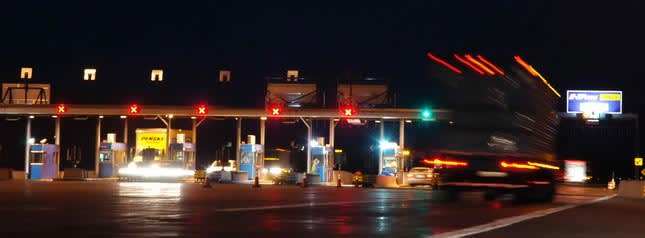
Toll booths and even transponder-based billing could become obsolete if GPS-based tolling catches on. Photo by Jim Park.
TransCore has introduced ROVR, a GPS device with GSM communications that allows infrastructure-less tolling and includes an optional driver safety monitoring feature shown to dramatically reduce accidents, improve fuel economy, and decrease Greenhouse gases.
As forms of tolling or road user charging become a more viable means to fund transportation infrastructure, the infrastructure-less tolling capability eliminates the need for costly toll structures and can be quickly implemented on new or existing roadways. ROVR is ideal for HOT lanes or Greenfield tolling environments both domestically and internationally. HOT lanes are HOV lanes that can be used by single drivers, provided they pay a fee. The ROVR device can also easily facilitate mileage-based user fee data if such legislation is approved.
The driver scorecard option is ideal for commercial vehicle fleets, parents of teen drivers, departments of motor vehicles, or driver education schools that need performance data or asset location devices. While most people believe they are above-average drivers, objective data can help improve driving patterns. As an educational tool, the scorecard increases awareness about how driving behavior can lower fuel costs, increase safety, and reduce individual carbon footprints.
The compact device plugs into the OBD port located under the dashboard, near the steering column on every car built since 1996. Installation takes only seconds to complete.
"What I find exciting about ROVR is its different approach from conventional technical implementations that are infrastructure intensive," explains TransCore's Chief Technology Officer, Kelly Gravelle. "ROVR gives transportation agencies an option they didn't have before. The multi-application nature of ROVR can not only deliver congestion management benefits much sooner than conventional approaches but provides a critical tool to help save lives and reduce green house gases. It is a compelling concept that could be a game changer for some agencies and at no cost to them."
Infrastructure-less Toll Facility
TransCore developed sophisticated, new algorithms designed to deliver high accuracy while using minimum bandwidth for both infrastructure-less toll plazas and HOT lane systems. Side-by-side test results at highway speeds using a ROVR device showed identical transactional performance to conventional transponder- based systems.
This new approach to HOT lane implementation can be deployed in just weeks or months and at zero or little to no cost to the transportation agency. Such an "Instant HOT" lane can be deployed across entire regional networks thereby increasing the potential for revenue generation and other benefits several fold. TransCore's design approach to such an infrastructure-less HOT lane system is based on a cost- effective telematics hardware platform, taking advantage of explosive improvements in telematics technology.
Driver Scorecard
For commercial fleets, ROVR can provide automated vehicle and driver monitoring.
"The way each individual drives affects safety, fuel economy of cars and trucks and the impact vehicles have on the environment," said Gravelle. "Unfortunately, we all think we are great drivers. We receive little feedback unless we have an accident or are stopped by a police officer."
Measuring certain driving characteristics like excessive idling, hard braking, rapid acceleration or over speed has shown to effectively quantify driver performance and risk. In research studies, providing this type of feedback to drivers has shown to improve driver performance. The way each motorist drives affects motorists' safety, the fuel economy of cars, and the impact vehicles have on the environment.
Each week, a scorecard is emailed to the driver. There's no need to login to a website. The scorecard highlights important aspects of the motorist's driving behavior compared to others and to the previous four weeks. It is designed to be easy to understand and provides useful insights into changes the motorist may want to consider that will save money or ensure safety.
During a 2010 EnCana study to monitor a fleet of vehicles used in the oil and gas industry, driver report card participants reduced rapid starts by 40%, speeding was 45% lower than the EnCana average, and most compelling the study saw a 49% reduction in motor vehicle incidents.
www.transcore.com.
More Drivers
When Language Stops the Truck: The Return of ELP Out-of-Service Orders
English language proficiency rules for commercial drivers aren’t new, but renewed out-of-service enforcement has raised the stakes. Here’s what carriers need to know before a driver reaches a roadside inspection.
Read More →
Samsara Launches Custom AI Agent Builder
Agent Studio lets fleets create AI tools for hours-of-service monitoring, reporting and driver support, including agents that communicate by phone.
Read More →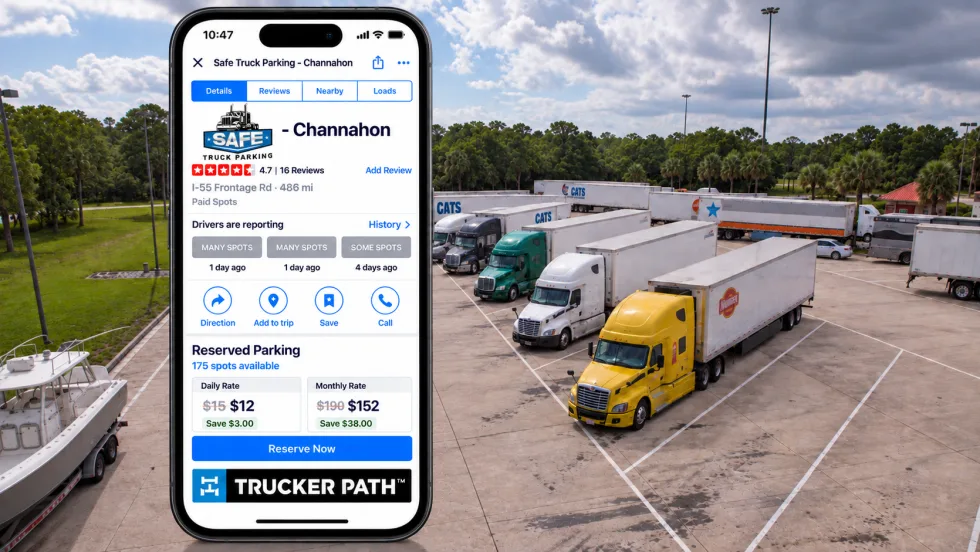
Trucker Path Expands Reserved Parking Network
Trucker Path has added close to 6,000 more truck parking spaces to its Trucker Path Reserved Parking Network with the addition of Safe Truck Parking.
Read More →
EEOC Sues Texas Trucking Company Over Driver Age Limits
The agency says Trancasa USA rejected applicants over 65 and applied tougher driving-record standards to those over 60.
Read More →
Nussbaum, Roehl Announce Second Driver Pay Increase This Year
This year has seen a swath of major truck driver pay increases as freight capacity has tightened.
Read More →
From One Generation to the Next: How Mentorship Builds Safer Truck Drivers
After three decades in trucking, Harold Perry shares what he's learned about driver safety, mentorship, and helping the next generation build confidence behind the wheel.
Read More →
Truck Drivers Need More Than Another Alert
Fleets have more visibility into truck health, safety events, and driver activity than ever. The next challenge is turning all that information into useful guidance for the person who has to decide what to do next.
Read More →
FMCSA Removes 110 Truck Driver Training Schools from Certified ELDT List
Federal regulators also are targeting more than 160 additional training providers and launching a nationwide audit of third-party CDL skills testers as part of a broader crackdown on trucking fraud.
Read More →
Hours of Service Pilot Programs: FMCSA Readies for 2027 Rollout
Two pilot programs could eventually reshape hours-of-service rules, giving truck drivers options to pause their 14-hour clock or use longer split sleeper rest periods.
Read More →
Medical Cards, English Proficiency Reshape Roadcheck Violations
Medical-card violations jumped to the top of the driver out-of-service list during CVSA’s 2026 International Roadcheck, while English-language proficiency violations appeared among the leading violations for the first time.
Read More →