




The Election and Trucking
Even as Congress returns to work this week, all eyes are on the Presidential election, now less than two months away. How the election will affect Congress, and Congress' impact on trucking, is anybody's guess. Some basics are
Even as Congress returns to work this week, all eyes are on the Presidential election, now less than two months away.
How the election will affect Congress, and Congress' impact on trucking, is anybody's guess.
Some basics are clear, though. If the Democrats take control, the ranking minority members will move up to the top rail.
In the House, for example, leadership of the key Transportation and Infrastructure Committee would go from Rep. Bud Shuster, R-Penn., to Rep. James L. Oberstar, D-Minn.
But even if the Republicans retain control of the House, Shuster will be forced to yield his chair under a Republican rule that requires chairmen to change after three terms. According to an analysis by a Hill insider, Shuster’s replacement will be Rep. Don Young, R-Alaska. Shuster would then become chairman of the very important Ground Transportation Subcommittee.
On the Senate side, the Republican rule would not affect Sen. John McCain, R-Ariz., who would remain chairman of the Commerce, Science and Transportation Committee if the GOP retains control. If the Democrats win, the leadership post would return to Sen. Fritz Hollings, D-S.C.
Trucking lobbyists are applying a similar analysis to all the important committees but the game cannot be finished until the votes have been counted.
Figuring out the impact of these changes on trucking is like reading the future in a puff of smoke.
The conventional wisdom is that Republicans are more sensitive to business interests than Democrats. There may be more convention than wisdom in that observation. Truckers certainly do not always get their way when Republicans hold the reins. After all, the current freeze on longer combination vehicles passed Congress during George Bush's administration. And Reagan was president when Congress passed steep tax increases in the Surface Transportation Assistance Act.
What is clear is that come January, there will be significant personnel changes at the agencies that directly affect trucking.
The new president will nominate a new DOT secretary early next year. He also will nominate a new chief at the Federal Motor Carrier Safety Administration, which now is working on reform of the truck driver hours of service rules -- easily the most significant truck rule since economic deregulation 20 years ago.
If the election gives the presidency to one party and control of the Senate to the other, we could see these nominations delayed as Republicans and Democrats ante up for political poker, using the nominees as chips.
In any case, new leadership at DOT and the safety agency could take a different approach to the hours-of-service rulemaking. If Bush wins, it is conceivable that Republican cost-consciousness would influence decisions about that very expensive rule.
On the other hand, the Republicans have moderated their platform somewhat, compared to the hard line of their recent past. They may not be so inclined to press that point, particularly if the counterbalance is public safety. Safety is an issue that traditionally cuts across party lines.
Until the players are in place, no one knows.
More Drivers

From One Generation to the Next: How Mentorship Builds Safer Truck Drivers
After three decades in trucking, Harold Perry shares what he's learned about driver safety, mentorship, and helping the next generation build confidence behind the wheel.
Read More →
Truck Drivers Need More Than Another Alert
Fleets have more visibility into truck health, safety events, and driver activity than ever. The next challenge is turning all that information into useful guidance for the person who has to decide what to do next.
Read More →
FMCSA Removes 110 Truck Driver Training Schools from Certified ELDT List
Federal regulators also are targeting more than 160 additional training providers and launching a nationwide audit of third-party CDL skills testers as part of a broader crackdown on trucking fraud.
Read More →
Hours of Service Pilot Programs: FMCSA Readies for 2027 Rollout
Two pilot programs could eventually reshape hours-of-service rules, giving truck drivers options to pause their 14-hour clock or use longer split sleeper rest periods.
Read More →
Medical Cards, English Proficiency Reshape Roadcheck Violations
Medical-card violations jumped to the top of the driver out-of-service list during CVSA’s 2026 International Roadcheck, while English-language proficiency violations appeared among the leading violations for the first time.
Read More →
Driver Trust Can Make or Break the Success of Fleet Safety Technology
New Teletrac Navman research suggests that onboarding, transparency about driver data, and positive feedback can play a significant role in how commercial drivers respond to safety and coaching technology.
Read More →
EEOC Sues KLLM Over Alleged Sex Discrimination in Driver Training
KLLM is facing a federal sex-discrimination lawsuit over policies the EEOC alleges put female truck driver trainees at a disadvantage.
Read More →
FMCSA Moves to Codify English Language Requirements for Commercial Drivers
By changing regulations on English-language proficiency requirements for commercial drivers, rather than relying on a guidance memo, the FMCSA said future administrations won't be able to walk back the Trump administration's stricter enforcement with just a memo.
Read More →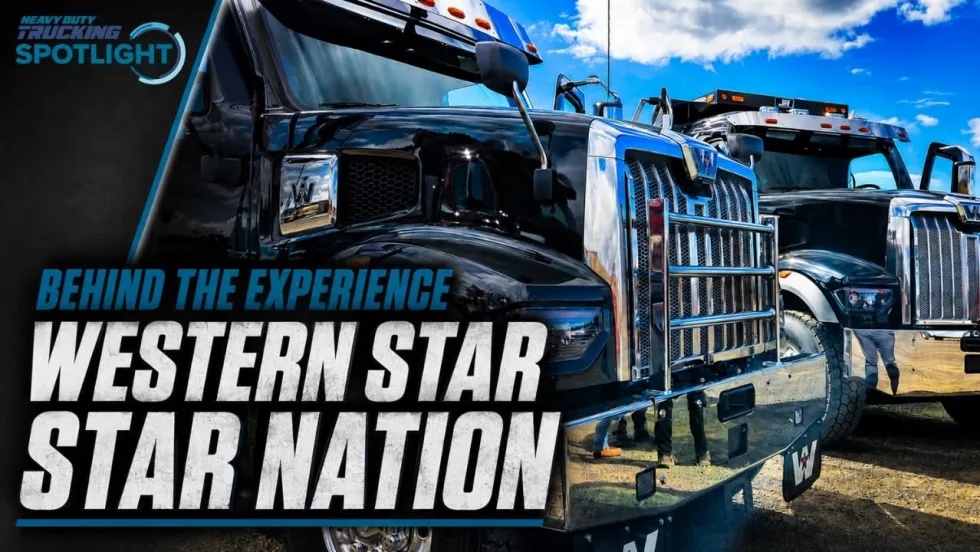
Drivers Put Western Star Trucks to the Test at Star Nation Experience
Watch to get an inside look at the Western Star trucks, technology, and community behind the Star Nation Experience 2026!
Read More →
Trump Administration Looks to Put More Veterans Behind the Wheel
The Freedom Haulers program pulls together existing and expanded programs at several federal agencies to recruit veterans to drive commercial heavy-duty trucks and cut the red tape for them to get a CDL, training, and employment.
Read More →