




TetherTech Develops Wheel-Separation Prevention Device
The TetherTech Safety system consists of a length of cable sized for the axle tube, two end caps and hardware. The caps bolt to the cable and to the hub, preventing a wheel separation from occurring.

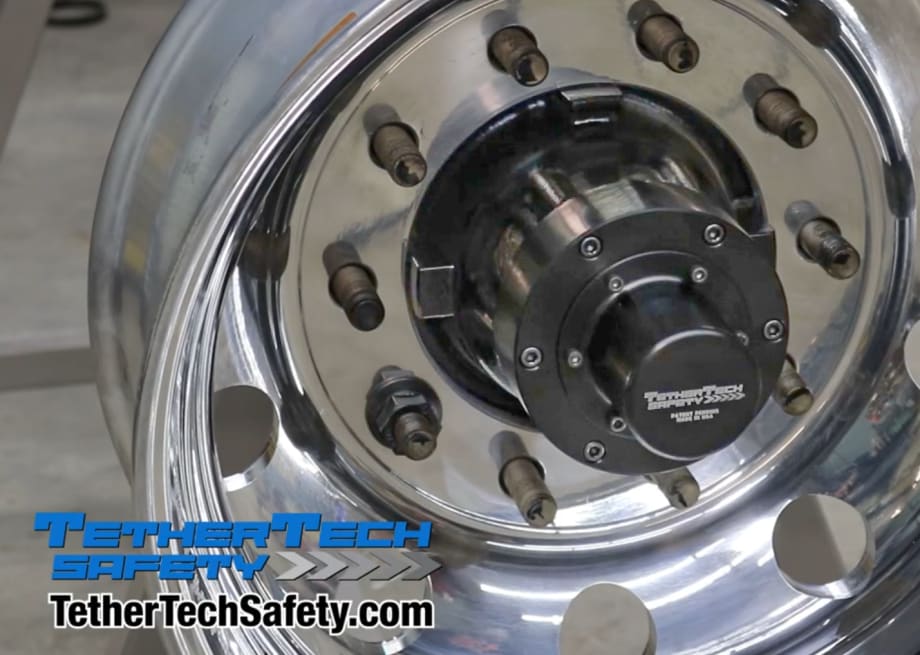
TetherTech Safety uses a thick steel cable running through the axle tube that is tethered to a pair of wheel-end caps to prevent the wheel assembly from separating in the event of a bearing failure.
Photo: TetherTech Safety
An Oklahoma startup believes it has a solution for the industry's wheel separation problem. TetherTech Safety uses a thick steel cable running through the axle tube that is tethered to a pair of wheel-end caps to prevent the wheel assembly from separating in the event of a bearing failure.
The cable is sized to the length of the axle tube including the end cap. When the ends of the cable are bolted to the end cap, there's virtually no endplay so the end caps hold the entire wheel assembly tightly in place against the axle spindle.
"If a wheel bearing comes apart, there's no way for the wheel to leave the vehicle," said TetherTech developer, Billy Turner. "It's held securely in place by the cable. When we tested the device, we ran more than 40 miles with no outer bearing in place and the wheels stayed on."
Turner said the cable and end-cap assembly is rated for 23,000 lbs.
The idea for such a restraining device came to Turner a few years ago after a wheel separation event occurred a few miles from his office. "A set of wheels came off a truck and killed two kids travelling in a Jeep," he said. "A third one was injured and is still having problems to this day."
But it all really hit home a month later when one of the trailers in his 20-truck fleet lost a set of dual wheels.
"We never heard what happened to those wheels," Turner said. "I don't think anyone was hurt by them, but I don't know for sure. After that I started looking around for a product that would help keep the wheels on in the event of a bearing failure, but there was nothing. That's when we set about developing the TetherTech Safety system."
The system is designed to prevent a separation in the event of a bearing failure resulting in damage to the outer bearing and retaining nut. It cannot prevent a fastener-related separation. Because the retaining cable runs through the axle tube and fastens to the wheel-end through the hub, in cannot be used with trailers equipped with automatic inflation systems.
More Safety & Compliance

FMCSA Pauses Biennial-Update Enforcement Amid Motus Transition
Carriers whose updates were due on or after June 1 have more time, while FMCSA works to stabilize its new registration system and warns of phishing sites impersonating its new carrier registration system, Motus.
Read More →
ZF Expands Commercial Vehicle Push in North America
ZF is expanding its North American commercial-vehicle presence with new transmission applications, electrification, trailer technology and autonomous-driving systems.
Read More →
Truck Drivers Need More Than Another Alert
Fleets have more visibility into truck health, safety events, and driver activity than ever. The next challenge is turning all that information into useful guidance for the person who has to decide what to do next.
Read More →
Tesla Wants a Self-Driving Semi. Are Cameras Enough?
Could Tesla’s camera-only autonomous driving technology work on an 80,000-pound Semi? In this commentary, HDT's Deborah Lockridge takes a look at Tesla, Cybercab, and how autonomous trucks see the road.
Read More →
What DOT’s Automated Vehicle Strategy Means for Trucking
The U.S. Department of Transportation issued a new automated-vehicle strategy that outlines plans for driverless-truck regulations, cross-state freight corridors, and federal safety standards.
Read More →
NYC Expands Speed, Pedestrian Safety Tech Across Fleet
New York City is expanding intelligent speed assistance and pedestrian-alert systems across its municipal fleet, moving the technologies from pilot programs into vehicle procurement and retrofit requirements.
Read More →
FMCSA Removes 110 Truck Driver Training Schools from Certified ELDT List
Federal regulators also are targeting more than 160 additional training providers and launching a nationwide audit of third-party CDL skills testers as part of a broader crackdown on trucking fraud.
Read More →
Beyond DOT Compliance: What Makes a Trucking Fleet Truly Safe?
A trucking fleet can follow every rule and still make unsafe decisions. The real test comes when safety conflicts with freight, productivity, or cost.
Read More →
Hours of Service Pilot Programs: FMCSA Readies for 2027 Rollout
Two pilot programs could eventually reshape hours-of-service rules, giving truck drivers options to pause their 14-hour clock or use longer split sleeper rest periods.
Read More →
New Guide Offers Pet Safety Tips for Truck Drivers
Hundreds of thousands of pets travel in truck cabs. A new safety guide from Volvo Trucks and the Center for Pet Safety offers practical advice for truck drivers who bring dogs and cats along for the ride.
Read More →