




Tennessee Tech Says Glider Kit Emissions Study Conclusions Inaccurate
Tennessee Tech said some of the conclusions of its study of glider kit emissions were not accurate, and that the data does not support its earlier statements that the remanufactured engines used in glider kits performed as well as OEM engines certified under EPA emissions standards.

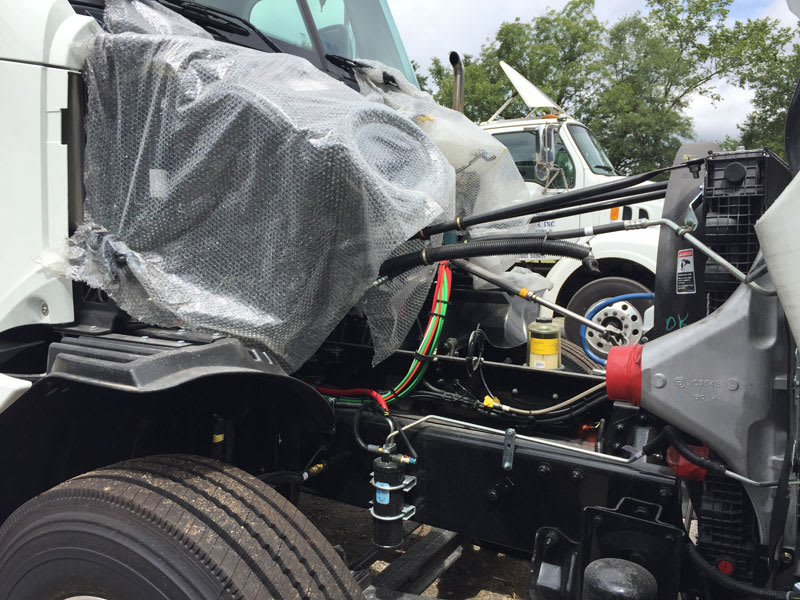
As the fate of rules restricting glider kit production hand in limbo, Tennessee Tech reports problems with the conclusions of a study it did used by glider kit supporters.
Photo by Deborah Lockridge
Tennessee Tech said some of the conclusions of its study of glider kit emissions were not accurate, and in fact that the data does not support its earlier statements that the remanufactured engines used in glider kits performed as well as OEM engines certified under EPA emissions standards.
In an Oct. 23 letter to the Environmental Protection Agency, university officials explained that a review of the study determined that the following statement from a letter about its findings was inaccurate: “The results of the emissions test were compared with the 2010 EPA emissions standards for [heavy-duty vehicles]. Our research showed that optimized and remanufactured 2002-2007 engines and OEM ‘certified’ engines performed equally as well and in some instances out-performed the OEM engines.”
The university said that statement is inaccurate in two respects. First, the field-testing procedures used by Tennessee Tech “were not sufficient to justify comparisons with EPA emissions standards.” And secondly, the university found that the data does not support the statement of findings.
The letter also went to Fitzgerald Glider Kits and Congresswoman Diane Black, both of whom used the results of the study to push for a rollback in the glider kit restrictions of the greenhouse gas emissions/fuel economy rules.
The study, Environmental & Economic Study of Glider Kit Assemblers, came under fire after it was revealed that Fitzgerald Glider Kits funded the research. According to a report by The Washington Post, Fitzgerald paid about $70,000 to finance the study and later agreed to build a new academic research center for TTU.
The results of the study purported to show that glider kits vehicles did not have a significant environmental impact when compared to modern, emissions-compliant trucks and engines. This contradicted a previous EPA study that found that NOx emissions from glider kit vehicles were around 40 times higher than those from compliant vehicles.
In turn, that EPA study has been criticized for Volvo’s role in providing test vehicles, and the agency earlier this year announced it would take a closer look at that research.
In February, Tennessee Tech asked EPA officials to not use its study while it investigated its validity.
University officials said the review found the research “was methodologically sound,” but only for the stated purpose of establishing baseline pollution levels for Fitzgerald’s trucks and for newly manufactured engines.
HDT reached out to Fitzgerald for comment, but the company has not responded. However, The Hill reported that Fitzgerald lobbyist Jon Toomey says the company stands by the study, saying "the results and the underlying data are valid and worthy of consideration. The letter vindicates the study and the results speak for themselves.”
Meanwhile, the status of a proposed rule to repeal the GHG glider kit provisions remains unclear.
More Equipment

How Volvo Updated Its D13 for EPA 2027 [Watch]
Volvo’s updated D13 promises lower emissions without sacrificing performance or fuel economy. Take a closer look at what changed inside the engine in this HDT Spotlight video.
Read More →
Michelin Tire Improves Efficiency and Durability for Regional Fleets
The Michelin X Multi Energy D2 is a regional haul drive tire engineered to help fleets improve fuel efficiency, durability and traction in demanding stop-and-go operations.
Read More →
ZF Expands Commercial Vehicle Push in North America
ZF is expanding its North American commercial-vehicle presence with new transmission applications, electrification, trailer technology and autonomous-driving systems.
Read More →
Tesla Wants a Self-Driving Semi. Are Cameras Enough?
Could Tesla’s camera-only autonomous driving technology work on an 80,000-pound Semi? In this commentary, HDT's Deborah Lockridge takes a look at Tesla, Cybercab, and how autonomous trucks see the road.
Read More →
Kodiak: Driverless Long-Haul Truck Launch on Track for 2026
Kodiak AI says its driverless long-haul safety case is 93% complete and it remains on track to begin commercial operations by year-end 2026.
Read More →
What DOT’s Automated Vehicle Strategy Means for Trucking
The U.S. Department of Transportation issued a new automated-vehicle strategy that outlines plans for driverless-truck regulations, cross-state freight corridors, and federal safety standards.
Read More →
East Coast Port Launches $45M Electric Truck Push
The Port Authority of New York and New Jersey announced millions in incentives for zero-emission drayage trucks, yard tractors, and new charging hubs near the port.
Read More →
PlusAI Going Public to Fund Autonomous Truck Launch
A SPAC deal could provide PlusAI with up to $300 million as it works toward a 2027 commercial launch of factory-built autonomous trucks.
Read More →
NHTSA Moves to Rewrite Truck Fuel-Economy Rules
The National Highway Traffic Safety Administration says it lacks authority to regulate medium- and heavy-duty truck engines separately from complete vehicles, but the existing standards have not yet been eliminated.
Read More →
Detroit Opens Orders for EPA 2027 Engines
Detroit isn’t starting from scratch to meet EPA 2027 diesel emissions standards. Its Gen 6 DD13 and DD15 engines keep much of today’s platform while updating the fuel and aftertreatment systems.
Read More →