




Telematics Offer Room for Improvement Beyond ELDs, Survey Finds
With the electronic logging device mandate top of mind this year, other potential uses of in-cab telematics may be overlooked, indicates a survey by ELD and telematics provider Teletrac Navman, even as many fleets are expanding in a booming freight environment.

From Teletrac Navman's 2018 Telematics Benchmark Report
From Teletrac Navman's 2018 Telematics Benchmark Report
With the electronic logging device mandate top of mind this year, other potential uses of in-cab telematics may be overlooked, indicates a survey by ELD and telematics provider Teletrac Navman, even as many fleets are expanding in a booming freight environment.
The survey, Telematics Benchmark Report: U.S. Edition, was conducted in January, shortly after the ELD mandate went into effect, and analyzed the responses of 2,400 fleet professionals.
At the time, 64% of fleets were using ELDs to track driver hours of service, but 31% were still using paper logs. It’s worth noting that at the time there was a phased-in enforcement period until April 1, where drivers were not being placed out of service nor fleets being assessed points against their scores in the federal Compliance, Safety, Accountability program. The survey found the ELD mandate to be the biggest compliance concern by far, at 75%, compared to 14% concerned about hourly/pay regulations, 14% about fuel taxes, 11% about hourly driver fraud, and 8% about highway transport.
Nevertheless, 72% said they perceived benefits from ELDs, with “less risk of compliance violations” at the top (28%), followed by “eliminating manual processes” (20%).
Telematics Beyond ELDs
ELDs, of course, are only one function of in-cab telematics. The survey found that while 77% of those responding are using telematics for vehicle tracking, there are other benefits they may be missing out on.
Respondents ranked “peace of mind/knowing where vehicles are” as the top benefit from telematics (46%), followed by “more efficient routing and dispatching” (32%). But several telematics features showed marked decrease in use since a similar survey in 2017, such as monitoring speeding (down 18% since 2017) and harsh braking (down 12%). In addition, 36% of respondents said fuel costs are their second largest expense, but only 29% reported using their telematics solution to monitor fuel usage. And 30% use telematics to track maintenance needs, down 10% from 2017.
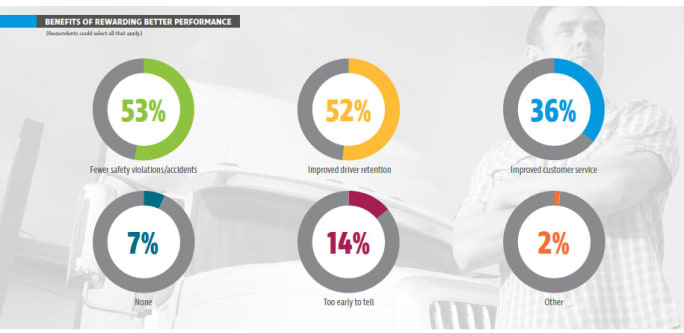
A key area where telematics could be used to improve fleet operations is in evaluating and rewarding drivers, says Teletrac Navman. But when asked if fleets were currently using telematics to measure driver performance, 43% said no. But 26% of those using telematics have seen reduced accidents as a result and, of those who benchmark and evaluate driver behavior, 57% say they reward their drivers for good performance. More than 50% of organizations said rewarding driver performance was directly responsible for reduced safety violations, and 52% said it improved driver retention.
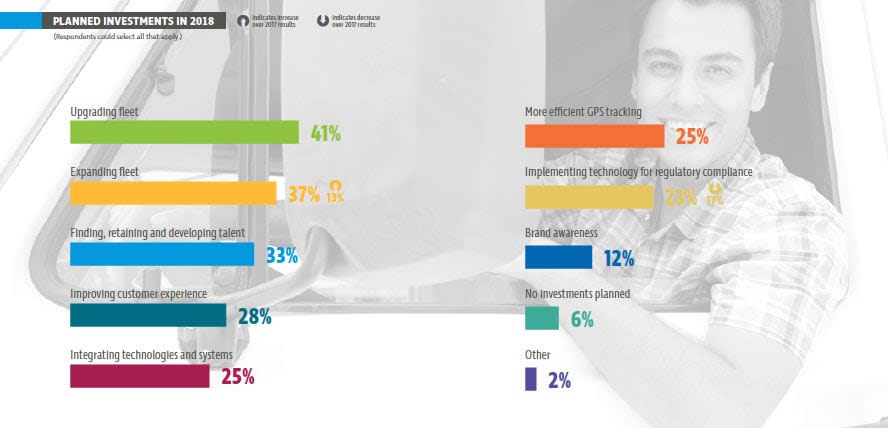
This is significant, because more than half of respondents said they are experiencing a talent shortage; 58% say they are increasing driver pay and 36% are improving benefits to recruit and retain new drivers. A significant portion, 41%, of respondents, said they planned to upgrade fleet equipment this year, and 37% said they’re expanding their fleets – up 13% from 2017.
There are several key areas where fleet respondents reported opportunities for growth, with the top one being short-haul delivery, cited by 49%, followed by long-haul freight at 48%. Small-package delivery was cited by 18% and oil and gas by 14%.
“We’re seeing more companies invest in telematics, but unfortunately many are only doing so to check the compliance box, not making the most of the technology to better their businesses,” said Sid Nair, senior director of transport and compliance, Teletrac Navman. “That’s likely due to tech fatigue, especially in the wake of regulations that demanded new technology, like ELDs. But in the long-term it will be a crippling hindrance, as we’re already seeing a widening gap between companies leveraging technology to drive fleet profitability and those who are merely reaping the benefits of the current high demand. Training everyone from drivers to fleet executives on how telematics data can boost operations is key, as the data alone won’t drive change.”
More Fleet Management

Why Private Fleets Are Taking More Freight
Private fleets are putting their own trucks on demanding customers and high-cost lanes as companies seek greater control over service, costs, and capacity.
Read More →
Color Match Smarter: Tools That Restore & Perform
For fleet managers and collision repair professionals keeping heavy-duty trucks on the road, getting the color right the first time isn't just about appearance — it's about efficiency, turnaround time, and bottom-line results. Discover how today's digital color tools are transforming the repair process from guesswork to precision.
Read More →
FMCSA Pauses Biennial-Update Enforcement Amid Motus Transition
Carriers whose updates were due on or after June 1 have more time, while FMCSA works to stabilize its new registration system and warns of phishing sites impersonating its new carrier registration system, Motus.
Read More →


2026 Blueprint for Countering Smarter Supply Chain Theft
Cargo theft is no longer just the cost of doing business. It's a multi-billion-dollar criminal enterprise exploiting vulnerabilities across your fleet, drivers, and supply chain.
Read More →
How Telematics Improves Visibility, Control, and Performance in Refrigerated Fleets
Explore how telematics help refrigerated fleets improve visibility, uptime, efficiency, compliance, and cargo protection across connected cold chain operations.
Read More →
What the U.S.-Canada Trade War Means for Trucking
Escalating U.S.-Canada tariffs could disrupt cross-border freight, reduce truck volumes, raise costs, and create new uncertainty for carriers on both sides of the border.
Read More →
What Are Trucking’s Top Concerns for 2026?
The American Transportation Research Institute wants to know what's worrying trucking fleet managers, drivers, and other stakeholders in its annual Industry Issues survey.
Read More →
American Trucking Associations Looks for a New Leader
ATA President and CEO Chris Spear abruptly left his job at the association on August 21, at a pivotal time for the trucking industry.
Read More →
Public Wi-Fi Cybersecurity Risks: How Truck Drivers and Fleets Can Protect Their Data
Public Wi-Fi can expose truck drivers and fleets to credential theft, malware, and other cyber threats. Here’s how to reduce the risk on the road.
Read More →
For Nicky Cupp, Fleet Innovation Starts With Frustration
HDT Truck Fleet Innovator Nicky Cupp turns everyday pain points at Fraley & Schilling into opportunities for better technology and smarter processes.
Read More →