




TCP: Carriers Resist Adding Capacity on Poor ROI
The Transport Capital Partners (TCP) 4th Quarter 2011 Business Expectations Survey finds 73 percent of responding carriers will not be adding any significant capacity until rates improve, providing a better return on their investment
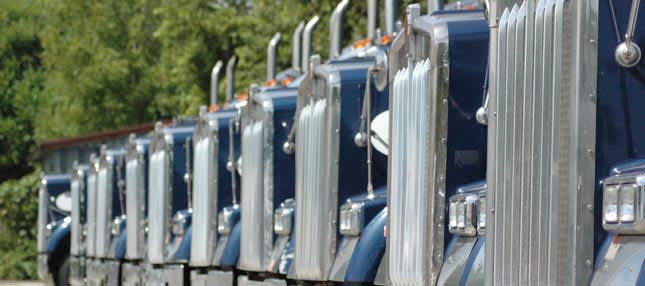
Carrier won't be making significant equipment investments until they see the rate increases needed to recoup that investment, says TCP. (Photo by Jim Park)
The Transport Capital Partners (TCP) 4th Quarter 2011 Business Expectations Survey finds 73 percent of responding carriers will not be adding any significant capacity until rates improve, providing a better return on their investment.
The total number of carriers who expect to add 0-5 percent capacity has remained steady for the last two quarters, TCP reports.
"Carriers tell us that rates are not covering investment risks, nor are they close to covering the record prices of new trucks," says Richard Mikes, TCP Partner and survey leader.
Mikes says about 25 percent of the carriers surveyed said then would need an operating ration in 87-90 range before they would see an ROI sufficient to prompt investment in new tractors.
"Half the group says they would need an operating ratio of 91-94," Mikes notes. "If a carrier is asset intensive and financing equipment, it is difficult to show a net margin with a 95+ OR."
When split between large and small carriers (more or less than $25 million in revenue), the survey found 53% of larger carriers said they were achieving an adequate rate of return to spur investment in new equipment compared to just 41% of smaller carriers.
"Fifty-three percent is hardly a ringing endorsement that rates are adequate for the investment needed and the risks taken by the larger carriers," notes TCP partner, Lana Batts.
Operating ratios and return on investment aside, nearly 70 percent of the carriers surveyed indicated they were currently unable to seat all the trucks they currently have.
Those three factors alone explain why carriers, as a whole, are not interested in growing their fleets dramatically, even in the face of expected volume increases. Most truck purchases today are intended to replace aging equipment, not to expand operations, the survey finds.
Both Mikes and Batts agree that with low, two-percent GDP growth forecasts for 2012, the 15-20 percent reduction in the national fleet seen during the recession will not be made up until carriers see higher rates to compensate for escalating costs and regulatory constraints of CSA and hours of service.
To read the press release on TCP's recent survey regarding volumes and rates, click here.
See www.transportcap.com for more details about TCP services.
More Fleet Management

How Telematics Improves Visibility, Control, and Performance in Refrigerated Fleets
Explore how telematics help refrigerated fleets improve visibility, uptime, efficiency, compliance, and cargo protection across connected cold chain operations.
Read More →
What the U.S.-Canada Trade War Means for Trucking
Escalating U.S.-Canada tariffs could disrupt cross-border freight, reduce truck volumes, raise costs, and create new uncertainty for carriers on both sides of the border.
Read More →
What Are Trucking’s Top Concerns for 2026?
The American Transportation Research Institute wants to know what's worrying trucking fleet managers, drivers, and other stakeholders in its annual Industry Issues survey.
Read More →

American Trucking Associations Looks for a New Leader
ATA President and CEO Chris Spear abruptly left his job at the association on August 21, at a pivotal time for the trucking industry.
Read More →
Public Wi-Fi Cybersecurity Risks: How Truck Drivers and Fleets Can Protect Their Data
Public Wi-Fi can expose truck drivers and fleets to credential theft, malware, and other cyber threats. Here’s how to reduce the risk on the road.
Read More →
For Nicky Cupp, Fleet Innovation Starts With Frustration
HDT Truck Fleet Innovator Nicky Cupp turns everyday pain points at Fraley & Schilling into opportunities for better technology and smarter processes.
Read More →
Adam Buttgenbach’s Approach to Electric Trucks: Start With Where They Fit
HDT Truck Fleet Innovator Adam Buttgenbach helped PepsiCo build one of North America’s largest EV fleets by focusing on where electric trucks make operational sense.
Read More →
Deen Albert: Let Automation Do the Math, People Make the Decisions
HDT Truck Fleet Innovator Deen Albert makes sure people are still at the heart of operations at Grand Island Express, even while adopting artificial intelligence tools. AI-assisted dispatch helped boost revenue 25% with the same number of trucks.
Read More →
Trimble’s New AI Agent Takes Aim at Fleet Back-Office Busywork
Arc Agent works across Trimble TMS products to automate repetitive tasks such as freight orders, maintenance, invoices, fuel costs and more.
Read More →
How HDT’s 2026 Truck Fleet Innovators Are Rethinking Fleet Operations
Meet five trucking leaders who are challenging assumptions, solving operational problems, and putting innovative ideas to work.
Read More →