





Related: Best Fleets to Drive For Nominees Face Intensive Interview Process
TCA Recognizes 18 Fleets with Outstanding Safety Records
Eighteen companies have been awarded division winners in the Truckload Carriers Association's 44th Annual Fleet Safety Awards competition.
January 10, 2020
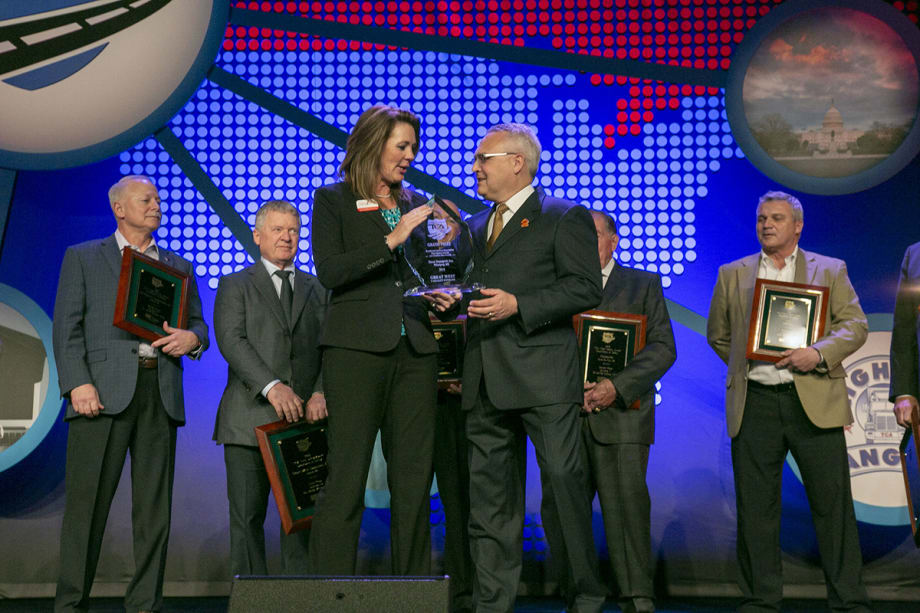
Bison Transport's Director, Safety and Driver Development Garth Pitzel accepts the 2018 TCA Fleet Safety Award from Great West Casualty Company's Executive Vice President and Chief Operating Officer Mandy Graham.
Photo: TCA
2 min to read
Eighteen companies have been awarded division winners in the Truckload Carriers Association's 44th Annual Fleet Safety Awards competition. The top three winning companies in each of six mileage-based divisions had the lowest accident frequency ratios per million miles, annually.
“For yet another year, TCA is honored to present the Fleet Safety Awards to our members who continually prioritize safety in their operations,” said TCA President John Lyboldt. “These awards showcase the best of our industry, and set these carriers apart as truly maintaining the gold standard when it comes to protecting their drivers, their loads, their equipment, and the greater motoring public.”
The 18 division winners are now invited to compete for one of two grand prizes – one for carriers with a total annual mileage less than 25 million miles and the other for carriers with mileage greater than 25 million miles. Grand prize winners will be announced at TCA’s 2020 Annual Convention, March 1-3, at the Gaylord Palms Resort in Kissimmee, Florida. All winners will also receive recognition at TCA’s 2020 Safety & Security Division Meeting June 7-9 in Louisville, Kentucky. The program is sponsored by Great West Casualty.
The 2019 Fleet Safety Awards winners include:
Division I Winners (less than 5 million miles)
1st Place: Carbon Express, Wharton, New Jersey
2nd Place: Kool Pak, Lake Oswego, Oregon
3rd Place: Valmont Industries, Valley, Nebraska
Division II Winners (5-14.99 million miles)
1st Place: First Express, Nashville, Tennessee
2nd Place: Transpro Freight Systems, Milton, Ontario
3rd Place: Convoy Systems LLC, Kansas City, Kansas
Division III Winners (15-24.99 million miles)
1st Place: Kottke Trucking, Buffalo Lake, Minnesota
2nd Place: Erb International, New Hamburg, Ontario
3rd Place: Veriha Trucking, Marinette, Wisconsin
Division IV Winners (25-49.99 million miles)
1st Place: Trans-West Logistics, Lachine, Quebec
2nd Place: Central Oregon Truck Company, Redmond, Oregon
3rd Place: H.O. Wolding, Amherst, Wisconsin
Division V Winners (50-99.99 million miles)
1st Place: Groupe Robert, Rougemont, Quebec
2nd Place: May Trucking Company, Salem, Oregon
3rd Place: Wilson Logistics, Springfield, Missouri
Division VI Winners (100 million or more miles)
1st Place: Bison Transport, Winnipeg, Manitoba
2nd Place: CFI, Joplin, Missouri
3rd Place: Landstar Inway, Jacksonville, Florida
More Safety & Compliance
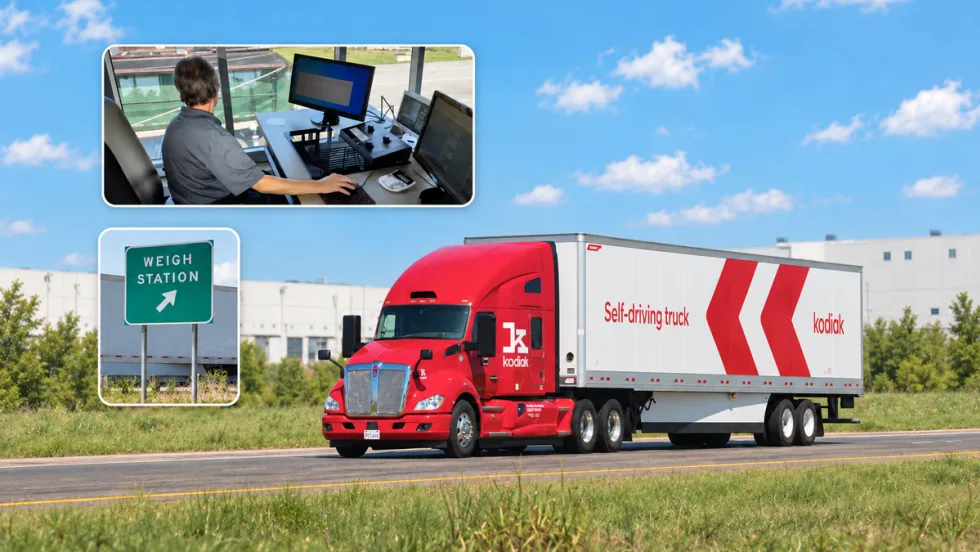
PrePass, Kodiak Connect Driverless Trucks to Roadside Enforcement
The system will allow enforcement agencies to verify Enhanced Inspection information and decide whether Kodiak’s autonomous trucks can bypass roadside screening sites.
Read More →
From One Generation to the Next: How Mentorship Builds Safer Truck Drivers
After three decades in trucking, Harold Perry shares what he's learned about driver safety, mentorship, and helping the next generation build confidence behind the wheel.
Read More →
FMCSA Pauses Biennial-Update Enforcement Amid Motus Transition
Carriers whose updates were due on or after June 1 have more time, while FMCSA works to stabilize its new registration system and warns of phishing sites impersonating its new carrier registration system, Motus.
Read More →
ZF Expands Commercial Vehicle Push in North America
ZF is expanding its North American commercial-vehicle presence with new transmission applications, electrification, trailer technology and autonomous-driving systems.
Read More →
Truck Drivers Need More Than Another Alert
Fleets have more visibility into truck health, safety events, and driver activity than ever. The next challenge is turning all that information into useful guidance for the person who has to decide what to do next.
Read More →
Tesla Wants a Self-Driving Semi. Are Cameras Enough?
Could Tesla’s camera-only autonomous driving technology work on an 80,000-pound Semi? In this commentary, HDT's Deborah Lockridge takes a look at Tesla, Cybercab, and how autonomous trucks see the road.
Read More →
What DOT’s Automated Vehicle Strategy Means for Trucking
The U.S. Department of Transportation issued a new automated-vehicle strategy that outlines plans for driverless-truck regulations, cross-state freight corridors, and federal safety standards.
Read More →
NYC Expands Speed, Pedestrian Safety Tech Across Fleet
New York City is expanding intelligent speed assistance and pedestrian-alert systems across its municipal fleet, moving the technologies from pilot programs into vehicle procurement and retrofit requirements.
Read More →
FMCSA Removes 110 Truck Driver Training Schools from Certified ELDT List
Federal regulators also are targeting more than 160 additional training providers and launching a nationwide audit of third-party CDL skills testers as part of a broader crackdown on trucking fraud.
Read More →
Beyond DOT Compliance: What Makes a Trucking Fleet Truly Safe?
A trucking fleet can follow every rule and still make unsafe decisions. The real test comes when safety conflicts with freight, productivity, or cost.
Read More →