




Survey: Owner-Operators More Unprepared for ELD Deadline Than Fleets
Nearly half of respondents to a poll by Help Inc. had not yet selected an electronic logging device two weeks ahead of the Dec. 18 deadline.
Source: Help Inc.
Source: Help Inc.
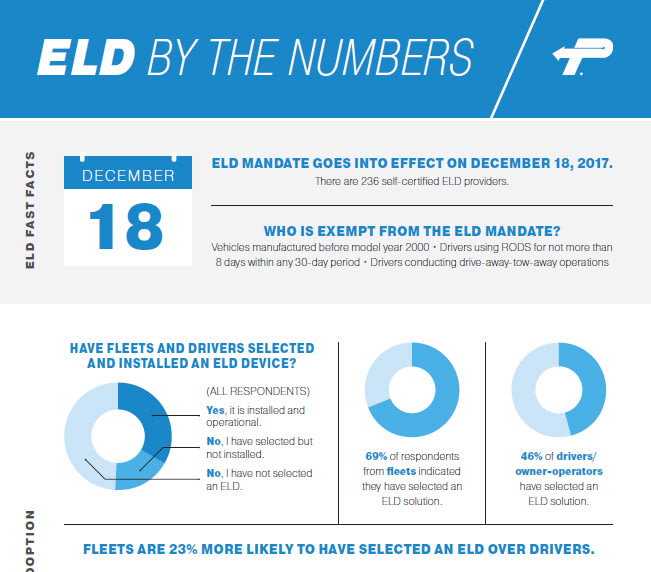
An online poll conducted through email and social media by Help Inc., the provider of the PrePass weigh station bypass service, has found that nearly half of respondents had not yet selected an electronic logging device ahead of the Dec. 18 deadline.
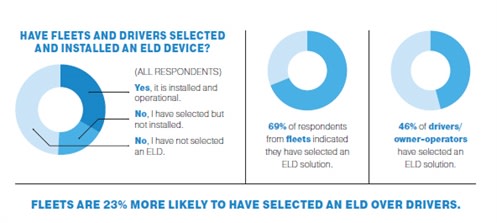
Only 33% of survey respondents said that they had selected and installed an ELD, while 18% had made a selection but hadn’t yet installed the device. The survey was conducted between Nov. 30 and Dec. 5, around two weeks before the scheduled compliance deadline.
While some of those polled who had not yet made an ELD choice may just be procrastinating, as many as 68% of that group said they weren’t planning to comply before the deadline – some because they weren’t convinced the ELD mandate would actually take effect on time, while as many as 31% of the group said they wouldn’t install ELDs at all, deadline or otherwise.
The survey also revealed that some trucking professionals were more likely than others to comply. Half of fleet managers surveyed reported having ELDs installed and operational, while only 28% of drivers and owner-operators said the same thing.
“It is surprising to see that such a large share of both owner-operators and drivers as well as fleet professionals see no need or rush to comply with the upcoming ELD mandate,” said Karen Rasmussen Help Inc. CEO. “Whether they are in favor of ELD or not, there is every indication that the FMCSA intends to follow through with its plans to require the devices without delay.”
Respondents reported that buying a low-cost, easy-to-use solution from a trusted provider were important factors influencing their purchasing decisions. A perception that ELDs are expensive is one reason many drivers and owners-operators and fleet managers are not planning to install the devices. According to the poll, 24% of respondents said they had not selected an ELD due to what they believe are high costs.
Help Inc. recently launched its own ELD application, designed to work with an OBD device that plugs into the diagnostic port using an app for Android and iOS devices.
“I believe there is a misconception among some fleets and owner-operators/drivers that ELDs are expensive and difficult to install, but that’s not the case,” said Rasmussen. “PrePass and a few other providers offer ELD solutions that literally take just a few seconds to install when paired up with a smartphone or tablet, and the apps cost no more than a dollar per day to use.”
The full results for the survey are available through an infographic found here.
More Drivers

Truck Drivers Need More Than Another Alert
Fleets have more visibility into truck health, safety events, and driver activity than ever. The next challenge is turning all that information into useful guidance for the person who has to decide what to do next.
Read More →
FMCSA Removes 110 Truck Driver Training Schools from Certified ELDT List
Federal regulators also are targeting more than 160 additional training providers and launching a nationwide audit of third-party CDL skills testers as part of a broader crackdown on trucking fraud.
Read More →
Hours of Service Pilot Programs: FMCSA Readies for 2027 Rollout
Two pilot programs could eventually reshape hours-of-service rules, giving truck drivers options to pause their 14-hour clock or use longer split sleeper rest periods.
Read More →
Medical Cards, English Proficiency Reshape Roadcheck Violations
Medical-card violations jumped to the top of the driver out-of-service list during CVSA’s 2026 International Roadcheck, while English-language proficiency violations appeared among the leading violations for the first time.
Read More →
Driver Trust Can Make or Break the Success of Fleet Safety Technology
New Teletrac Navman research suggests that onboarding, transparency about driver data, and positive feedback can play a significant role in how commercial drivers respond to safety and coaching technology.
Read More →
EEOC Sues KLLM Over Alleged Sex Discrimination in Driver Training
KLLM is facing a federal sex-discrimination lawsuit over policies the EEOC alleges put female truck driver trainees at a disadvantage.
Read More →
FMCSA Moves to Codify English Language Requirements for Commercial Drivers
By changing regulations on English-language proficiency requirements for commercial drivers, rather than relying on a guidance memo, the FMCSA said future administrations won't be able to walk back the Trump administration's stricter enforcement with just a memo.
Read More →
Drivers Put Western Star Trucks to the Test at Star Nation Experience
Watch to get an inside look at the Western Star trucks, technology, and community behind the Star Nation Experience 2026!
Read More →
Trump Administration Looks to Put More Veterans Behind the Wheel
The Freedom Haulers program pulls together existing and expanded programs at several federal agencies to recruit veterans to drive commercial heavy-duty trucks and cut the red tape for them to get a CDL, training, and employment.
Read More →
Putting Mack’s Command Steer to the Test
A test drive of Mack’s Command Steer active steering system evaluates how it can make truck driving easier and less tiring.
Read More →