




Survey Finds Logistics Companies Weathered Tepid Economic Conditions in 2011
In spite of a slow economic climate, 74% of North American logistics companies surveyed achieved or exceeded revenue projections in 2011, according to the 19th Annual Survey of Third-Party Logistics Providers. However, companies that failed to meet their financial projections were up sharply from 14% in 2010 to 26% in 2011

Dr. Bob Lieb, professor of supply chain management at Northeastern University in Boston, is author of the 19th Annual Survey of Third-Party Logistics Providers, sponsored by Penske Logistics.
In spite of a slow economic climate, 74% of North American logistics companies surveyed achieved or exceeded revenue projections in 2011, according to the 19th Annual Survey of Third-Party Logistics Providers. However, companies that failed to meet their financial projections were up sharply from 14% in 2010 to 26% in 2011.
The survey was presented this week at the Council of Supply Chain Management Professionals Annual Global Conference in Atlanta by survey author Robert Lieb, professor of Supply Chain Management at Northeastern University and Joe Gallick, senior vice president of sales for Penske Logistics.
The findings analyze responses from 31 large third-party logistics company CEOs across North America, Europe and Asia-Pacific whose companies were responsible for generating approximately $45 billion in revenue in 2011.
The report was co-authored by Kristin Lieb, assistant professor of marketing communications, Emerson College. The survey is underwritten by Penske Logistics, a leading provider of third-party logistics services.
While some North American companies may have fallen short of revenue projections, none of the companies were unprofitable, and none of the CEOs surveyed believed the regional third-party logistics industry operated at a loss for the year.
Globally, 63% of companies either met or exceeded their revenue projections and 71% of these logistics companies experienced moderate profitability during 2011. However, Europe continues to struggle, with 25% of companies surveyed experiencing unprofitability.
"The difficulties facing the European market today mirror the economic instability North American logistics companies faced a few years ago," commented Robert Lieb. "Globally, industry growth and company profitability continue to increase, but at a much slower rate. As we move forward, CEOs are being cautious, forecasting lower revenue growth projections over the next three years."
Looking towards growth, many CEOs have identified the health care industry as a strategic target, with 71% of the companies surveyed already having clients in the industry. Across all regions, companies are forecasting substantial growth in health care business during the next three years.
Within North America, health care clients generated 6% of regional revenues in 2011, with predictions showing an 11% share of revenue three years from now. Within health care, more than half of the CEOs predicted the medical devices segment of the industry will grow fastest during the next three years.
Major Supply Chain and Logistics Industry Trends and Insights:
Forecasting Revenue: Over the next year, all regions are forecasting lower revenue growth than last year.
North American Market Opportunities: Increasing flexibility will be important as customers look for greater collaboration and integration of supply chain activities.
European Market Opportunities: In attempts to increase growth, European companies will continue expanding into new industry verticals.
Asia-Pacific Market Opportunities: As domestic consumption rises within Asia, companies are focusing on expanding 4PL offerings in these fragmented emerging markets.
Thirty-one CEOs completed surveys via an Internet-based questionnaire during the summer of 2012. Companies participating in the annual survey included: Agility Logistics, Cardinal Logistics, Caterpillar Logistics, DHL Exel Supply Chain, DSC Logistics, Genco Supply Chain Solutions, Kuehne + Nagel Logistics, Inc., Menlo Logistics, MIQ Logistics, Penske Logistics, DB Schenker, Transplace, UPS Supply Chain Solutions, UTi Integrated Logistics, Werner Logistics, CEVA Logistics, and Rhenus Contract Logistics.
You can read more in this Penske blog post.
More Fleet Management

Does Your Trucking Fleet Need a New TMS? [Video]
Cloud technology, AI and new integrations are changing what transportation management systems can do. But does taking advantage of those advances mean replacing your existing TMS?
Read More →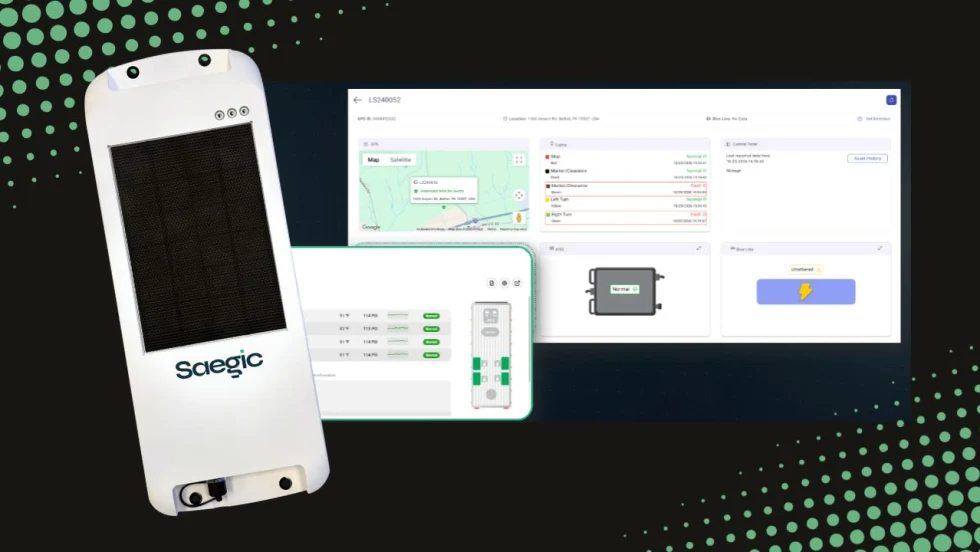
Road Ready Becomes Saegic, Launches New Trailer Telematics Gateway
Clarience Technologies is rolling out new hardware and expanding its plans for connecting trailer telematics, maintenance data, and video.
Read More →
Give Your Trucking Fleet a Cybersecurity Walkaround
Your fleet's cybersecurity policies may look good on paper. These seven checks can help you find out whether they’re working.
Read More →
Kodiak Lines Up Fleets for Driverless Trucking
An agreement for 75 trucks, a new Texas freight lane, and progress on safety validation move Kodiak closer to its planned driverless highway launch.
Read More →
ITS Logistics Settles Religious Harassment Case
The Nevada-based logistics firm agreed to pay more than $396,000 to settle a religious harassment charge involving an employee's Jewish identity.
Read More →
Your Trucks Are Busy. That Doesn’t Mean They’re Winning.
High utilization doesn’t always mean strong margins. Looking beyond the current load can help fleets make better dispatch decisions and get more value from each truck’s time.
Read More →
Why This Trucking Recovery Is Different
Freight demand remains sluggish, but rising costs and tougher enforcement have taken enough capacity out of the market to change the outlook for motor carriers.
Read More →
Platform Science Adds Dispatch and Safety Tools
Four additions to PS Fleet help fleets monitor loads, manage driver coaching, share truck locations and adjust video system settings.
Read More →
PrePass Intelligence Mines Fleet Bypass, Toll and Safety Data
PrePass Intelligence helps fleets measure bypass savings, flag potential toll overcharges, and spot suspicious transactions by combining data from separate systems.
Read More →
Motive Adds AI Agents for Fleet Operations
New tools automate follow-up on fleet data, from maintenance work orders to driver alerts, with two-way voice conversations planned for later this year.
Read More →