




Study: More Techs and Services Drive Repair Shop Profits
Adding technicians and services can significantly boost revenue and profits for independent repair shops, a new study by Fullbay has found.

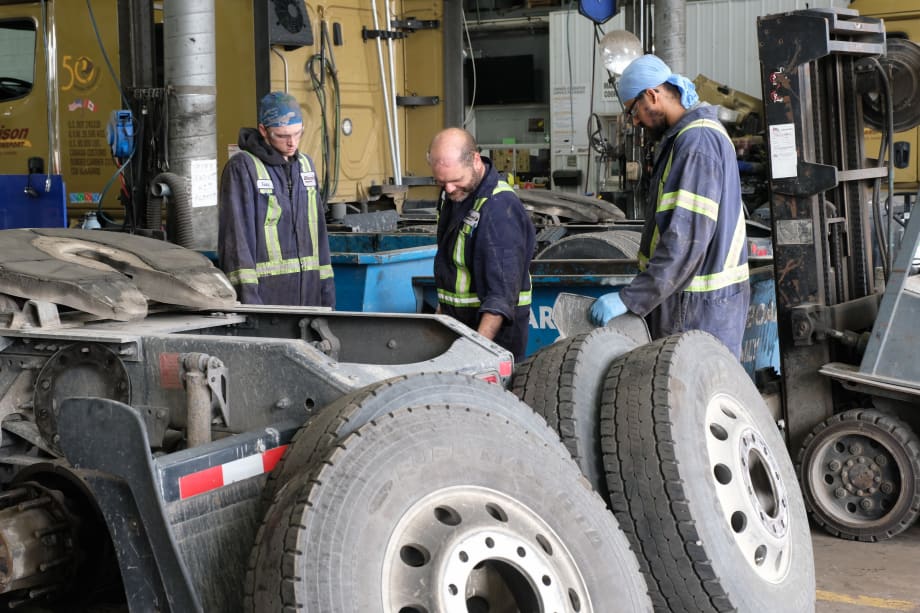
A new study sponsored by Fullbay found that repair shop profitability increases as the number of techs employed and services offered increases.
Photo: Jim Park
Fleets that depend on independent truck repair shops may be encouraged by findings in a new report that paints a picture of an industry that's changing to meet the changing needs of the trucking industry. They might not be as happy about trends in labor rates.
Fullbay, a provider of maintenance management technologies, has released its “State of Heavy Duty Repair Report.” The study surveyed more than 1,600 maintenance professionals in the freight, logistics and repair industries in order to determine the overall state of North American independent repair shops serving the heavy-duty trucking market.
“The diesel industry can be lucrative – but how much a shop earns can depend on many factors, like what services it offers, the number of techs on staff, and even where it’s located,” said Patrick McKittrick, CEO of Fullbay.
More Services, More Technicians, More Profit
Fullbay’s study suggests that, generally speaking, the more services a shop offers, the more profitable it its.
These services encompass any repair or maintenance service that better serves customers, according to the report. These include services such as mobile repairs, tire repair, and welding and fabrication, among others. The study found that shops offering only one service see average gross revenues between $250,000 - $2 million. In contrast, 28% of shops offering seven services crossed into the $4 million revenue threshold or higher.
Shops also generally saw revenue increase as they added technicians. The study found that growing from three to four technicians yielded a 40% increase in revenue. Likewise, growing from five to six or seven technicians continued to increase revenue in the shop.
Limiting a shop to one or two types of vehicles can severely impact a shop's revenue prospects, the study also found. Shops that can service four to six makes and models seem to be the sweet spot for the highest revenue potential.
That said, once shops begin servicing seven types of vehicles or more, their revenue potential drops to the same level as shops servicing three (or fewer) types of vehicles.
Technicians and Labor Rates
Fullbay found that 76% of shops surveyed raised labor rates in 2022. The report also noted that the more technicians a shop had, the higher the increase tended to be.
Shops with one to two technicians, for example, hiked their rates an average of $7.10 per hour. Shops with 21 to 40 techs raised their rates an average of $14.60 per hour. Many of these shops also boosted technicians’ hourly rates in 2022, the report found. Of the shops that raised their labor rates, a whopping 92% also boosted hourly pay for technicians.
The report also looked at how much revenue technicians generate – but found those figures varied according to geographic location and the overall labor rate. That said, Fullbay found that most technicians bring in between $5,000 and $20,000 per month. However, the report noted that in some select locations, technicians can bring over $40,000 per month.
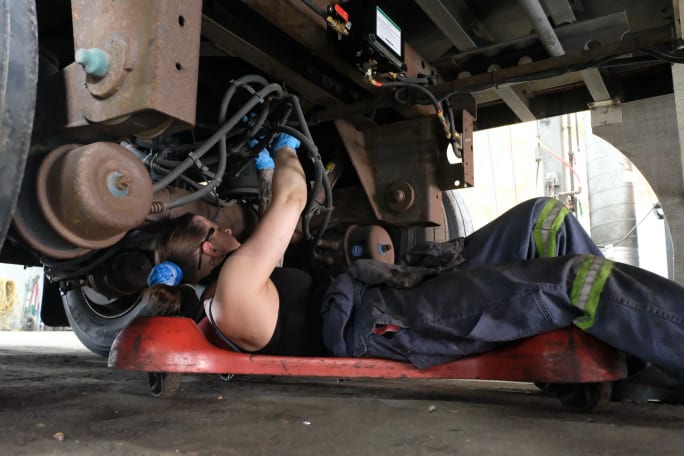
The study also found that technicians, on average, bring in between $5,000 to $20,000 in monthly revenue for the shops that employ them.
Photo: Jim Park
Most technicians (46%) are paid an hourly wage, the study found. It also noted – somewhat surprisingly – that the highest paid technicians are in the Southeastern U.S., averaging $46 per hour. The Southeast also led in terms of technicians who are paid salaries instead of an hourly wage. Technicians in the Southeast average earning (pre-tax) $7,434 per month.
The study also found that 49% of shop work is scheduled ahead of time, while 51% of work is as requested or emergency.
And it seems customers reward fast, accurate work. Shops report that over half the work they do — 59%, to be exact — is repeat business. Not surprisingly, shops over 30 years old and shops with four or fewer technicians seem to attract the most repeat business. The older shops, in particular, command high loyalty from their customers, reporting that of their customers, 77% had been in before for service.
General Growth Across the Board
The report also noted that independent heavy-duty repair shops are generally doing well. It found that in 2021, shops across continental North America averaged 34% growth over 2020. In 2022, shops grew 19% on top of that 34%.
While these numbers might suggest shops saw less growth in 2022, the report cautions that 2021 was largely a rebound year after the slump of 2020. It concluded that once shops had recovered from their pandemic troubles, they did continue to see steady growth.
The report found that the Southeast had the greatest year-over-year growth in 2022, with the Southwest and Midwest close behind.
Overall, the report paints a picture of an industry that is rapidly changing in order to deal with new technologies and customer need for expedited maintenance.
More Fleet Management

Color Match Smarter: Tools That Restore & Perform
For fleet managers and collision repair professionals keeping heavy-duty trucks on the road, getting the color right the first time isn't just about appearance — it's about efficiency, turnaround time, and bottom-line results. Discover how today's digital color tools are transforming the repair process from guesswork to precision.
Read More →
FMCSA Pauses Biennial-Update Enforcement Amid Motus Transition
Carriers whose updates were due on or after June 1 have more time, while FMCSA works to stabilize its new registration system and warns of phishing sites impersonating its new carrier registration system, Motus.
Read More →
2026 Blueprint for Countering Smarter Supply Chain Theft
Cargo theft is no longer just the cost of doing business. It's a multi-billion-dollar criminal enterprise exploiting vulnerabilities across your fleet, drivers, and supply chain.
Read More →


How Telematics Improves Visibility, Control, and Performance in Refrigerated Fleets
Explore how telematics help refrigerated fleets improve visibility, uptime, efficiency, compliance, and cargo protection across connected cold chain operations.
Read More →
What the U.S.-Canada Trade War Means for Trucking
Escalating U.S.-Canada tariffs could disrupt cross-border freight, reduce truck volumes, raise costs, and create new uncertainty for carriers on both sides of the border.
Read More →
What Are Trucking’s Top Concerns for 2026?
The American Transportation Research Institute wants to know what's worrying trucking fleet managers, drivers, and other stakeholders in its annual Industry Issues survey.
Read More →
American Trucking Associations Looks for a New Leader
ATA President and CEO Chris Spear abruptly left his job at the association on August 21, at a pivotal time for the trucking industry.
Read More →
Public Wi-Fi Cybersecurity Risks: How Truck Drivers and Fleets Can Protect Their Data
Public Wi-Fi can expose truck drivers and fleets to credential theft, malware, and other cyber threats. Here’s how to reduce the risk on the road.
Read More →
For Nicky Cupp, Fleet Innovation Starts With Frustration
HDT Truck Fleet Innovator Nicky Cupp turns everyday pain points at Fraley & Schilling into opportunities for better technology and smarter processes.
Read More →
Adam Buttgenbach’s Approach to Electric Trucks: Start With Where They Fit
HDT Truck Fleet Innovator Adam Buttgenbach helped PepsiCo build one of North America’s largest EV fleets by focusing on where electric trucks make operational sense.
Read More →