




Striking Port Truckers Return to Work
After a week of striking at port terminals and businesses across southern California, truckers from all of the affected companies have returned to work.

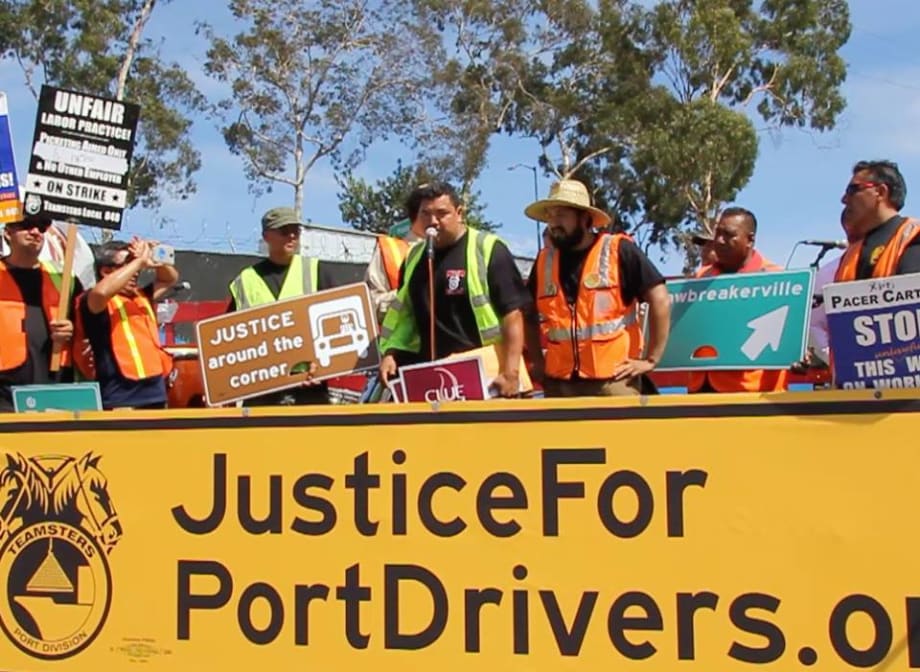
Drivers at four port trucking companies had been on strike since April 27. Photo via Justice for Port Drivers
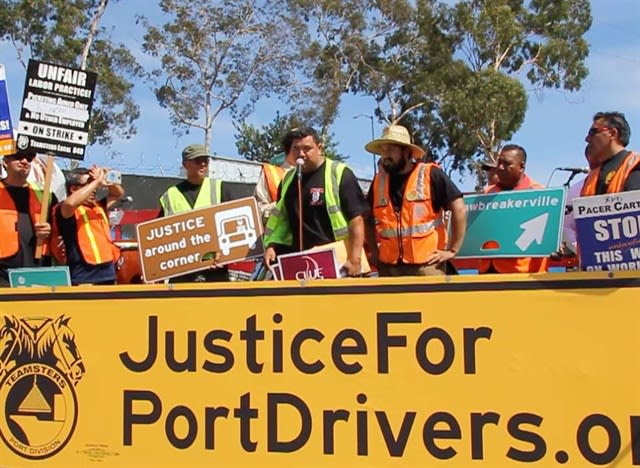
Drivers at four port trucking companies had been on strike since April 27.Photo via Justice for Port Drivers
UPDATED — After a week of striking at port terminals and businesses across southern California, truckers from all of the affected companies have returned to work.
Though no agreements were made between the striking truckers and their employers regarding their claim of misclassification as independent contractors, the drivers at Intermodal Bridge Transport, Pacer Cartage and Harbor Rail Transport ended their nearly week-long strike. Later in the day on May 1, drivers from Pacific 9 Transportation also agreed to return to work.
“The drivers have been on the picket line all week and they have not been able to earn any income,” said Barb Maynard of Justice for Port Truck Drivers. “They recognize that this is a long fight and they have gone back to work so they can continue to provide for their families.”
The strike may not be over for good, however, as the core issues that prompted the job action were not addressed.
“They fully expect to strike again if their companies don’t classify them as employees,” Maynard added.
The strike was able to disrupt operations at several companies, such as Walmart, Costco, Toyota, General Electric and Target, but port terminals were mostly kept running. The terminals were turning away trucks from the striking companies, which prevented the picketers from causing traffic backups.
The drivers believe they are improperly classified as independent contractors, accusing their employers of wage theft. The issue has come up several times at Southern California ports, leading to strikes and lawsuits. As a result, some companies have reclassified their drivers as full employees.
Updated to include new information on Pac 9 drivers ending the strike later in the day.
More Drivers
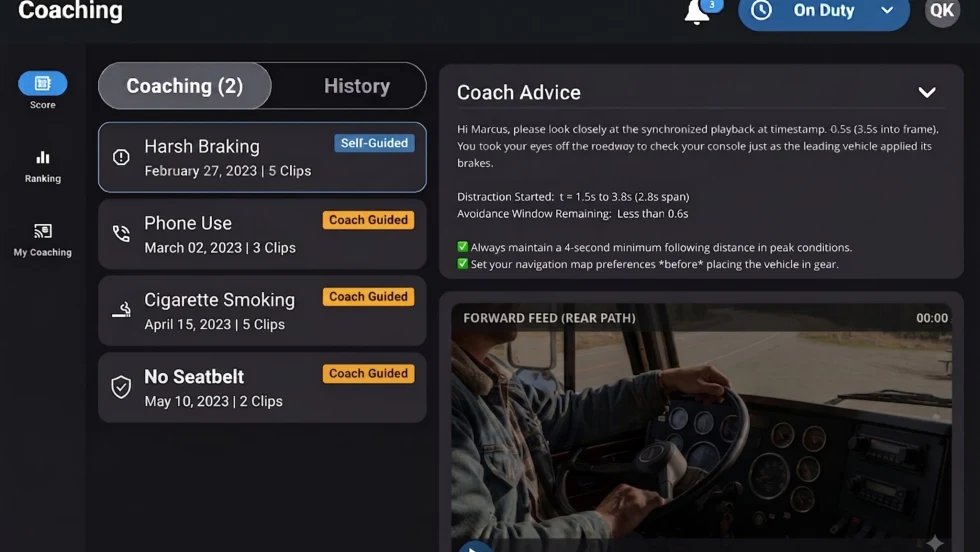
Platform Science Adds Dispatch and Safety Tools
Four additions to PS Fleet help fleets monitor loads, manage driver coaching, share truck locations and adjust video system settings.
Read More →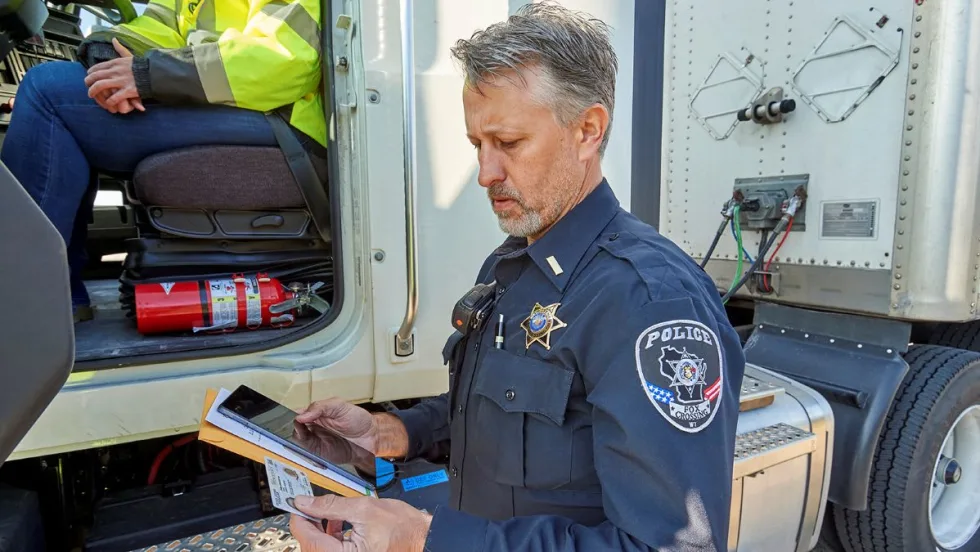
When Language Stops the Truck: The Return of ELP Out-of-Service Orders
English language proficiency rules for commercial drivers aren’t new, but renewed out-of-service enforcement has raised the stakes. Here’s what carriers need to know before a driver reaches a roadside inspection.
Read More →
Samsara Launches Custom AI Agent Builder
Agent Studio lets fleets create AI tools for hours-of-service monitoring, reporting and driver support, including agents that communicate by phone.
Read More →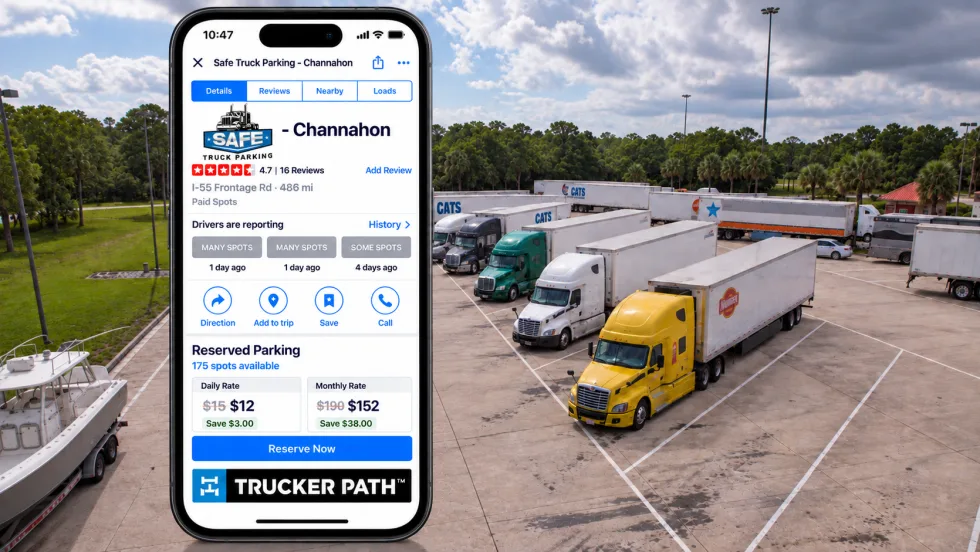
Trucker Path Expands Reserved Parking Network
Trucker Path has added close to 6,000 more truck parking spaces to its Trucker Path Reserved Parking Network with the addition of Safe Truck Parking.
Read More →
EEOC Sues Texas Trucking Company Over Driver Age Limits
The agency says Trancasa USA rejected applicants over 65 and applied tougher driving-record standards to those over 60.
Read More →
Nussbaum, Roehl Announce Second Driver Pay Increase This Year
This year has seen a swath of major truck driver pay increases as freight capacity has tightened.
Read More →
From One Generation to the Next: How Mentorship Builds Safer Truck Drivers
After three decades in trucking, Harold Perry shares what he's learned about driver safety, mentorship, and helping the next generation build confidence behind the wheel.
Read More →
Truck Drivers Need More Than Another Alert
Fleets have more visibility into truck health, safety events, and driver activity than ever. The next challenge is turning all that information into useful guidance for the person who has to decide what to do next.
Read More →
FMCSA Removes 110 Truck Driver Training Schools from Certified ELDT List
Federal regulators also are targeting more than 160 additional training providers and launching a nationwide audit of third-party CDL skills testers as part of a broader crackdown on trucking fraud.
Read More →
Hours of Service Pilot Programs: FMCSA Readies for 2027 Rollout
Two pilot programs could eventually reshape hours-of-service rules, giving truck drivers options to pause their 14-hour clock or use longer split sleeper rest periods.
Read More →