





Related: New Liftgate Helps Drivers Manage Extra-Large Items
Strick Elevator Allows 25% More Freight in a 28-Foot Pup Trailer
When a less-than-truckload client came to Strick Trailers with an idea to build a more efficient and productive pup trailer, Strick delved into the task and came up with the Elevator.
March 27, 2020
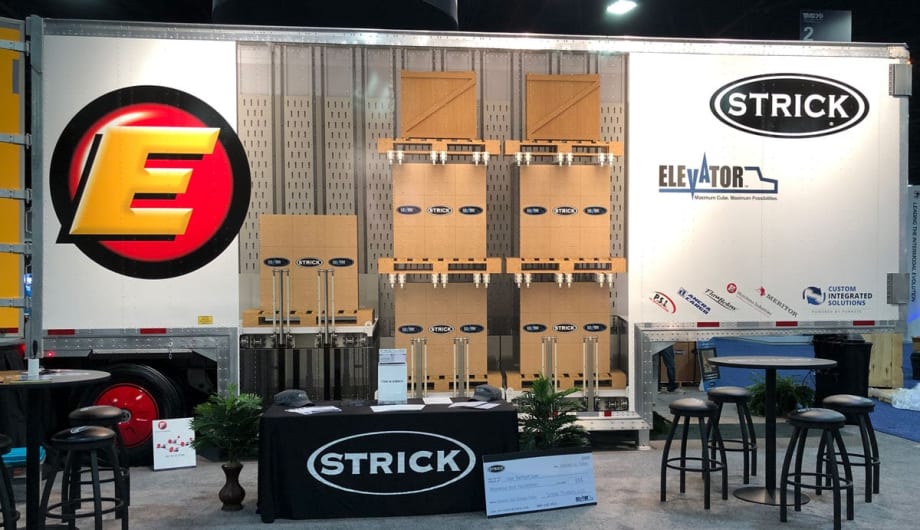
The Strick TMC display trailer featured graphics showing how three pallets could be stacked in the elevator portions of the trailer.
Photo courtesy Strick Trailers
3 min to read
When a less-than-truckload client came to Strick Trailers with an idea to build a more efficient and productive pup trailer, Strick delved into the task and came up with the Elevator, which it showed to fleets at the Technology & Maintenance Council annual meeting in late February in Atlanta.
“No problem or solution is too big; we were up to the challenge,” Director of Engineering Justin Bell told HDT.
This specialized 28-foot trailer has a motorized internal system to provide increased cargo space for operational efficiency. It uses the space between the axles, with three elevator platforms that drop the trailer floor segments from the regular floor level down to a level where three pallets can be fit in vertically instead of two – a triple-stack, allowing for six more pallets than a standard pup trailer – a 25% increase.
A forklift can drive right over the motorized sections to load the front section of the trailer. Once pallets are placed on each elevator section, that section is lowered so that additional pallets can be stacked on top, with the help of Ancra’s AutoDeck system.
Mike Palmer, vice president of fleet services for Estes Express, told HDT that the idea for using that space for cargo was not a new one, and in fact Carolina Freight had something similar that used a trap door – but it involved a lot of manual labor, and you couldn’t drive a forklift over it.
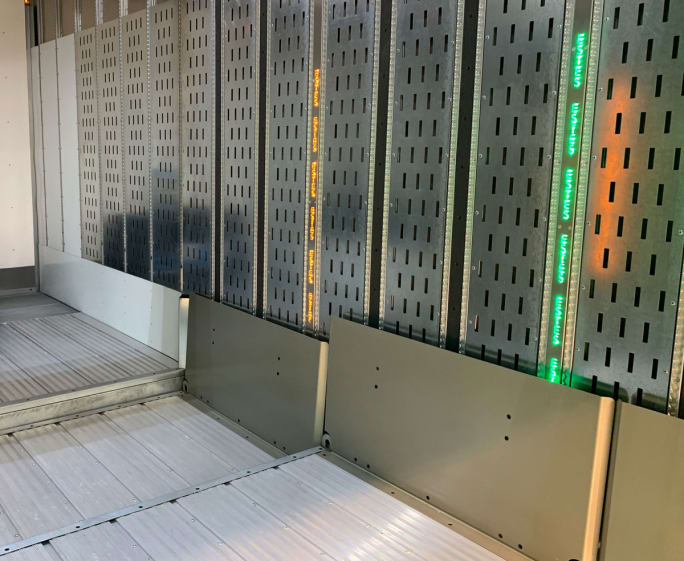
Warning lights show green when the elevator platforms are fully up, amber while they are moving, and red when they are down.
Photo: Deborah Lockridge
The “elevators” are three, 93-inch-wide, 50-inch-long aluminum platforms located in/above the drop section.
Bell explained that while Strick has an excellent engineering team on staff to handle its many custom trailer designs, for the electrical system, they turned to Purkeys. The resulting Elevator power system is designed to handle dual and triple trailer configurations. The elevator platforms are lifted and lowered via four synced 24V electric actuators, with the platform motion guided with an adjustable integral roller system. An Interior sidewall-mounted 24V control panel controls individual platform motion with individual lighted push buttons.
For safety, an integrated sidewall multi-light warning system indicates a stowed or unstowed platform position, as well as platform-in-motion scenarios – green lights mean forklifts can operate over the platforms like a regular floor. Red lights indicate the platform is lowered. Yellow lights indicate the platform is moving between those two states.
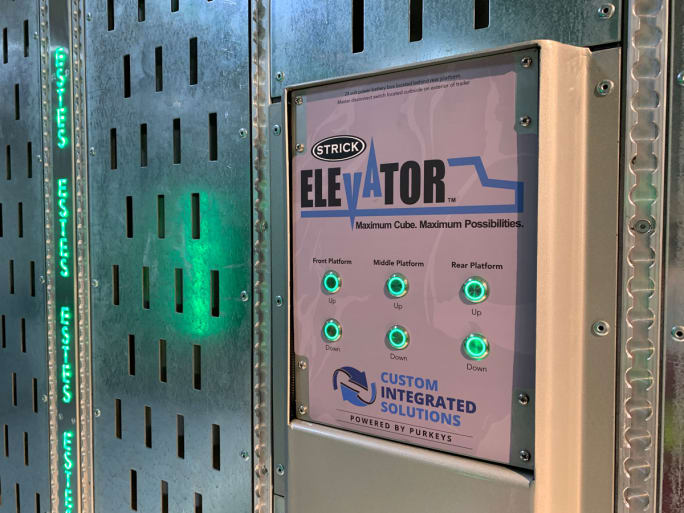
Strick worked with Purkey's to develop the Elevator electrical system.
Photo: Deborah Lockridge
A 7-way Custom Integrated Solutions nose box with optional single and/or dual pole charging plug maintains two onboard batteries, while a standard 200-watt solar charging system manages power levels to allow for loading and unloading with no tractor connection. The onboard 12V to 24V power converter reduces total current required for lifting loaded platforms.
Estes is taking delivery of the first two in the near future and will be testing them on a long run to California with the assistance of Strick engineers in the field. Palmer explained that this particular run offers more time for loading, which will be needed as compared to a standard trailer. The testing period will allow Strick to address any problems or bugs that may arise. “Any time you have moving parts, you have to consider maintenance,” Bell noted.
Palmer said if all tests well, Estes has a couple hundred more runs where this trailer would work for his operations.
Strick said the Elevator concept, because it allows more cargo on one trailer, can decrease the number of tractors, trailers and drivers needed in a fleet. And because it essentially has a built-in trailer skirt, that’s another savings. Although the system does add weight to the trailer, this solution is likely more appealing for freight that cubes out before it weighs out.
The company said the Elevator trailer can be configured to meet the unique needs of many different types of operations.
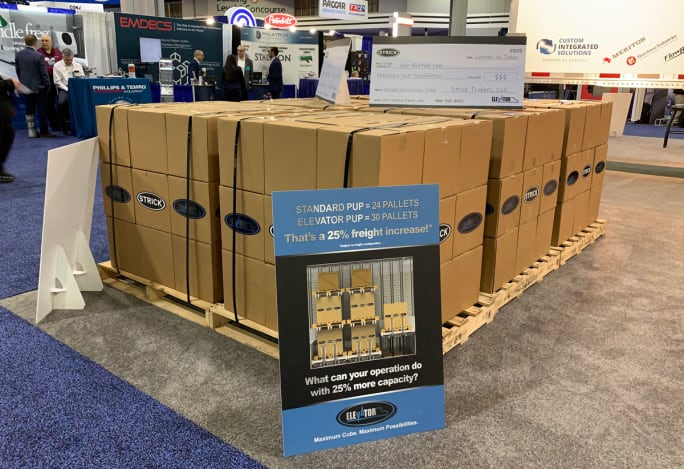
The Strick TMC booth showed how much additional freight could be loaded into the Elevator pup trailer.
Photo: Deborah Lockridge
More Equipment
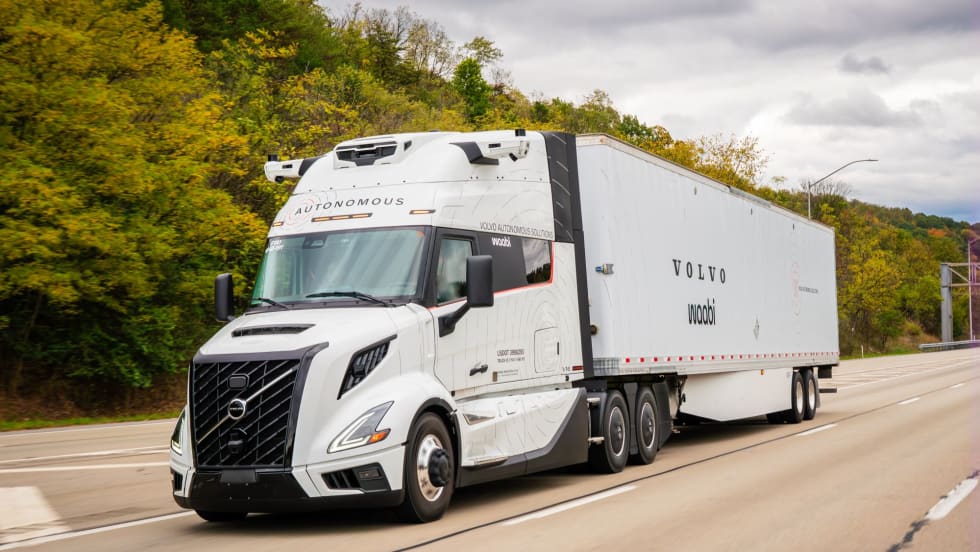
Waabi, Volvo Claim Breakthrough in Scaling Autonomous Trucking
Waabi says its AI-powered virtual driver successfully transferred to Volvo Autonomous Solutions' Volvo VNL Autonomous platform without retraining or additional data, a milestone the companies say could dramatically accelerate commercialization of autonomous trucks.
Read More →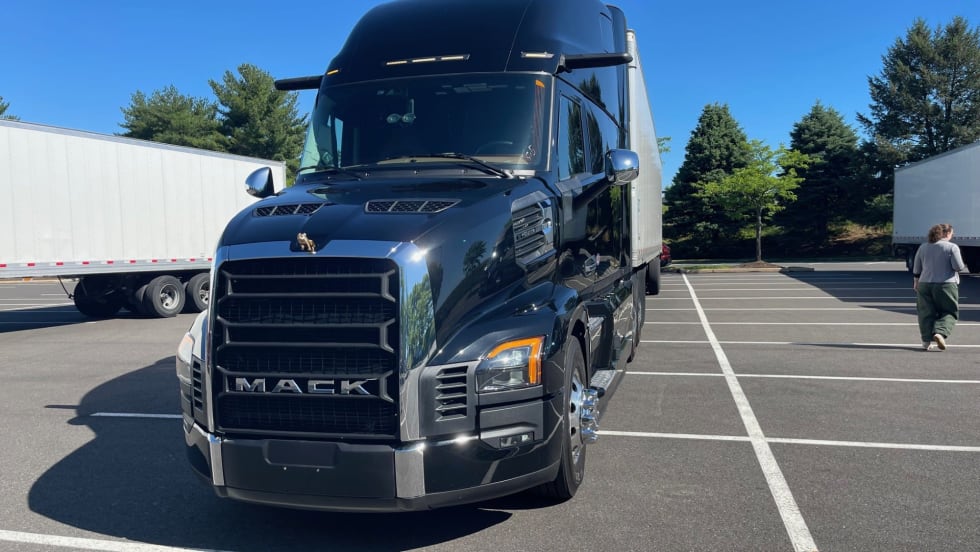
Why the Mack Pioneer Signals a New Era in Class 8 Truck Design
After a public-road drive through eastern Pennsylvania, one thing became clear: Mack's new Pioneer isn't simply packed with technology -- it's been engineered around the driver in ways that could redefine long-haul trucking.
Read More →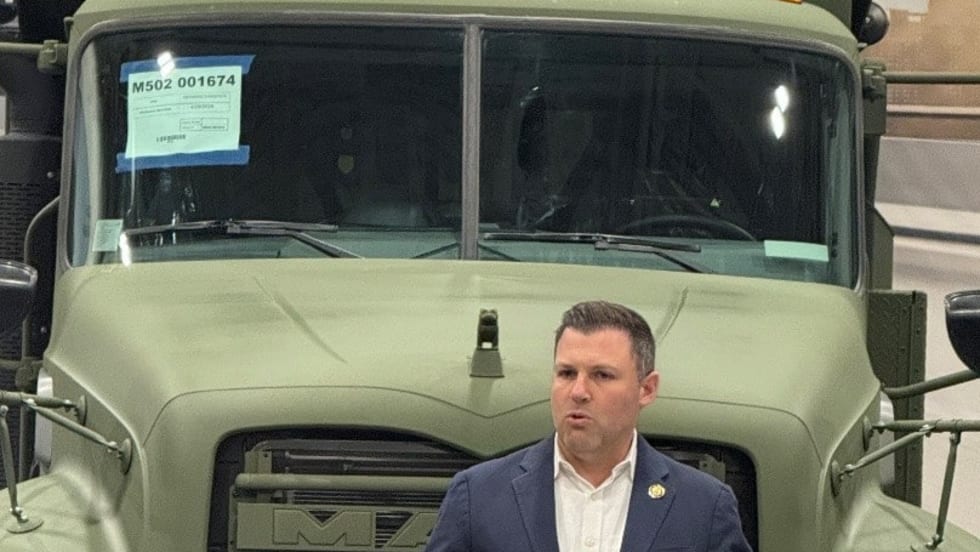
Mack Defense Secures $47 Million to Continue Military Dump Truck Production
President Trump visited Mack Defense’s Macungie, Pennsylvania, facility on June 23 to tout a $47 million Heavy Dump Truck order.
Read More →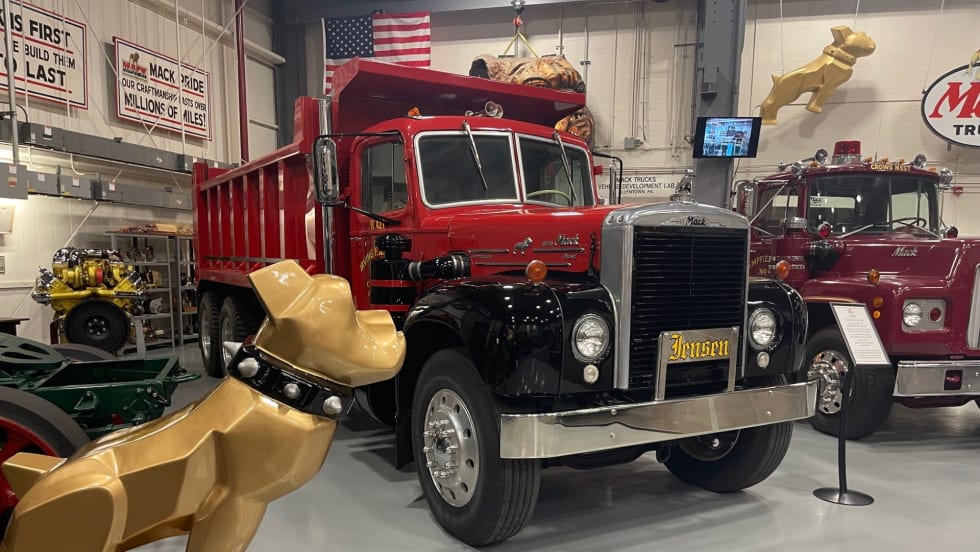
New (Antique) Trucks Take the Spotlight at the Mack Trucks Museum
The Mack Trucks Historical Museum has a slate of new historic vehicles on display this year.
Read More →
WEX, TFS Launch Equipment Financing Program for Trucking Fleets
The companies say the program uses technology to connect fleets with financing providers more efficiently than traditional lending channels.
Read More →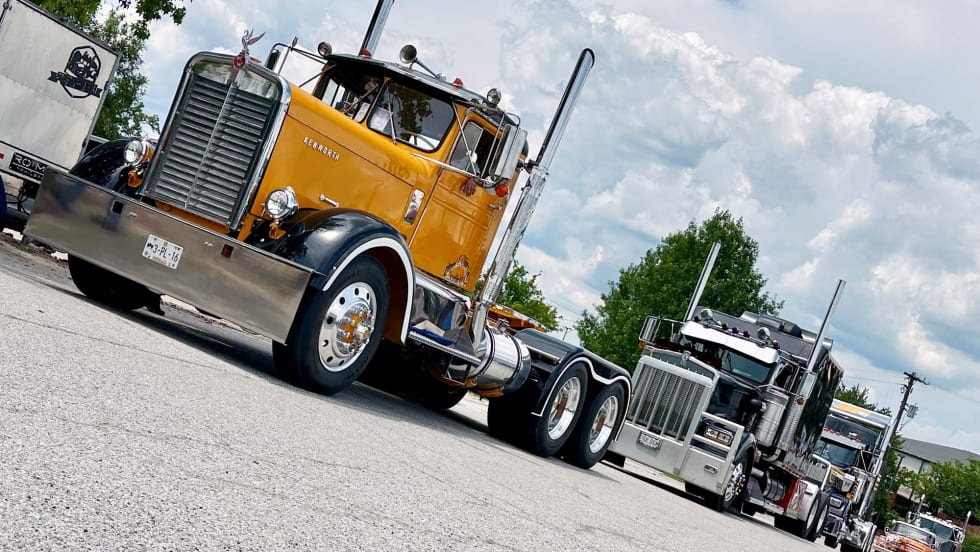
Historic, Vintage, and Antique Trucks at the 2026 ATHS Convention
More than 500 trucks were on display, indoors and out, at the 2026 American Historical Society annual convention in Springfield, Missouri.
Read More →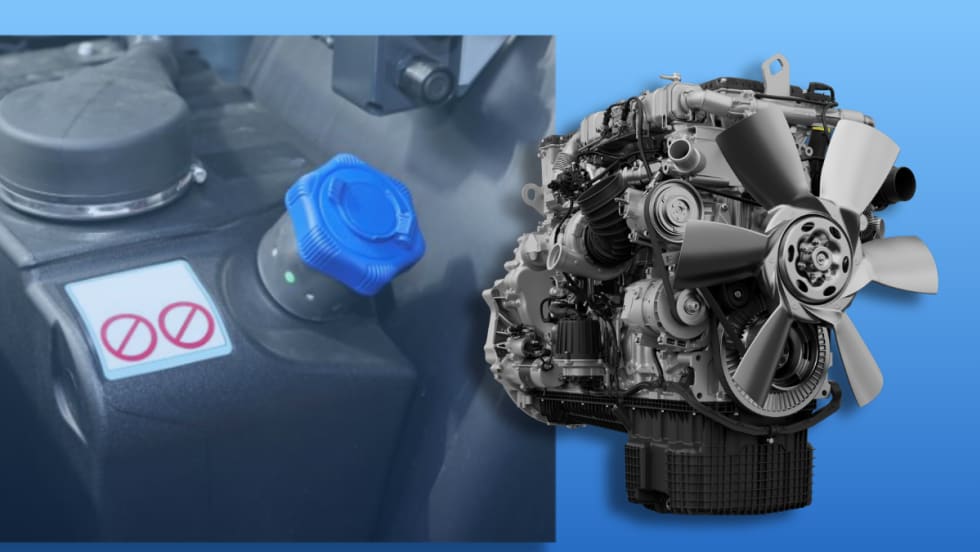
DTNA Software Update Gives Truckers More Time Before DEF Derates Take Effect
The changes reflect EPA guidance aimed at reducing downtime caused by emissions-system faults while maintaining compliance requirements.
Read More →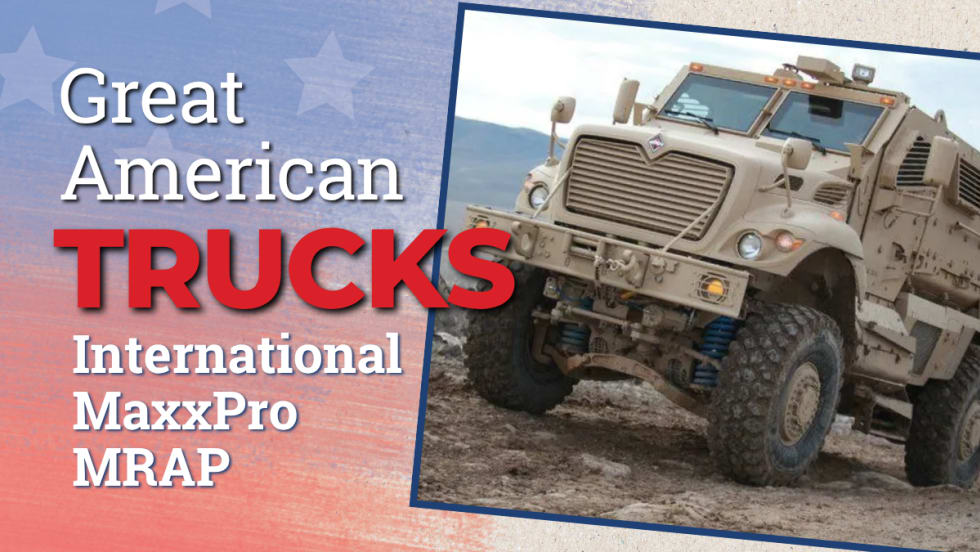
Great American Trucks: The International MaxxPro MRAP
Built from an International WorkStar chassis and powered by a MaxxForce diesel, the MaxxPro MRAP became one of the most important military trucks of the Iraq War era.
Read More →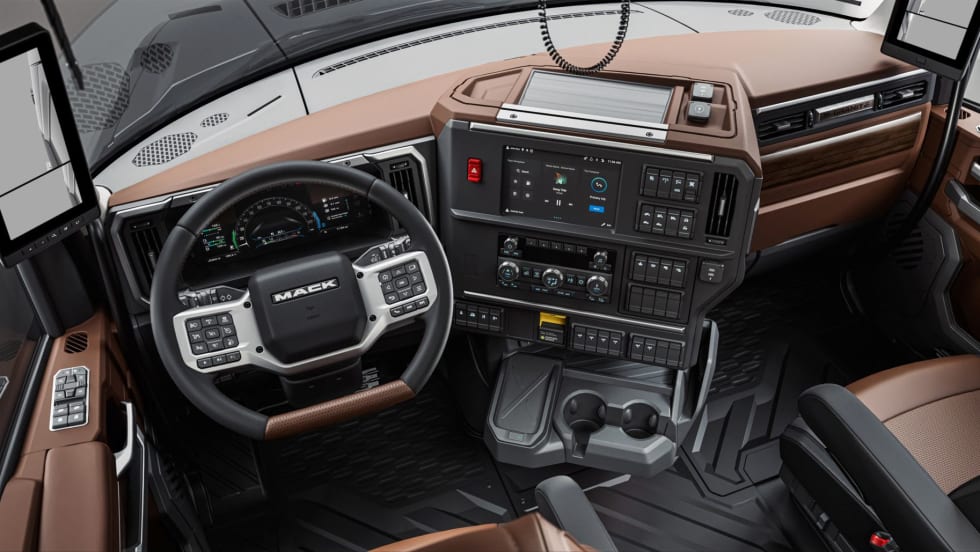
New Mack Granite Cab Puts Driver Comfort Front and Center
Mack’s next-generation vocational truck features a roomier cab, premium seating, advanced steering technology, and a driver-focused interior designed with direct input from professional operators.
Read More →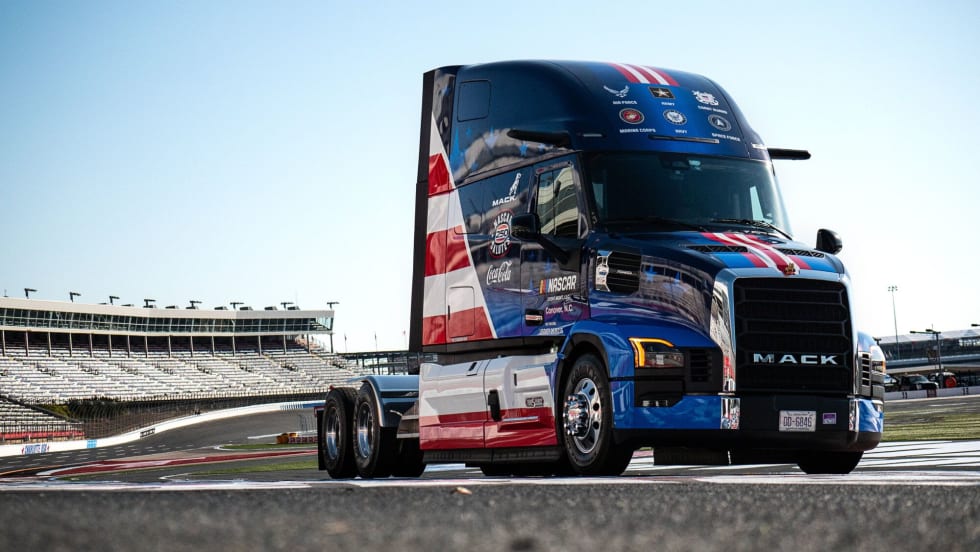
Mack Unveils Fan-Selected Patriotic NASCAR Pioneer Wraps
Racing fans picked the patriotic design now featured on three Mack Pioneer trucks hauling NASCAR equipment across the country during the 2026 season.
Read More →