




Economic Watch: Employment, Factory Activity, and a Possible Drag on GDP
The number of overall job additions in the U.S. slowed in December as the trucking industry shed some positions, while separate reports show a bit of softening in the factory sector, amid a new concern about the overall economic performance in the final part of 2017.


The number of overall job additions in the U.S. slowed in December as the trucking industry shed some positions, while separate reports show a bit of softening in the factory sector, amid a new concern about the overall economic performance in the final part of 2017.
Employers added 148,000 non-farm jobs in December, according to the Labor Department, well below analysts’ expectations and down from an upwardly revised November level of 252,000. The unemployment rate remained unchanged at 4.1%.
The biggest job gains occurred health care, construction, and manufacturing, with job losses in the retail sector. The for-hire trucking sector reported 600 fewer jobs in December, while the wider transportation and warehousing category had 1,800 job additions.
Some slowing in job gains was anticipated, given that November and October were thought to have been temporarily boosted by a recovery from hurricane-related weakness in September, according to Paul Ferley, assistant chief economist at RBC Economics Research.
“December’s payroll gain is sufficiently strong to keep gross domestic product growth at an above-potential rate near-term at a time when the economy is likely pressing capacity limits,” he said.
The report follows one from payroll processor ADP reporting 250,000 non-farm, private sector jobs were added in December. It also revised slightly downward the November addition of jobs to 185,000.
Factory Orders, Shipments Show Continued Strength Despite Investment Dip
Meantime, a report from the Commerce Department showed factory orders in the U.S. increased for the fourth straight month in November – but investment in business equipment seemed to be cooling.
New factory orders were 1.3% higher than the month before, following a 0.4% rise in October. Shipments of factory made goods increased 1.3% in November, the 11th increase in the past 12 months.
In contrast, orders for non-defense capital goods minus aircraft, an indicator of business investment, fell 0.2% in November, following a 0.8% gain in October. Shipments of these so-called core capital goods fell 0.1% in November after they surged 1.2% in October.
Despite the drop in the core capital goods category in November, the three-month average annualized growth rate for core capital goods orders is now 17.9%, Wells Fargo Securities noted -- the fastest clip in about three years. At the same time, shipments are up 14.2% at a three-month annualized rate.
It also pointed out a few days earlier, the ISM manufacturing survey showed a jump in new orders to the fastest pace of expansion since 2004.
“In 2014, a drop in ISM new orders was a head fake, but soft orders in 2014 and 2015 were energy-related after a drop in oil prices. This time, manufacturing appears poised for a more sustainable increase,” said Tim Quinlan, senior economist at Wells Fargo Securities.
4th Quarter GDP Expected to Take Hit From Trade Deficit
Despite these good overall reports about employment and manufacturing, another report from the Commerce Department signaled what may turn out to be a bit of a drag on the economy when fourth quarter 2017 numbers are released.
The U.S. trade deficit widened to $50.5 billion in November from $48.9 billion in October. a bit higher than most analysts had expected and the first time that it has exceeded $50 billion since March 2012.
That’s because although exports of goods and services jumped by 2.3% in November, imports were also up 2.5%. While increased exports push gross domestic product (GDP) performance higher, more imports drag the GDP figure down.
For more insight into the potential for the GDP numbers, you have to look at the “real trade deficit,” meaning price-adjusted terms. This enters directly into calculations of real GDP growth, explained Kay H. Bryson, global economist at Wells Fargo Securites.
“Real net exports of goods and services provided modest positive contributions to overall GDP growth in the first three quarters of 2017, but it appears that the string will end in the last quarter of the year, because real net exports of goods deteriorated significantly in October and again in November,” he said. "If real exports and real imports in December remain at their respective November levels, then real net exports would slice more than one percentage point off of the topline GDP growth rate in the fourth quarter.”
Although Bryson said Wells Fargo does not expect that the overall drag will be quite that large, real net exports likely exerted significant headwinds on overall GDP growth in the fourth quarter of 2017, and there could be a modest drag from trade on the GDP for the next few quarters.
More Fleet Management
Motive Adds AI Agents for Fleet Operations
New tools automate follow-up on fleet data, from maintenance work orders to driver alerts, with two-way voice conversations planned for later this year.
Read More →
Can You Beat Our Trucking Trivia Challenge?
Test your truck knowledge with 19 trivia questions from Heavy Duty Trucking Exchange. Can you keep up with the fleet pros?
Read More →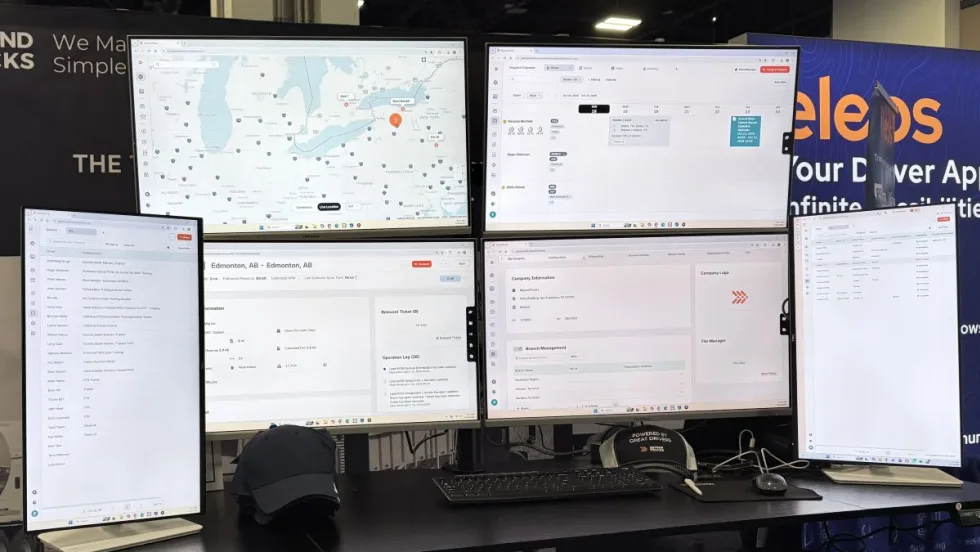
BeyondTrucks Adds Rules Checks to Dispatch
New Compatibility Engine checks driver qualifications, equipment requirements and fleet policies before loads are dispatched.
Read More →
Diesel Prices Hijack Trucking’s Worry List
ATRI’s annual survey finds cautious optimism about freight, but diesel costs, litigation, and insurance continue to squeeze fleets. Drivers have different priorities on several issues.
Read More →
Nomination Deadline Extended for HDT Emerging Leaders
Just a few more days to nominate accomplished trucking fleet professionals under 40 who are making an impact and helping lead the industry forward for the HDT Emerging Leaders award. Deadline extended to October 20!
Read More →
What Will ATA’s New Leader Bring to Trucking's Table?
Incoming President and CEO Mark Colson’s record in Alabama offers clues about his priorities and approach following Chris Spear’s abrupt departure as the head of the American Trucking Associations.
Read More →
Volvo, Waabi Start Commercial Autonomous Operations in Texas
Volvo VNL Autonomous trucks, powered by the Waabi Driver, are hauling freight directly to third-party facilities for a customer in Texas.
Read More →
Samsara Launches Custom AI Agent Builder
Agent Studio lets fleets create AI tools for hours-of-service monitoring, reporting and driver support, including agents that communicate by phone.
Read More →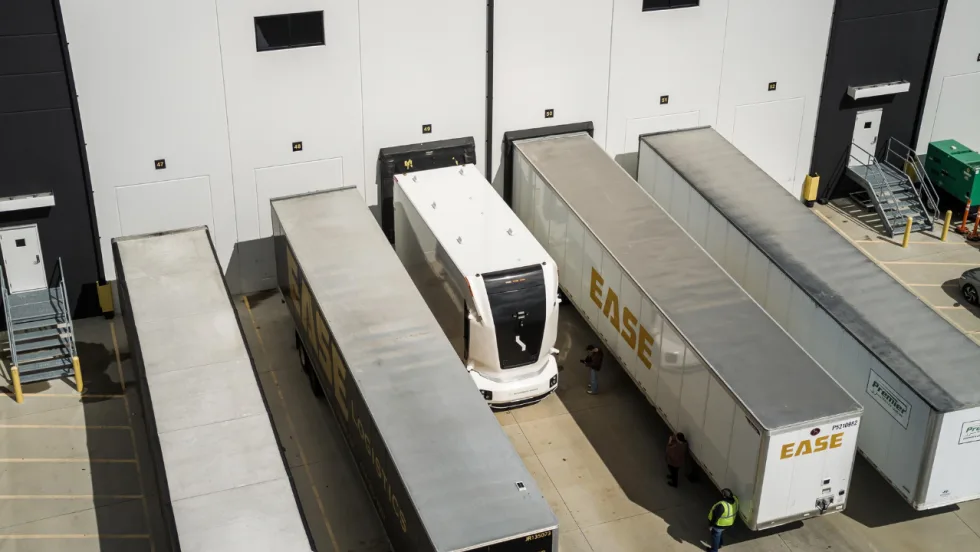
Einride Driverless Electric Trucks Begin Daily Freight Operations in Ohio
Two cabless electric trucks are hauling freight between EASE Logistics facilities in Marysville, Ohio, as part of a multi-state truck automation project.
Read More →
Geotab Links Fleet Card to Vehicle Data
The new card combines fuel discounts with telematics-based purchase controls. Geotab’s analysis also points to potential savings from choosing lower-priced fuel stops.
Read More →