




Report: Fund Freight Infrastructure Beyond Highway Trust Fund
A new research report strongly advocates for greater funding of transportation infrastructure investments what is now covered by Highway Trust Fund allocations. It also stresses the value of projects designed to support multiple transportation modes.


Image: U.S. DOT

A new research report strongly advocates for greater funding of transportation infrastructure investments what is now covered by Highway Trust Fund allocations. It also stresses the value of projects designed to support multiple transportation modes.
Release of the “The State of Freight II—Implementing the FAST Act and Beyond” report, co-authored by the American Association of State Highway and Transportation Officials and the American Association of Port Authorities, marks the one-year anniversary of the passage of the Fixing America’s Surface Transportation (FAST) Act highway bill.
The report aims to be a “blueprint for state DOTs, Congress and the new [Trump] administration to address the critical freight infrastructure needs of our nation,” said AASHTO President and MaineDOT Commissioner David Bernhardt.
“One of my top priorities as AASHTO president is to focus on intermodal freight capacity constraints and work collectively to improve the vital connections between rail, ports, intermodal facilities and the national surface transportation system necessary to meet the projected demand in population growth and freight movement over the coming decades.”
Kurt Nagle, AAPA president and CEO, said the report gives a “comprehensive national overview of where states are collectively in developing state freight plans, one year after the FAST Act was passed.”
The two associations contend that while states are making progress, improvements to critical freight infrastructure have not kept pace with current and future demands. The report includes several recommendations to leverage private-sector investment and “move lawmakers to provide additional and ongoing funding resources outside of the Highway Trust Fund.”
Based on compiling and analyzing results from a combined AASHTO- AAPA survey completed in November, the report delves into how states fund freight-specific investments through state-dedicated or discretionary funding, and how these funding sources can potentially work with federal freight investments.
For example, the survey found that 71% of states have state freight plans that they are actively working to make compliant with the FAST Act compliant. Additionally, 57% of states have targeted more than 6,200 freight projects for inclusion in their state freight plans, while 35% have identified a combined $259 billion in costs for their state’s freight plan projects.
The associations also noted that of the 50 state departments of transportation and the District of Columbia’s, 12 have direct relationships with one or more ports in their state. What’s more, 38 states are connected by navigable waterways and/or marine highway routes, “which creates opportunities and obvious synergies for close DOT/port relationships.”
To help states plan sustainable investments in a national freight network, AAPA and AASHTO recommend in the report that these steps be taken:
Have the U.S. Department of Transportation continue providing Highway Trust Fund allocations to states for highway freight projects through the National Highway Freight program
Have the USDOT coordinate its Build America Bureau and freight advisory committees with state freight plans to better leverage private-sector investment
Request that Congress provide additional and ongoing funding resources outside of the HTF for the overall multimodal freight network in such a way it can supplement highway formula dollars and fund discretionary grant programs
Move the Harbor Maintenance Tax (HMT) from discretionary to mandatory spending to enable all the revenues from HMT collections to be used for maintenance of deep-draft navigation channels and providing more equity
During a Dec. 6 conference call with reporters, AASHTO Executive Director Bud Wright pointed out that while the FAST Act authorizes $11 billion to be spent on freight infrastructure over a five-year span, “a lot more will be needed just for the over 6,200 freight projects targeted by states. “That’s why we’re urging lawmakers to provide additional and ongoing resources outside of the Highway Trust Fund to fund freight programs.”
AAPA’s Nagle told reporters that a combination of federal, state, local and private-sector investments will be needed to bridge the funding gap. “President-elect Trump has talked very vocally about his desire to rebuild infrastructure – discussing an up to $1 trillion package with Congress,” he said. “I think there is a new recognition by Trump and Congress that we need to invest not just in overall infrastructure, but in transportation, specifically in freight transportation, if we are to compete internationally.”
More Fleet Management

How Innovative Trucking Leaders Turn Change Into an Advantage
As the pace of change accelerates in trucking, the fleets that adapt best have more than the latest technology. They have cultures that embrace improvement.
Read More →
Freight Broker Bonds Just Got Harder to Get. Here's What That Means for Your Fleet.
When it gets harder for a freight broker to prove they are financially sound, the ones who cannot clear that bar get pushed out of the market. And those are exactly the brokers who used to leave motor carriers holding the bag.
Read More →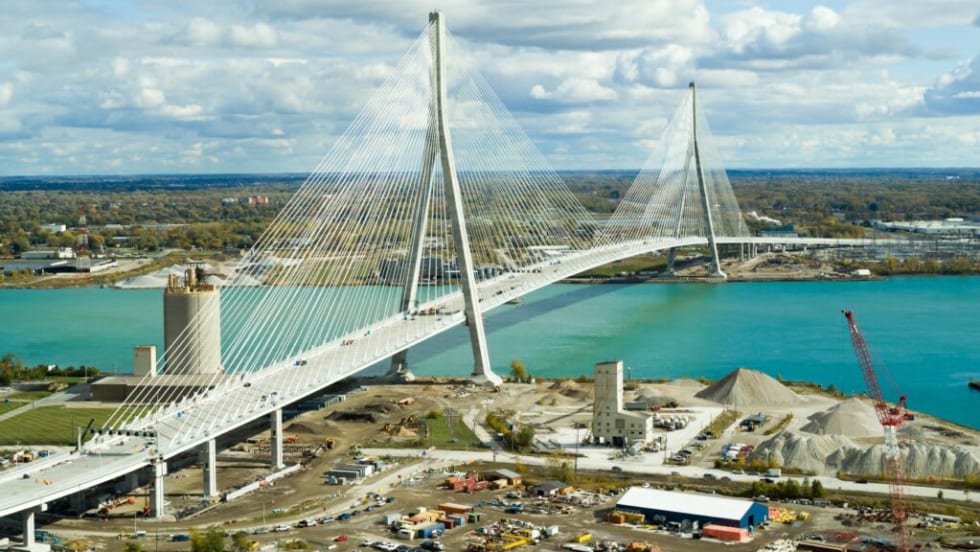
Long-Awaited Canadian Border Bridge to Open in Detroit
For trucking, the bridge opening should offer immediate improvements in efficiency and reliability, with new customs facilities, expanded inspection capacity, and direct freeway-to-freeway connections.
Read More →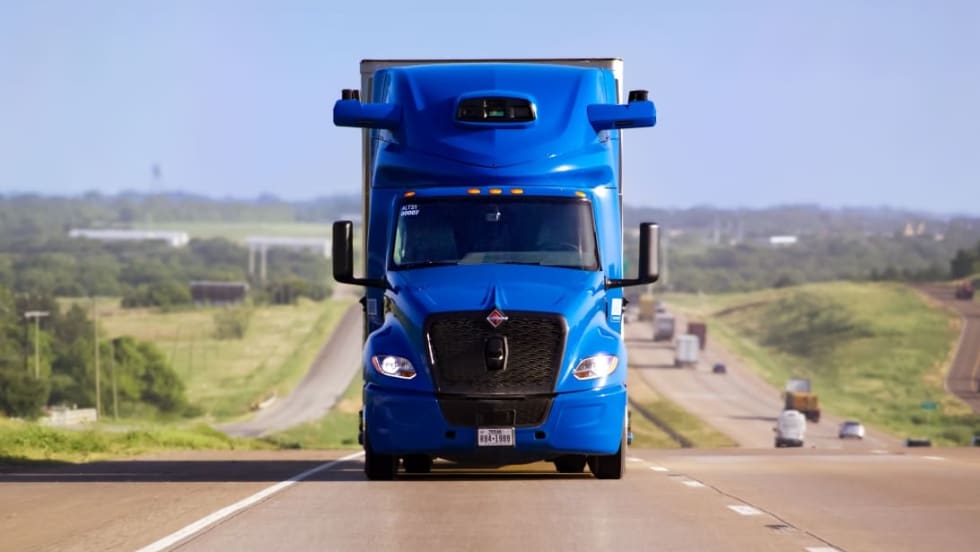
Aurora Rolls Out Next Generation of Driverless Trucks for Commercial Freight
Aurora's latest autonomous trucks it's rolling out with International feature lower-cost hardware designed for a million miles as the company expands commercial driverless freight operations across the U.S. Sun Belt.
Read More →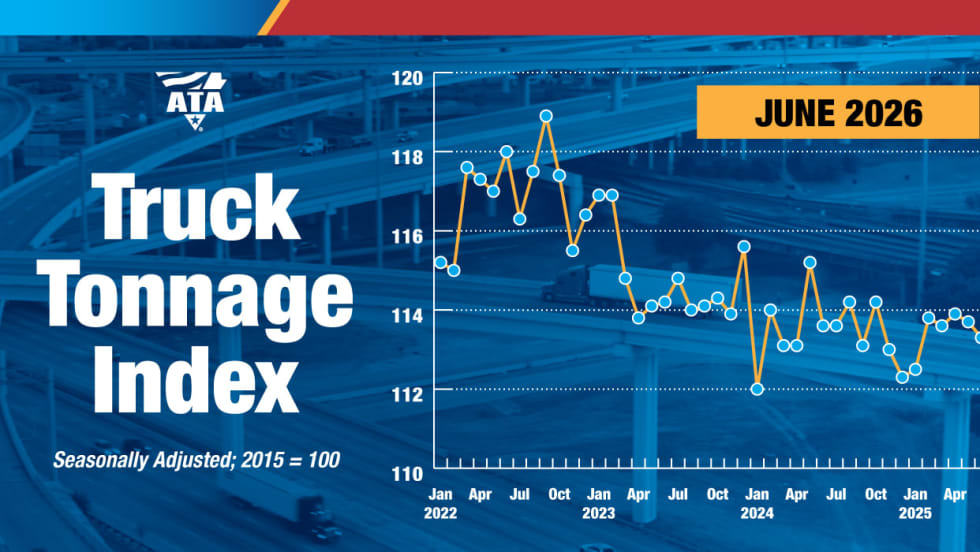
Freight Tonnage Down, Rates up, as Lower Capacity Powers Trucking Recovery
The recovery from the freight recession continues to be driven by reduction in capacity rather than by increased demand.
Read More →
Think Your Trucking Fleet Isn't Using Much AI? Think Again
Shadow AI — the use of unauthorized artificial intelligence tools at work — is becoming increasingly common, putting sensitive company data at risk. Learn how trucking fleets can protect sensitive data while embracing AI.
Read More →
ArcBest Consolidates Brands, Cuts Workforce
The company will bring three business units under the ArcBest brand, eliminate about 2% of positions, and expects the changes to generate $40 million in annual savings.
Read More →
Trucking Fleets Faced Record Operating Costs During Third Year of Freight Recession
ATRI's annual operational cost report shows carriers trimmed fleets, delayed equipment purchases, and ran older trucks as expenses continued to outpace freight rates.
Read More →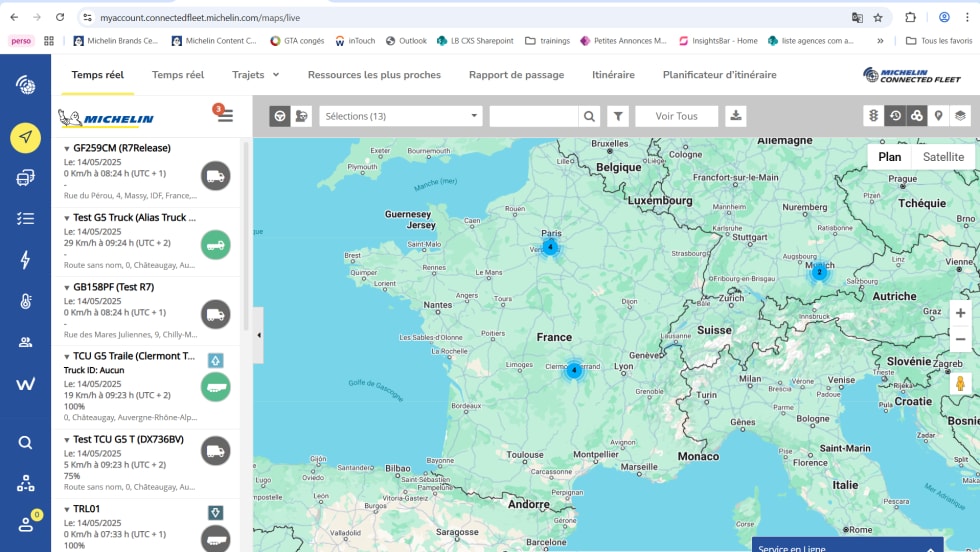
Michelin Adds AI Assistant to MyConnectedFleet Platform
Michelin’s new generative AI tool delivers instant fleet insights, helping managers analyze fuel use, tire maintenance, vehicle status, and operational performance without manually creating reports.
Read More →
LytxOne Platform Now Features AI, Compliance, and Asset Tracking Tools
New enhancements add AI-powered insights, asset tracking, compliance automation, and configurable privacy controls to Lytx's all-in-one fleet management platform.
Read More →