




Study: Distracted Driving a Growing Problem Along Part of I-95
A new report shows distracted driving is a growing problem along a section of one of America’s most heavily travelled routes.


A new report shows distracted driving is a growing problem along a section of one of America’s most heavily travelled routes.
In a second annual report on distracted drivers on Interstate 95 in Northern Virginia, the number of frequent I-95 drivers likely to use their cell phone while driving has increased from 56% in 2013 to 62% this year.
The report is from the motorist group AAA Mid-Atlantic, along with two companies involved in a construction project in Northern Virginia. It is based on a survey of 1,023 drivers who live in the area and frequently travel the route.
It also found the number of distracted drivers on I-95 who have had a traffic incident or near-miss as a result of their behavior has increased from 24% in 2013 to 31% in 2014.
Fifty-four percent of all distracted drivers on I-95 say they are at least occasionally responding to a work-related issue. These responders are 10% more likely than non-work responders to have an incident or near miss behind the wheel, according to the study. It also found work responders are also more likely than non-work responders to read texts, write texts and read/respond to emails.
The top reasons distracted drivers respond to work-related issues on I-95 include:
The belief that an immediate response is expected, at 31%,
The desire to multitask/save time, at 27%,
The need to check that the issue is not an emergency, at 17%.
Just 18% of area drivers say their employer has a policy regarding the use of cell phones while driving.
Despite major construction activities along I-95 in Northern Virginia, just 18% of I-95 drivers have specifically opted to not read or write texts or emails in the I-95 construction zone. Only 11% say that they no longer talk on a cell phone in the construction zone.
More Fleet Management
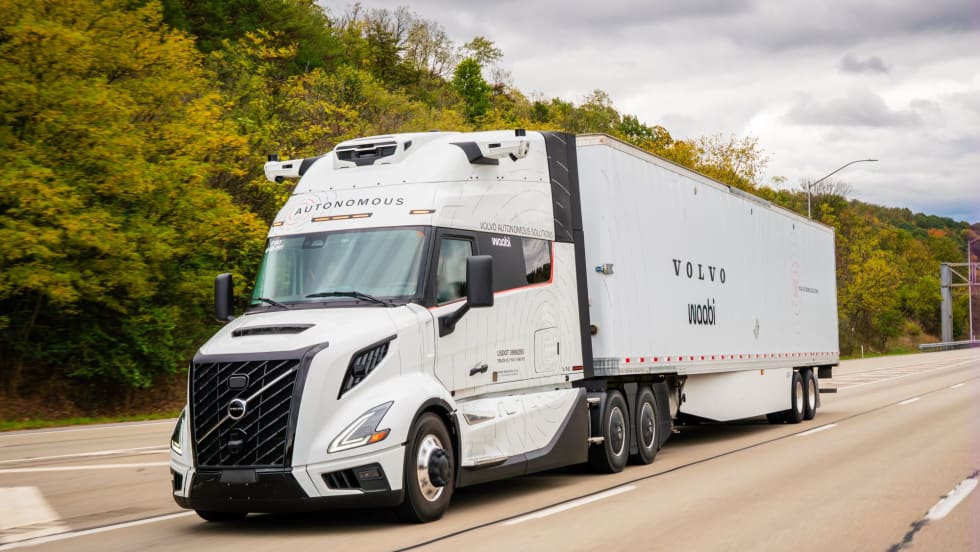
Volvo, Waabi Start Commercial Autonomous Operations in Texas
Volvo VNL Autonomous trucks, powered by the Waabi Driver, are hauling freight directly to third-party facilities for a customer in Texas.
Read More →
Samsara Launches Custom AI Agent Builder
Agent Studio lets fleets create AI tools for hours-of-service monitoring, reporting and driver support, including agents that communicate by phone.
Read More →
Geotab Links Fleet Card to Vehicle Data
The new card combines fuel discounts with telematics-based purchase controls. Geotab’s analysis also points to potential savings from choosing lower-priced fuel stops.
Read More →

How MFA Helps Protect Trucking Fleets
Multi-factor authentication adds protection when passwords are stolen. Here’s how it works and where fleets should start.
Read More →
How Better Freight Data Helps Trucking Teams Get Ahead of Disruption
Trucking and logistics teams have plenty of data. The problem is getting the right information in front of the right people soon enough to act. Better-connected data can help teams spot trouble earlier and make smarter decisions before small problems become big ones.
Read More →
Trimble: Taking Artificial Intelligence in Trucking Beyond Faster Tasks
At Insight 2026, Trimble executives argued that fleets may need to redesign workflows to get more from AI as it introduced new products and enhancements. AI’s value will depend on how fleets combine automation with their people's knowledge.
Read More →
Build a bulletproof fleet: Uniting ELDs and dash cams for total compliance
An ELD can prove compliance, but it cannot always prove what happened on the road. Discover how uniting accurate ELD data with AI-powered dash cam video can help your fleet strengthen compliance, defend against liability, protect drivers and reduce operational costs.
Read More →
Nominations Open for HDT Emerging Leaders
Heavy Duty Trucking is looking for accomplished trucking fleet professionals under 40 who are making an impact and helping lead the industry forward.
Read More →
Why Private Fleets Are Taking More Freight
Private fleets are putting their own trucks on demanding customers and high-cost lanes as companies seek greater control over service, costs, and capacity.
Read More →
Color Match Smarter: Tools That Restore & Perform
For fleet managers and collision repair professionals keeping heavy-duty trucks on the road, getting the color right the first time isn't just about appearance — it's about efficiency, turnaround time, and bottom-line results. Discover how today's digital color tools are transforming the repair process from guesswork to precision.
Read More →