




Standoff over Mexican Trucks Resumes with Pilot Program Announcement
Repeating the pattern that has been established over the past decade and longer, opponents of long-distance trucking across the Mexican border moved quickly yesterday to restrain the latest plan to open the border. Within hours of the

Repeating the pattern that has been established over the past decade and longer, opponents of long-distance trucking across the Mexican border moved quickly yesterday to restrain the latest plan to open the border.
Within hours of the Department of Transportation announcing that U.S. Secretary Ray LaHood and Mexican Secretary Dionisio Perez-Jacome had signed an agreement to go ahead with the pilot program, the Owner-Operator Independent Drivers Association reported that it has sued to halt the program and several congressmen introduced legislation to limit the program.
The three-year pilot program sets up a vetting and enforcement program to ensure the safety of Mexican trucks, with the goal of evaluating their safety performance, based on inspections at the roadside, ports of entry and weigh stations, and on traffic enforcement. Hazardous materials and passenger carriers are not included in the program.
It's the newest version of a story that has been going on since the United States and Mexico signed the North American Free Trade Agreement in 1994. In past versions the administration in office, Democrat or Republican, diligently looked for ways to implement the cross-border trucking provision of NAFTA while the Teamsters union, OOIDA, safety advocacy groups and environmental groups just as diligently looked for ways to scuttle the plan.
What's different this time is that Mexico has upped the ante by levying retaliatory tariffs on 99 U.S. products. That tactic, which is costing more than $2 billion a year, has brought U.S. food producers and their congressional representatives into the fight.
Food producers such as Kraft Foods, Campbell Soup and Tysons Food are on record in support of FMCSA's pilot program, and they have support from a number of congressmen who say that the tariffs have led to the loss of tens of thousands of jobs as well as more than $4 billion in business losses.
Under the agreement, Mexico will start to phase out the tariffs when the program begins. That will happen when the U.S. DOT Inspector General completes a congressionally ordered report and FMCSA completes any work required by that report.
The agreement says Mexico will suspend half of the tariffs within 10 days of the program's commencement, and the remainder within five days of the first Mexican trucking company getting its U.S. operating authority.
The Arguments For And Against
In a statement supporting the agency's program, the U.S.-Mexico Chamber of Commerce repeated the key argument for opening the border.
"In 2010, Mexico and the United States enjoyed a nearly $400 billion trade relationship, and 70% of it travels by truck in an antiquated transportation system that requires three trucks and three drivers to do the job of one," the Chamber said in comments to FMCSA.
"This not only bloats producer and consumer prices by hundreds of millions of dollars a year. It also fails to fulfill the benefits (particularly lower transportation costs) that accrue from U.S.-Mexico proximity - a key NAFTA advantage. Doing so now clearly would boost U.S. and North American competitiveness against economic rivals and result in still more jobs."
This was one of more than 2,250 comments on FMCSA's plan. Almost half of them came from Teamsters union members who repeated their fears that opening the border would lead to job losses. To this the agency said that the purpose of the pilot program is to test the effectiveness of the regulatory system and the safety of Mexican carriers. The jobs issue is beyond the scope of its authority, the agency said.
In the comments, opposition to the program coalesced around issues such as FMCSA's plan to fund electronic monitoring systems in the Mexican trucks and Mexico's standards for commercial driver's licenses.
In response to concerns about the electronic monitoring systems, the agency explained that Congress and other stakeholders made it clear that such systems needed to be part of the program. The agency said it will own the equipment and will control the data in order to ensure compliance with the hours of service rules and cabotage restrictions.
The cost of buying the systems for the duration of the program will be $2.5 million. This is less than 0.1% of the costs borne by U.S. companies subject to Mexican tariffs over 12 months, the agency said.
"We believe this is not only in the public interest to require and provide the electronic monitoring devices, but is also a good investment for the country."
Regarding the Mexican CDL, the agency said that existing federal rules already recognize and accept the Mexican Licencia Federal de Conductor as the equivalent to the U.S. CDL, and thousands of LCF holders have been driving their trucks into the U.S. for almost 20 years. In the same manner, the agency said, it has long recognized Mexico's physical qualification standards.
A number of opponents expressed concern about the impact of violence in Mexico. The agency responded that it is not aware of any information that suggests the pilot program will increase illegal activities.
To concerns about Mexico allowing reciprocal access to U.S. carriers, the agency said that hundreds of companies operate in the border region, and four U.S. carriers from 2007 demonstration project continue to operate into Mexico.
A recent analysis of the issue by the Congressional Research Service provides some perspective. John Frittelli of CRS says in his report that very few trucks are likely to go further than the border states.
The 2007-2009 pilot program run by the Bush administration bears this out, he said. In that program, which Congress eventually shut down at the insistence of labor interests, Mexican participants made 12,516 trips into the U.S., of which 1,439 or 11.5% went beyond the 25-mile commercial zone next to the border. And only 4% of these long-haul trips went beyond the border state.
Program Details
The agency intends to compare the performance of the Mexican carriers over three years against the performance of U.S. carriers. In the Bush administration's cross-border demonstration program, the agency found that the Mexican carriers had no accidents and much lower out-of-service rates than U.S. trucks and drivers. There were not enough Mexican carriers in the program to create a statistically valid sample, however, a shortcoming the agency hopes to correct with this program.
In general, the program will set up a three-stage process for Mexican carriers that wish to participate. FMCSA said it does not know how many Mexican carriers will join. The last program attracted 775 applications but only 29 of those carriers completed the paperwork and were vetted.
The process will start with the Mexican carrier filling out a 28-page application covering details of its operations, including affiliations, insurance, safety program and compliance with U.S. laws.
The application will be followed by a pre-authorization safety audit, in which FMCSA reviews the carrier's safety management system and inspects the specific trucks that will cross the border. The safety management system would have to include such elements as a drug and alcohol testing program and a way to verify hours of service, insurance and driver qualifications, among numerous other requirements. Trucks that pass the inspection will get a CVSA decal.
If the carrier passes the audit it would get provisional operating authority and could commence cross-border operations. Provisional authority will last for 18 months. After that period, if the carrier has no pending enforcement or safety improvement actions and has cleared a compliance review, it is eligible for permanent authority in the pilot program.
Mexican carriers that have permanent authority in the pilot program would be eligible to convert that to standard permanent authority, after the three-year pilot p
More Equipment

More Trailer Data Through the Same Seven-Way [Video]
Can trucking’s standard seven-way connector handle more cameras and trailer data? Grote’s Adam Slade shows HDT how the company is using new technology with its 4See trailer system, not only to add a new backup camera but also to expand other capabilities — without adding another connection.
Read More →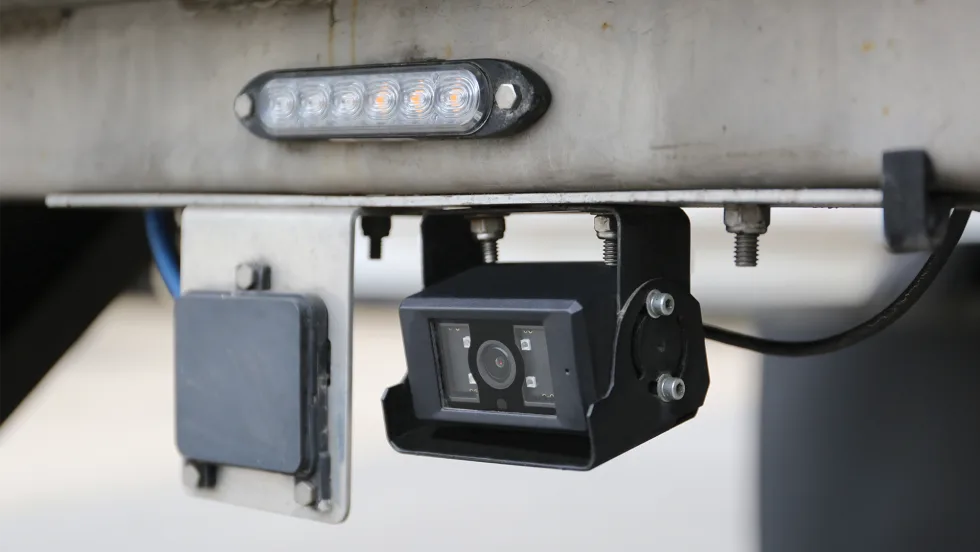
Grote: More Cameras, Same Seven-Way Connector
The next-generation 4See rear-view backup camera from Grote uses the standard seven-way connector and supports additional cameras and other trailer data.
Read More →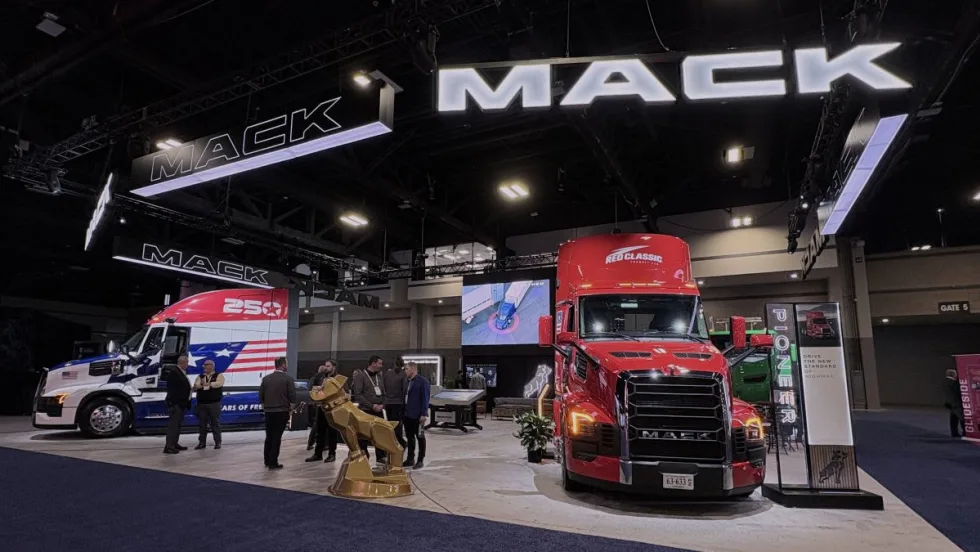
Trucks at ATA's 2026 MC&E in Charlotte, North Carolina [Photos]
From rigs decked out in patriotic America's 250 paint schemes to autonomous trucks and more, check out these photos from ATA's 2026 Management Conference & Exhibition.
Read More →
Help HDT Find Trucking’s Top Products
Have you come across a new product that could make a difference for trucking fleets? Nominate it for HDT’s 2027 Top 20 Products Awards by November 9.
Read More →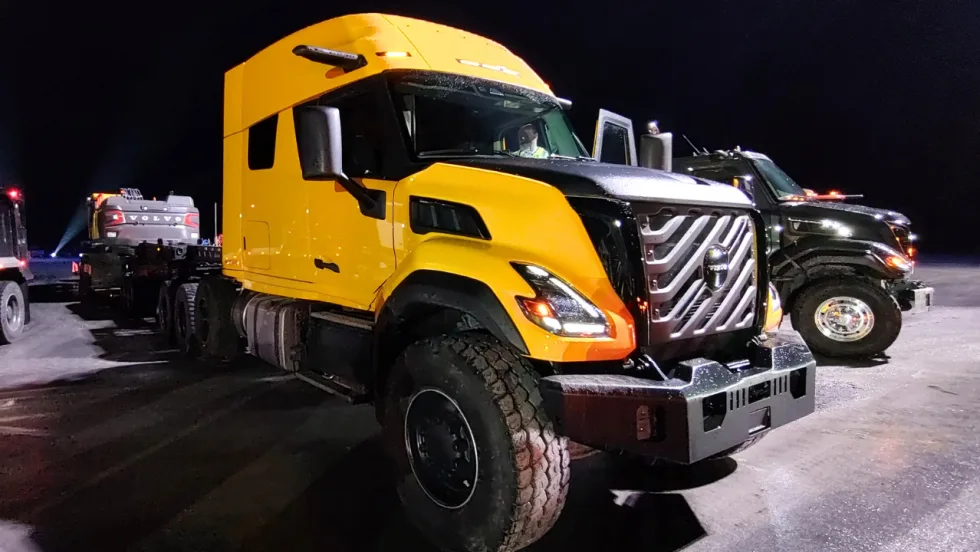
Volvo Unveils New VNX Heavy-Haul and Vocational Truck
Volvo Trucks has launched the VNX, a new vocational truck also available as a tractor in day cab and two sleeper configurations, with one heavy-haul model. The Volvo VNX is powered by Volvo's D13 platform, which delivers up to 540 horsepower and 1,950 pound-feet of torque and is EPA 2027-compliant.
Read More →
How GP Transco Cuts Trucking Fuel Costs, a Tenth of a Gallon at a Time
What’s another tenth of a mile per gallon worth? GP Transco shares how equipment upgrades and driver coaching turn small gains into meaningful fuel savings.
Read More →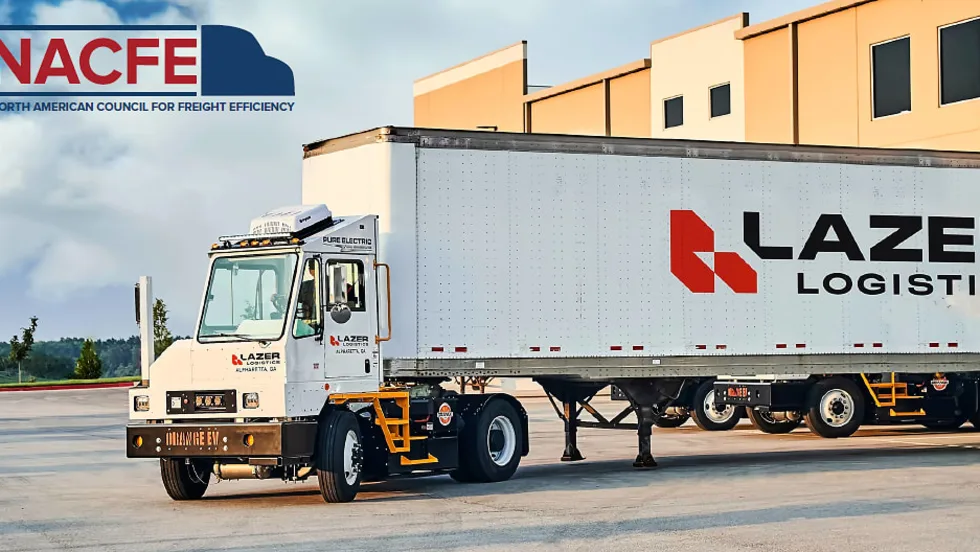
Electric Yard Tractors Move Beyond Pilots
Operating-cost savings have overtaken sustainability goals as the leading reason surveyed fleets are adopting battery-electric terminal tractors, according to new NACFE research.
Read More →
Continental Introduces New Regional Truck Tires
Continental says its new Generation 5 steer and drive tires for regional operations offer longer tread life, with estimated mileage gains of 22% and 19%, respectively.
Read More →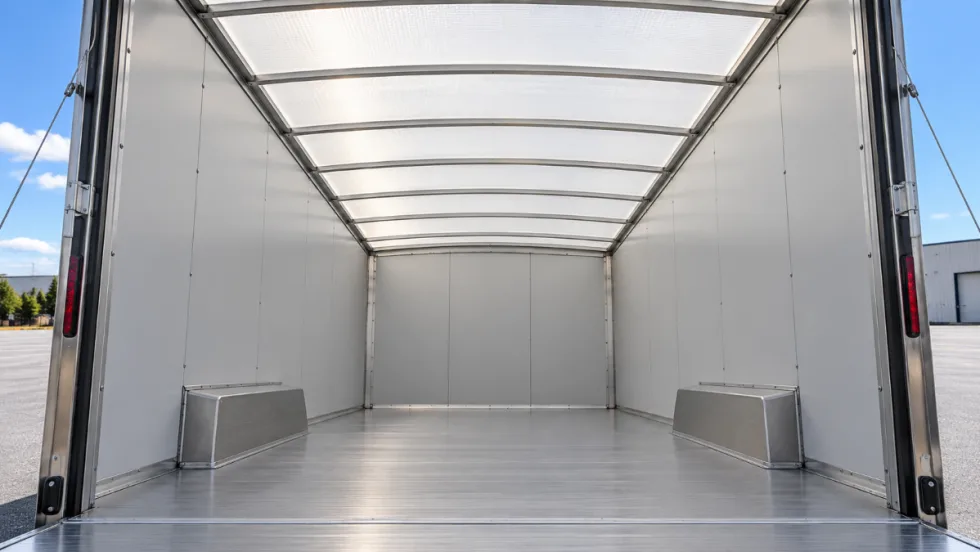
Tekmodo Introduces CargoBright Brand for Translucent Trailer Roofs
CargoBright is designed to diffuse daylight across the cargo area while performing as a working vehicle roof.
Read More →
Fleet Economics Shape Electric Truck Outlook
ACT Research expects costs, charging infrastructure, and technology improvements to drive zero-emission commercial vehicle adoption as federal regulations and incentives retreat.
Read More →