




Spot Truckload Rates Improve, Freight Availability Matches Year Earlier
Average spot truckload dry van rates increased in July from June for the first time in six years, while July spot market freight availability caught up with 2015 levels for the first time this year.

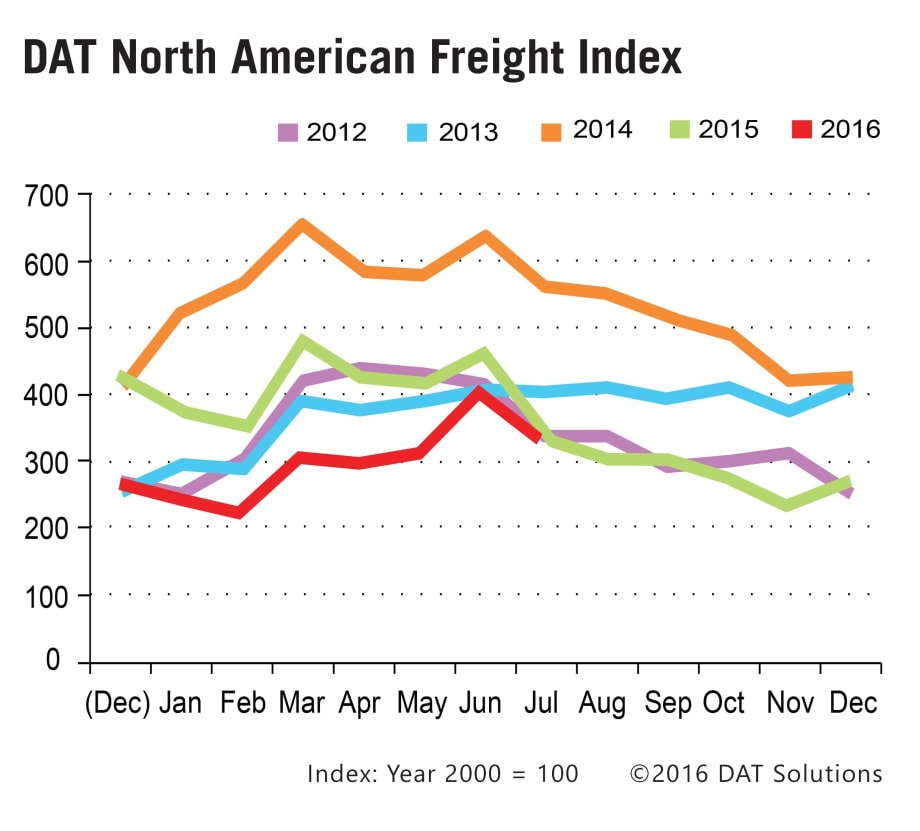
July spot market freight availability caught up with 2015 levels for the first time this year, due to an increase in volume for dry and refrigerated van trailers, and despite a year-over-year flatbed freight volume decline. Graphic: DAT

July spot market freight availability caught up with 2015 levels for the first time this year, due to an increase in volume for dry and refrigerated van trailers, and despite a year-over-year flatbed freight volume decline.Graphic: DAT
Average spot truckload dry van rates increased in July from June for the first time in six years, while July spot market freight availability caught up with 2015 levels for the first time this year, according to latest reading from the DAT North American Freight Index.
Despite a 1.4% gain, or 2 cents per mile, for dry vans last month, reefer rates declined 1.7%, or 3 cents. That indicates relative strength, however, compared to the 5.2% average decline in July of the previous six years, according to the freight-matching service provider. Flatbed rates fell 2.3%, or 4 cents, which is typical for the season.
Month-over-month, total spot market freight volume dropped 17% from the June peak, which is typical for the time of the year, while van and reefer freight each lost 14% and flatbeds slid 23%.
Even with this July drop, DAT said spot market freight availability matched the level from a year earlier, due to an increase in volume for dry and refrigerated van trailers that offset a year-over-year flatbed freight volume decline.
Also unusual was a rate increase for van trailers in July compared to June. Van rates typically peak in June and decline in July, according to DAT.
The increased spot market volume can be attributed to recent cutbacks by the large fleets that typically work with shippers on a contractual basis, according to Mark Montague, industry pricing analyst at DAT.
"As trucks are withdrawn from the marketplace, shippers are beginning to assign a larger portion of freight to third party logistics providers and freight brokers," he said. "If these trends continue, spot market volume could exceed 2015 levels for the rest of the quarter, driving rates up," he said.
As this marketplace transition progresses, the impact varies by equipment type. Compared to July 2015, van freight volume increased 17% and reefers gained 5.2%. Flatbed volume declined 18%, however, due partly to prolonged cutbacks in the energy, manufacturing and construction sectors that generate flatbed freight, said DAT.
Despite these higher volumes, truckload rates fell for all spot market equipment year-over-year, a consistent trend for 14 months. The declines in July were less steep compared to the first half of 2016, especially for vans and reefers.
Compared to July 2015, van rates dropped 6.5%, reefers lost 6%, and flatbed rates fell 7.1%. The average fuel surcharge declined 23%, meanwhile, driving down the total revenue per mile by 9.4% for vans and flatbeds, and 9% for reefers. The surcharge, which varies with the price of diesel fuel, is included in the total rate paid to carriers.
In an interview with Heavy Duty Trucking magazine for the July issue, Montague said external pressures that pushed rates down appear to be easing and rates are finally starting to improve — although they still have a way to go before returning to last year’s levels or the record-setting highs of 2014.
More Fleet Management

For Nicky Cupp, Fleet Innovation Starts With Frustration
HDT Truck Fleet Innovator Nicky Cupp turns everyday pain points at Fraley & Schilling into opportunities for better technology and smarter processes.
Read More →
Adam Buttgenbach’s Approach to Electric Trucks: Start With Where They Fit
HDT Truck Fleet Innovator Adam Buttgenbach helped PepsiCo build one of North America’s largest EV fleets by focusing on where electric trucks make operational sense.
Read More →
Deen Albert: Let Automation Do the Math, People Make the Decisions
HDT Truck Fleet Innovator Deen Albert makes sure people are still at the heart of operations at Grand Island Express, even while adopting artificial intelligence tools. AI-assisted dispatch helped boost revenue 25% with the same number of trucks.
Read More →
Trimble’s New AI Agent Takes Aim at Fleet Back-Office Busywork
Arc Agent works across Trimble TMS products to automate repetitive tasks such as freight orders, maintenance, invoices, fuel costs and more.
Read More →
How HDT’s 2026 Truck Fleet Innovators Are Rethinking Fleet Operations
Meet five trucking leaders who are challenging assumptions, solving operational problems, and putting innovative ideas to work.
Read More →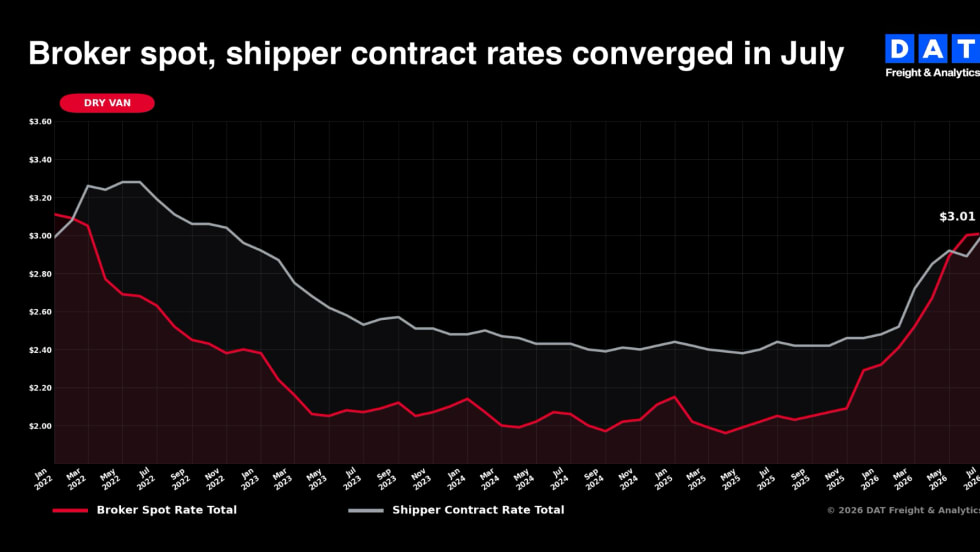
Tight Trucking Capacity Pushes Rates Higher Even as Freight Volumes Fall
“Spot rates moving ahead of contract rates have historically signaled a tightening market, but we haven’t seen a capacity-driven market quite like this one,” said DAT's Dean Croke.
Read More →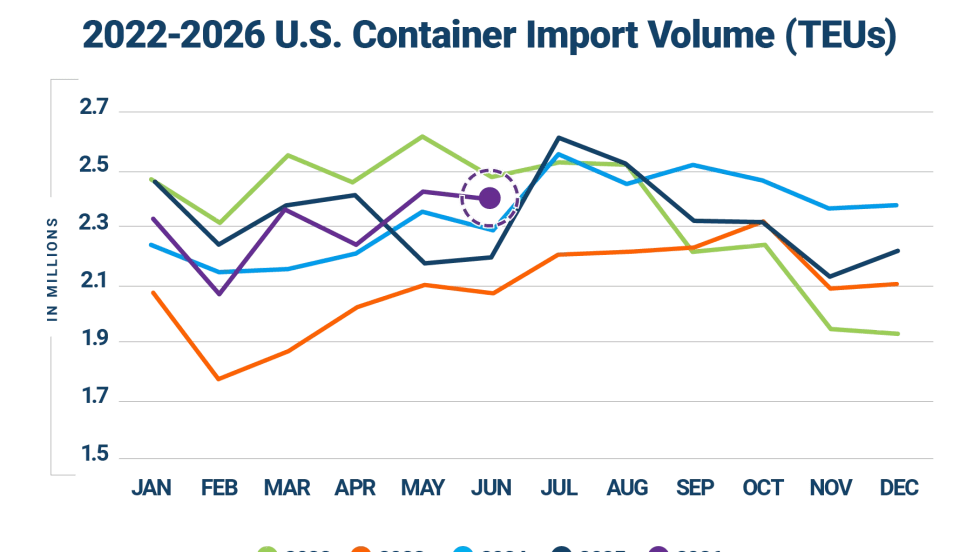
Import Cargo’s Early Peak Season is Winding Down
There was an early start to peak season this year at the nation's gateway ports, as retailers brought in merchandise ahead of tariff changes in late July and responded to other supply chain uncertainties,
Read More →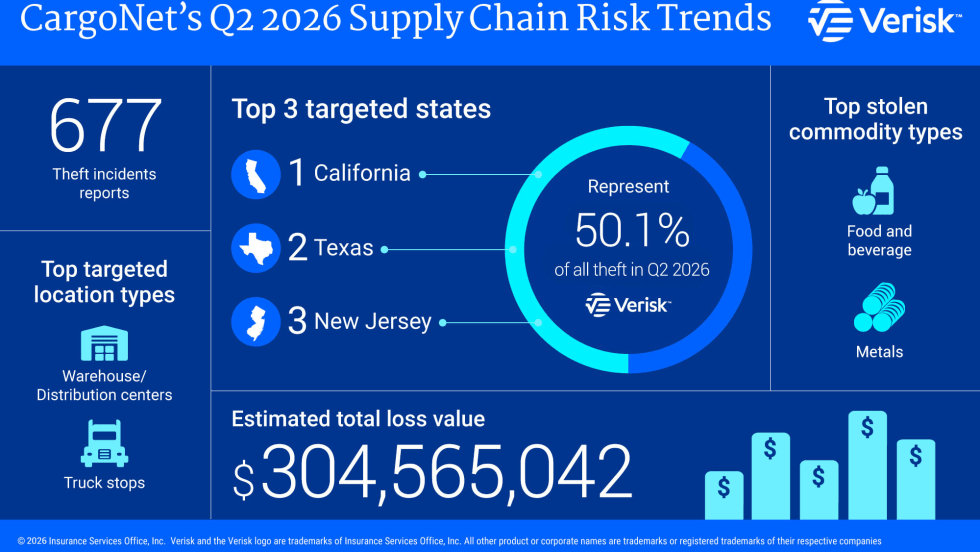
Fewer Cargo Thefts, Bigger Losses: Criminals Target Higher-Value Loads
CargoNet says organized theft rings are stealing fewer shipments but choosing more valuable freight, including metals and technology, resulting in record losses.
Read More →
How Innovative Trucking Leaders Turn Change Into an Advantage
As the pace of change accelerates in trucking, the fleets that adapt best have more than the latest technology. They have cultures that embrace improvement.
Read More →
Freight Broker Bonds Just Got Harder to Get. Here's What That Means for Your Fleet.
When it gets harder for a freight broker to prove they are financially sound, the ones who cannot clear that bar get pushed out of the market. And those are exactly the brokers who used to leave motor carriers holding the bag.
Read More →