




Speed Limit to Increase on Certain Sections of Twinned Highways in Manitoba
The speed limit on certain sections of twinned roadway in Manitoba will increase to 110 kilometres per hour effective July 1, but fines will also increase for those caught exceeding the limit
The speed limit on certain sections of twinned roadway in Manitoba will increase to 110 kilometres per hour effective July 1, but fines will also increase for those caught exceeding the limit,
Infrastructure and Transportation minister Ron Lemieux and Attorney General Dave Chomiak announced.
"Increasing the speed limit is not an invitation to speed," said Lemieux. "We are increasing the limit in a very controlled manner on two short sections of twinned highway where it is safe to do so. At the same time, we are being very clear that increasing the speed limit is not an invitation to speed and we are doing this by increasing the penalty for drivers who exceed the posted limit."
"These fines, of course, will have no impact on Manitoba motorists who adhere to the speed limit," said Lemieux.
Effective July 1, the speed limit on PTH 1 from the Saskatchewan border to Virden will increase to 110 km/h from 100 km/h. The speed limit on PTH 75 from the Emerson border crossing to St. Jean Baptiste will also increase to 110 km/h.
"These increases allow motorists some continuity when entering Manitoba from Saskatchewan and North Dakota," said Lemieux. "We are not proceeding with any further speed limit increases. However, we will watch very closely how motorists respond to these increases and incorporate this into future highway planning."
Effective July 1, fines will increase for all speeding infractions. For example, the fine for exceeding the speed limit by 10 to 34 km/h will increase between $27 and $171 depending on the degree of the infraction.
More Equipment
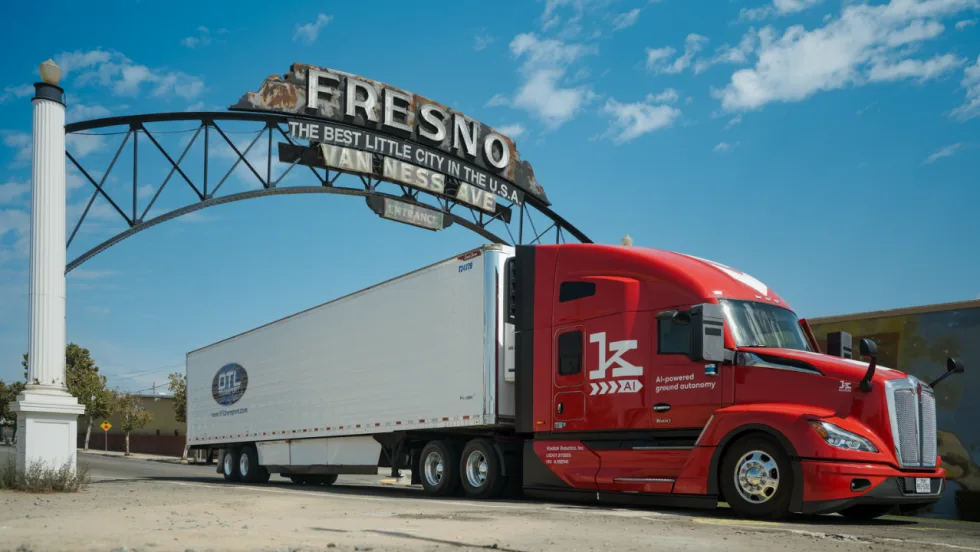
Kodiak Hauls Produce in California Autonomous Truck Pilot
Kodiak AI and DTL Transport have begun hauling produce between Fresno and Los Angeles under California’s new rules for testing heavy-duty autonomous trucks. A safety driver remains behind the wheel.
Read More →
Used-Truck Remarketing Math Is Changing
Used-truck value is no longer just a concern at trade-in. Decisions made throughout a truck’s first life can influence what it’s worth years later.
Read More →
How Volvo Updated Its D13 for EPA 2027 [Watch]
Volvo’s updated D13 promises lower emissions without sacrificing performance or fuel economy. Take a closer look at what changed inside the engine in this HDT Spotlight video.
Read More →
Michelin Tire Improves Efficiency and Durability for Regional Fleets
The Michelin X Multi Energy D2 is a regional haul drive tire engineered to help fleets improve fuel efficiency, durability and traction in demanding stop-and-go operations.
Read More →
ZF Expands Commercial Vehicle Push in North America
ZF is expanding its North American commercial-vehicle presence with new transmission applications, electrification, trailer technology and autonomous-driving systems.
Read More →
Tesla Wants a Self-Driving Semi. Are Cameras Enough?
Could Tesla’s camera-only autonomous driving technology work on an 80,000-pound Semi? In this commentary, HDT's Deborah Lockridge takes a look at Tesla, Cybercab, and how autonomous trucks see the road.
Read More →
Kodiak: Driverless Long-Haul Truck Launch on Track for 2026
Kodiak AI says its driverless long-haul safety case is 93% complete and it remains on track to begin commercial operations by year-end 2026.
Read More →
What DOT’s Automated Vehicle Strategy Means for Trucking
The U.S. Department of Transportation issued a new automated-vehicle strategy that outlines plans for driverless-truck regulations, cross-state freight corridors, and federal safety standards.
Read More →
East Coast Port Launches $45M Electric Truck Push
The Port Authority of New York and New Jersey announced millions in incentives for zero-emission drayage trucks, yard tractors, and new charging hubs near the port.
Read More →
PlusAI Going Public to Fund Autonomous Truck Launch
A SPAC deal could provide PlusAI with up to $300 million as it works toward a 2027 commercial launch of factory-built autonomous trucks.
Read More →