




SmartDrive’s New SmartSense Features Reduce Speeding, Parking Concerns
SmartDrive Systems recently announced the release of SmartSense for Speeding for Conditions and Sitting Duck, both of which offer new capabilities to increase driver safety.

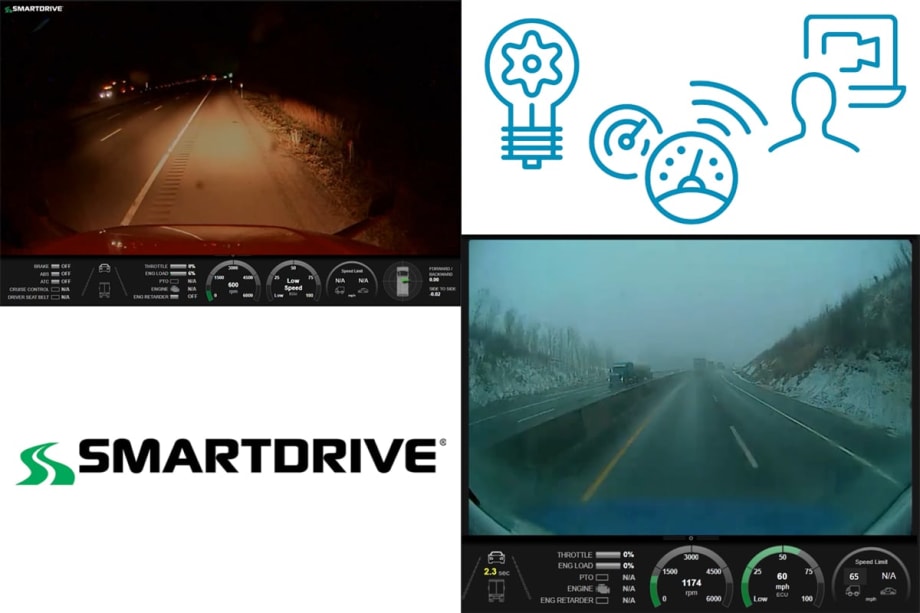
Images: SmartDrive
SmartDrive Systems recently announced the release of SmartSense for Speeding for Conditions and Sitting Duck, both of which offer new capabilities to increase driver safety.
The combination of purpose-built sensors with computer vision, engine telematics, and accelerometer data gives fleets new levels of risk identification and collision mitigation, according to SmartDrive. The systems have been tested by nationally recognized fleets, including Knight-Swift Transportation, which has been piloting the new SmartSense features and have seen a marked improvement.
“Commercial drivers often must deal with less than ideal conditions as they ensure essential goods are delivered,” said Brett Sant, senior vice president, safety and risk management, Knight-Swift Transportation. “SmartSense for Speeding for Conditions allows us to proactively notify and remind drivers of these fast-changing weather conditions and recommend safe driving practices to help ensure they are operating safely in these changing environments.”
The Speeding for Conditions feature alerts fleets when drivers are traveling at speeds deemed unsafe for specific road conditions, which could include snow, rain, or sleet. Using real-time weather information, the system notifies a fleet if a driver is either speeding or driving faster than the speed limit set in the SmartSense system for different weather conditions. This allows fleets to then alert drivers of not only the adverse driving behaviors, but the inclement weather conditions that could be affecting them.
“With insurance premiums, nuclear verdicts and everyday driving risks skyrocketing, fleets must be able to identify hidden dangers and proactively address them,” said Steve Mitgang, CEO of SmartDrive. “When the country’s leading fleets came to us with these concerns, we knew we had to challenge the status quo to find a solution.”
The lack of available truck parking due to the current COVID-19 pandemic, along with frequently full truck stops and rest areas, can create a dangerous dilemma for drivers, who can be forced to park in undesignated and unsafe locations. These “sitting duck situations” put both drivers and the motoring public at risk. The new Sitting Duck feature detects and reports vehicles that have stopped, parked, or stalled in a potentially hazardous location; provides real-time data to assess the incident; and delivers video of where the driver is stopped or parked.
“Many times, drivers find themselves in circumstances where they need mechanical assistance or need to stop in a heavily-traveled area,” said Sant. “SmartSense for Sitting Duck technology helps us protect our drivers by alerting management that they may need help. We can then quickly advise our driver on how to handle the situation and, if necessary, provide support — or send assistance — and get them back on the road safely.”
The new SmartSense features are available with SmartDrive’s Transportation Intelligence Platform, which can be integrated with a fleet’s existing telematics messaging system. The system can also alert drivers prior to entering an area impacted by weather and also alerts dispatch about drivers who are parked longer than necessary or in adverse situations. Manager notifications are triggered if corrective action is not taken by drivers, and the real-time, interactive dashboards provide at-a-glance data, so fleet managers can quickly identify trends and intervene.
More Safety & Compliance

FMCSA Pauses Biennial-Update Enforcement Amid Motus Transition
Carriers whose updates were due on or after June 1 have more time, while FMCSA works to stabilize its new registration system and warns of phishing sites impersonating its new carrier registration system, Motus.
Read More →
ZF Expands Commercial Vehicle Push in North America
ZF is expanding its North American commercial-vehicle presence with new transmission applications, electrification, trailer technology and autonomous-driving systems.
Read More →
Truck Drivers Need More Than Another Alert
Fleets have more visibility into truck health, safety events, and driver activity than ever. The next challenge is turning all that information into useful guidance for the person who has to decide what to do next.
Read More →
Tesla Wants a Self-Driving Semi. Are Cameras Enough?
Could Tesla’s camera-only autonomous driving technology work on an 80,000-pound Semi? In this commentary, HDT's Deborah Lockridge takes a look at Tesla, Cybercab, and how autonomous trucks see the road.
Read More →
What DOT’s Automated Vehicle Strategy Means for Trucking
The U.S. Department of Transportation issued a new automated-vehicle strategy that outlines plans for driverless-truck regulations, cross-state freight corridors, and federal safety standards.
Read More →
NYC Expands Speed, Pedestrian Safety Tech Across Fleet
New York City is expanding intelligent speed assistance and pedestrian-alert systems across its municipal fleet, moving the technologies from pilot programs into vehicle procurement and retrofit requirements.
Read More →
FMCSA Removes 110 Truck Driver Training Schools from Certified ELDT List
Federal regulators also are targeting more than 160 additional training providers and launching a nationwide audit of third-party CDL skills testers as part of a broader crackdown on trucking fraud.
Read More →
Beyond DOT Compliance: What Makes a Trucking Fleet Truly Safe?
A trucking fleet can follow every rule and still make unsafe decisions. The real test comes when safety conflicts with freight, productivity, or cost.
Read More →
Hours of Service Pilot Programs: FMCSA Readies for 2027 Rollout
Two pilot programs could eventually reshape hours-of-service rules, giving truck drivers options to pause their 14-hour clock or use longer split sleeper rest periods.
Read More →
New Guide Offers Pet Safety Tips for Truck Drivers
Hundreds of thousands of pets travel in truck cabs. A new safety guide from Volvo Trucks and the Center for Pet Safety offers practical advice for truck drivers who bring dogs and cats along for the ride.
Read More →