




Slater Threatens Veto, Promises Changes on Hours of Service
With a veto threat in one hand and a promise of changes in the other, Transportation Secretary Rodney Slater yesterday continued his campaign to keep the hours of service reform process alive. Slater said he would have
With a veto threat in one hand and a promise of changes in the other, Transportation Secretary Rodney Slater yesterday continued his campaign to keep the hours of service reform process alive.
Slater said he would have a tough time recommending to President Clinton that he sign a DOT appropriations bill that cuts off funding for the rulemaking process. The Senate version of that bill contains a provision pushed by American Trucking Associations that would prohibit the department from doing any work on hours reform during the next fiscal year.
“There is no way that we can even suggest that (that) kind of measure will be acceptable,” Slater told reporters at a press conference.
At the same time, he said DOT now is prepared to issue a supplemental rulemaking that, in the words of Federal Motor Carrier Safety Administration chief Clyde Hart, would recast the proposal.
“A supplemental rulemaking would allow us to take all (the) information (from upcoming hours of service roundtables) and recast the notice of proposed rulemaking,” Hart said.
He described the supplement as a way to “clean up” the original proposal, although he acknowledged in the same sentence that he hated to use the term. He later declined to characterize the supplement as a “wholesale rewrite.”
At this point, Hart said, the safety agency does not know what will be in the supplemental rule. He and Slater did indicate that they have specific issues in mind, however: the distinctions between trucks and buses, sleeper berth rules and the categories of carrier operations. On the latter point, Hart suggested that the safety agency may add more categories because “there are a number of operators who don’t seem to fit neatly in one or the other neatly.”
Slater and Hart see the roundtable sessions – six days of discussions scheduled in Washington, D.C., in September and early October – as key to the process. At the roundtables, representatives of all interests will be invited to speak on specific hours of service issues, such as scheduling rules, onboard recorders and enforcement.
“What we are looking for in the roundtables is specific evidence – you’ve told us what’s wrong, now tell us how to fix it,” Hart said. “What are we missing, what haven’t we looked at, what studies did we miss, did we misinterpret something?”
Hart specifically mentioned that he wants to see the ATA-sponsored study of the safety agency’s analysis of the rule’s cost. That analysis, prepared by National Economic Research Associates, found that the safety agency understated the costs by more than five times.
“Let’s see if we’re off, by how much and in what direction,” he said.
With Congress soon to return and take up the issue of the hours provision in the DOT appropriations bill, Slater acknowledged that the roundtables are part of the message of flexibility that DOT is trying to send.
“Thwarting the process would be unfortunate and would not take us any closer to getting the rules that everyone wants to have,” he said. “I think at the end of the day (that) Congress, seeing how we’re trying to play this out, I think they are going to respond positively.”
Hart maintained that there is agreement on significant details of the proposal – the 24-hour clock, the 12-hour driving day, the provision for some weekend rest.
Challenged on the 12-hour day, Hart explained that while there are differences on how the rules should account for on-duty time versus driving time, “there is agreement on the basic day for drivers.” He also said that there is not that much difference between the FMCSA proposal and ATA’s proposal on the number of hours that should constitute a weekend.
Asked if he thought the rulemaking process could be improved, Slater said it is working out as he had envisioned – although in the beginning he did not foresee having to extend the comment period three times.
“I am not worried that we could have taken another course and been any closer to a resolution than we are now,” he said. “The good thing is that the process has not broken down. We still have a shot at getting the parties to coalesce around what we might come back with as a supplemental rule.”
More Drivers

Competition Heating Up for Truck Drivers
New report reveals rising driver hiring costs, the return of sign-on bonuses, growing AI advantages, and the operational factors shaping driver retention.
Read More →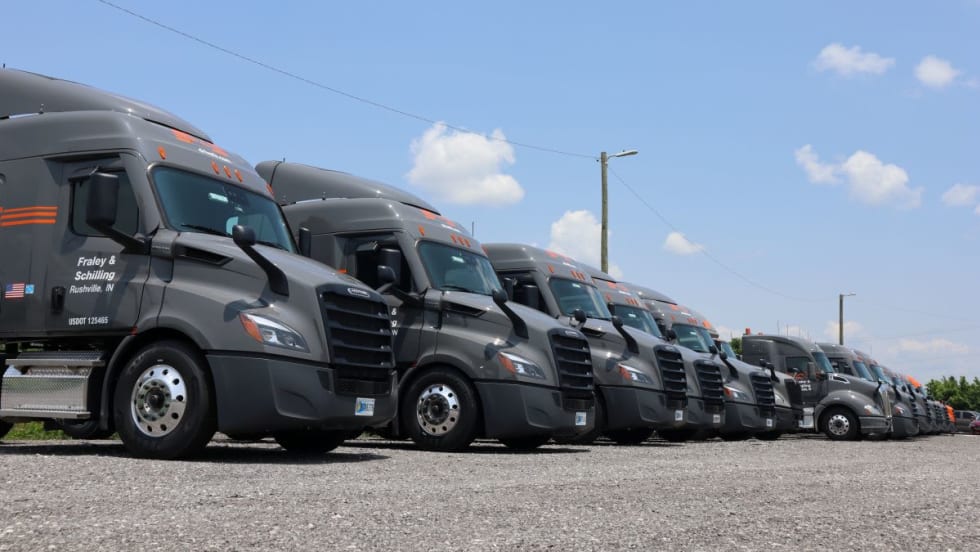
How Fraley & Schilling Improved Logbook Compliance by Over 50%
Fraley & Schilling needed a way to close a compliance workflow gap in its ELD system without adding more work from driver training, reminders, and back-office follow-ups. It found the answer in a custom driver app.
Read More →
Volvo Goes Gaming
Volvo has roared into American Truck Simulator with two new flagship trucks.
Read More →
What the Best Fleets to Drive For Teach About Driver Retention
Survey fatigue, AI-powered routing, owner-operator expectations, and the decline of social media all emerged as themes from this year's Best Fleets to Drive For program.
Read More →
Driver Retention Lessons From the Best Fleets to Drive For
What separates trucking's best workplaces from the rest? Jane Jazrawy shares the biggest lessons from this year's Best Fleets to Drive For program on driver retention, communication, AI, and workforce trends on the HDT Talks Trucking podcast.
Read More →
Farewell, CDL: Why I'm Giving Up My Commercial Driver's License
After more than 20 years as a CDL holder, HDT Executive Editor Jack Roberts is letting his commercial license expire. Not because he wants to — but because trucking's nuclear verdict crisis has made the risks of public-road test drives too great for editors, manufacturers, and everyone involved.
Read More →
How Top Trucking Fleets Improve Driver Retention [Video]
What do healthy snacks, optimized routing, and just picking up the phone have in common? They're all strategies the Best Fleets to Drive For are using to retain truck drivers.
Read More →
Trucker Path Adds Verisk CargoNet Theft Data to Navigation Platform
Trucker Path’s new cargo theft risk overlays give drivers and fleets visibility into high-risk areas, stolen commodity trends, and theft hotspots.
Read More →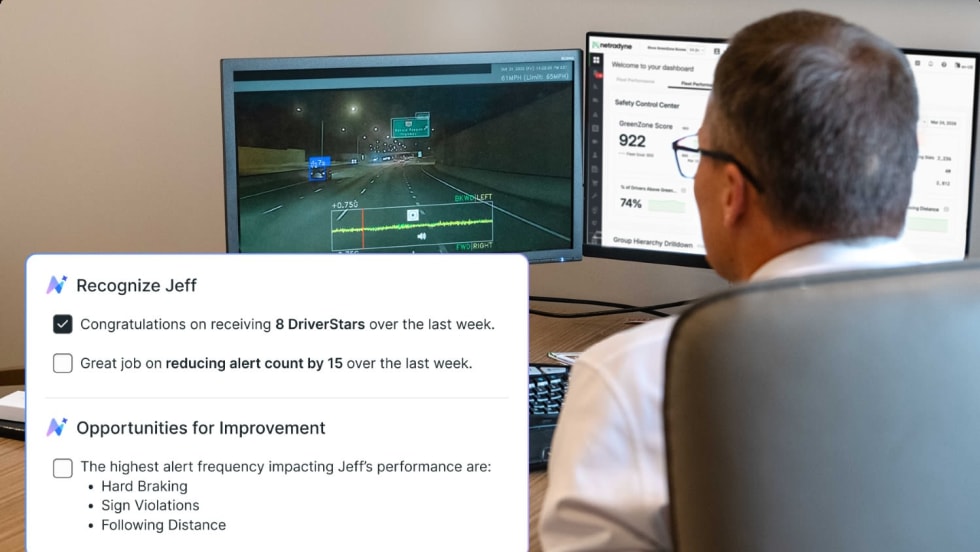
Netradyne Intelligence Uses New AI Agents to Automate Response to In-Cab Camera Data
The company called the next-generation in-cab camera safety platform "a fundamental shift from systems that report on what happened to systems that actively drive what should happen next."
Read More →
Why Truck Detention Keeps Costing Fleets Time and Money
A 2024 ATRI study found detention affects nearly 40% of truckload stops and costs the industry more than $15 billion annually. Despite the toll on drivers, fleets, and supply chains, the problem remains stubbornly persistent.
Read More →