




Senate Bill Would Create Clearinghouse for Drug and Alcohol Test Results
The Senate last week opened another front in the long-running effort to establish a national clearinghouse for truck driver drug and alcohol test results. The Safe Roads Act of 2011, introduced by Sens. Mark Pryor and John Boozman, both Republicans from Arkansas, would give the Department of Transportation two years after passage to establish the clearinghous
The Senate last week opened another front in the long-running effort to establish a national clearinghouse for truck driver drug and alcohol test results.
The Safe Roads Act of 2011, introduced by Sens. Mark Pryor and John Boozman, both Republicans from Arkansas, would give the Department of Transportation two years after passage to establish the clearinghouse
. Co-sponsors of the measure include Sens. Olympia Snowe, R-Maine, David Vitter, R-La., and Roger Wicker, R-Miss.
This is the second of two federal initiatives on the clearinghouse. The Federal Motor Carrier Safety Administration is planning to propose a rule in November that would do much the same as the bill, although details of that proposal are not yet available.
Both initiatives would create a central database that employers would have to check during the hiring process. Employers would have to submit test results and refusals to the clearinghouse.
The bill would require that the database be maintained by a third party contractor and have security protections to ensure privacy. Employers would pay a nominal fee to use the system. There would be no charge for drivers who are requesting their own information.
Employers would have to make sure that a driver applicant has been tested within the past three years. If the test was positive, the driver must have completed the required return-to-duty process. The employer also has to check if a driver has refused to take the test. And the employer would have to check the database once a year after hiring the driver.
An employer would have to get the driver's consent before looking at his record. The clearinghouse administrator would have to notify a driver when the clearinghouse has received a record, when a record has been modified or deleted, and when a result has been released to an employer.
Drivers would be able to make sure that their records are accurate, and could make updates if necessary. There would be a dispute procedure, including an appeal process.
State motor vehicle departments would have access as part of the CDL application process.
The bill also would require all urine testing sites to register with DOT, and certify themselves annually. A complete list of registered sites would be published annually in the Federal Register,
In addition, the bill proposes that DOT develop a secure way to electronically notify an employer of positive test results that show up during the week after an employer's inquiry. It also proposes that the department consider ways to make the clearinghouse compatible with other regulatory and safety databases, including the National Driver Register and the Commercial Driver's License Information System.
It is possible that the bill could move independently, but it is also possible that it would be attached to the pending reauthorization of the federal highway program. That legislation is now being drafted by congressional committees with the aim of action later this year, although passage is by no means assured.
Why Needed
Congress and trucking interests represented by American Trucking Associations have been pushing for the clearinghouse for years. ATA had been supporting it already but the idea got a jump start in 2008 when a Government Accountability Office investigation found serious flaws in the federal drug testing system for truck drivers.
The agency sent undercover investigators with bogus backgrounds and CDLs to 24 collection sites and came away with the conclusion that DOT's drug testing system is vulnerable to manipulation and use of substances that alter the urine specimen.
Investigators were able to use bogus licenses at all of the sites, and almost all of the sites did not follow proper testing protocol. For example, bathrooms had substances such as soap that could be used to adulterate the urine specimen, or running water that could be used to dilute the specimen. More than 40 percent of the sites did not ask the driver to empty his pockets to be sure he was not carrying a test defeat substance. Almost a fifth of the sites did not check the temperature of the specimen.
The agency also was troubled by drivers' easy access to cheat products. Investigators bought drug masking materials and synthetic urine on the Internet and used them successfully.
In an analysis after the investigation, GAO found that many factors contributed to the problem. FMCSA's resources and enforcement options are limited, which makes it easier for carriers to just take a pass at compliance or even ignore the rules. Further, it's too easy to subvert the urine test with adulterating substances. And it's too easy for drivers who have tested positive to continue working.
The clearinghouse would be key to correcting these problems, said ATA President and CEO Bill Graves.
"For over 15 years, commercial drivers have been required to submit to drug and alcohol testing to ensure they aren't impaired while on the highway," he said in a statement last week. "However, a loophole in the system allows drivers who test positive to evade the consequences of their actions by failing to disclose their complete work histories and positive test results to prospective employers. This important legislation will close that loophole and will improve the safety of our highways."
The Owner Operator Independent Drivers Association, however, said the bill is "little more than an attempt by large motor carriers to make the government act as their human resources departments," reports the association's Land Line magazine.
"I think this is a classic example where big business tries to get government to assume its own responsibility and have taxpayers pick up the tab," OOIDA Executive Vice President Todd Spencer told the magazine. "It's pretty obvious that those trucking companies and their supporters of this are far more concerned about what's in a driver's urine than what's between their ears."
More Drivers
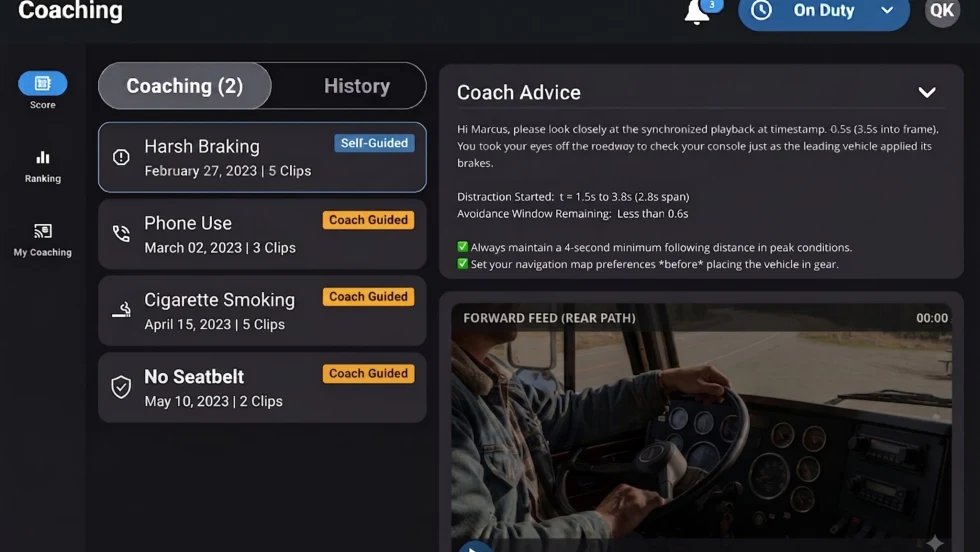
Platform Science Adds Dispatch and Safety Tools
Four additions to PS Fleet help fleets monitor loads, manage driver coaching, share truck locations and adjust video system settings.
Read More →
When Language Stops the Truck: The Return of ELP Out-of-Service Orders
English language proficiency rules for commercial drivers aren’t new, but renewed out-of-service enforcement has raised the stakes. Here’s what carriers need to know before a driver reaches a roadside inspection.
Read More →
Samsara Launches Custom AI Agent Builder
Agent Studio lets fleets create AI tools for hours-of-service monitoring, reporting and driver support, including agents that communicate by phone.
Read More →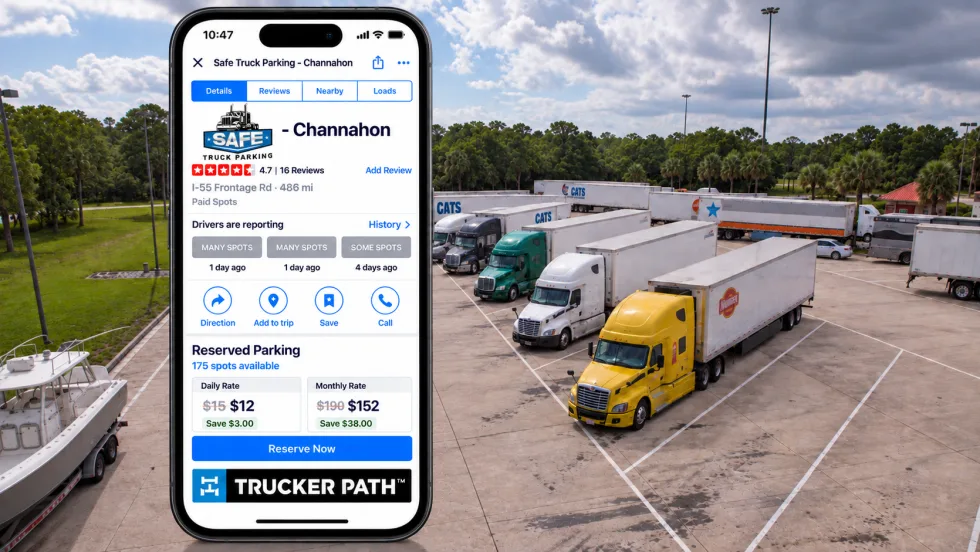
Trucker Path Expands Reserved Parking Network
Trucker Path has added close to 6,000 more truck parking spaces to its Trucker Path Reserved Parking Network with the addition of Safe Truck Parking.
Read More →
EEOC Sues Texas Trucking Company Over Driver Age Limits
The agency says Trancasa USA rejected applicants over 65 and applied tougher driving-record standards to those over 60.
Read More →
Nussbaum, Roehl Announce Second Driver Pay Increase This Year
This year has seen a swath of major truck driver pay increases as freight capacity has tightened.
Read More →
From One Generation to the Next: How Mentorship Builds Safer Truck Drivers
After three decades in trucking, Harold Perry shares what he's learned about driver safety, mentorship, and helping the next generation build confidence behind the wheel.
Read More →
Truck Drivers Need More Than Another Alert
Fleets have more visibility into truck health, safety events, and driver activity than ever. The next challenge is turning all that information into useful guidance for the person who has to decide what to do next.
Read More →
FMCSA Removes 110 Truck Driver Training Schools from Certified ELDT List
Federal regulators also are targeting more than 160 additional training providers and launching a nationwide audit of third-party CDL skills testers as part of a broader crackdown on trucking fraud.
Read More →
Hours of Service Pilot Programs: FMCSA Readies for 2027 Rollout
Two pilot programs could eventually reshape hours-of-service rules, giving truck drivers options to pause their 14-hour clock or use longer split sleeper rest periods.
Read More →