




Seeing Machines Launches Vision-Based Accident Avoidance
Seeing Machines has announced the U.S. launch of Seeing Machines Fleet, an accident-avoidance solution that helps truck drivers and fleet operators better manage fatigue and distraction events in real time

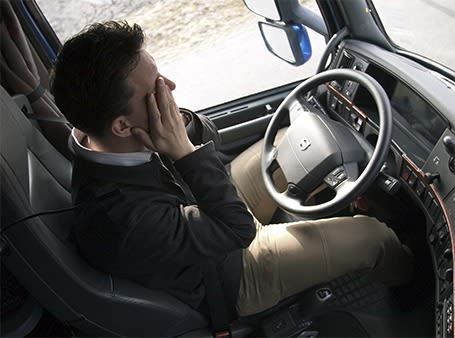
The moment an accident threat is detected, new system alerts the driver and monitoring staff through in-vehicle alarms and seat vibrations. Image: Seeing Machines
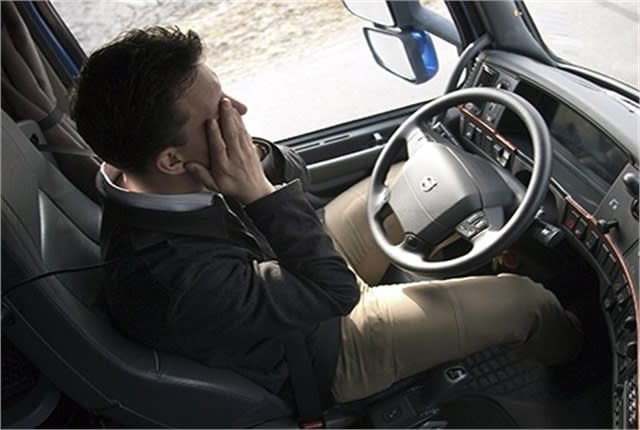
The moment an accident threat is detected, new system alerts the driver and monitoring staff through in-vehicle alarms and seat vibrations.Image: Seeing Machines
Seeing Machines announced the U.S. launch of Seeing Machines Fleet, an accident-avoidance solution that helps truck drivers and fleet operators better manage fatigue and distraction events in real time at this week’s National Private Truck Council meeting in Cincinnati.
Based in Australia with offices in Tucson, Ariz. And Mountain View, Calif., Seeing Machines offers real-time driver fatigue, distraction and accident-prevention technologies.
The company said that its new offering for this market is “unlike today’s common, in-cab video-based event recorders” because it helps drivers avoid accidents and reduce the risk of governmental fines through an advanced set of distraction and fatigue detection technologies.
Seeing Machines Fleet uses the company’s computer-vision DSS technology to track driver eye and facial movement to provide fleet operators an objective way of detecting and preventing driver fatigue and distraction events in real time.
According to the company, the moment an accident threat is detected, the system alerts the driver and the monitoring staff through in-vehicle alarms and seat vibrations while sending an informative data package to the central monitoring team for further analysis and action.
“Unlike competitors’ passive recording technology that is used for post-event analysis and driver coaching, our technology assists operators and truck drivers in avoiding accidents in the first place,” said Ken Kroeger, CEO of Seeing Machines.
“This has helped our customers reduce fatigue and distraction related incidents– helping keep people, cargo and equipment safe as well as increasing efficiency, productivity and profitability,” he added.
Seeing Machines said the research and development supporting their new fleet product included over eight years of testing, field studies and industry usage in transportation, mining and automotive sectors in which the company worked closely with its alliance partners Caterpillar and Takata.
The technology is currently being used by truck, bus and mining customers in Europe, Australia and South Africa.
To date, Seeing Machines said that to date it has shipped more than 4,000 units of its driver safety system worldwide, “with all clients reporting, at minimum, a 71 percent reduction in fatigue and distraction related driving events.”
“Driver fatigue and distraction are clearly major contributing factors in vehicle accidents,” noted Dr. Mike Lenné, GM of Human Factors for the company. “Drivers who are tired or who have microsleeps, or who are distracted by activities including texting, drift in and out of lanes or off the road, vary their speed unnecessarily and are fundamentally unable to react in time to other drivers and other potential hazards on the road..”
He said with all that in mind, “Seeing Machines has created an industry-leading portfolio of image processing capability related specifically to head, eye, and gaze tracking. This core technology is crucial in detecting these behaviors in real time and therefore in helping companies and drivers to better understand their safety issues and to support changes to address these known risks.”
More Fleet Management

What the U.S.-Canada Trade War Means for Trucking
Escalating U.S.-Canada tariffs could disrupt cross-border freight, reduce truck volumes, raise costs, and create new uncertainty for carriers on both sides of the border.
Read More →
What Are Trucking’s Top Concerns for 2026?
The American Transportation Research Institute wants to know what's worrying trucking fleet managers, drivers, and other stakeholders in its annual Industry Issues survey.
Read More →
American Trucking Associations Looks for a New Leader
ATA President and CEO Chris Spear abruptly left his job at the association on August 21, at a pivotal time for the trucking industry.
Read More →
Public Wi-Fi Cybersecurity Risks: How Truck Drivers and Fleets Can Protect Their Data
Public Wi-Fi can expose truck drivers and fleets to credential theft, malware, and other cyber threats. Here’s how to reduce the risk on the road.
Read More →
For Nicky Cupp, Fleet Innovation Starts With Frustration
HDT Truck Fleet Innovator Nicky Cupp turns everyday pain points at Fraley & Schilling into opportunities for better technology and smarter processes.
Read More →
Adam Buttgenbach’s Approach to Electric Trucks: Start With Where They Fit
HDT Truck Fleet Innovator Adam Buttgenbach helped PepsiCo build one of North America’s largest EV fleets by focusing on where electric trucks make operational sense.
Read More →
Deen Albert: Let Automation Do the Math, People Make the Decisions
HDT Truck Fleet Innovator Deen Albert makes sure people are still at the heart of operations at Grand Island Express, even while adopting artificial intelligence tools. AI-assisted dispatch helped boost revenue 25% with the same number of trucks.
Read More →
Trimble’s New AI Agent Takes Aim at Fleet Back-Office Busywork
Arc Agent works across Trimble TMS products to automate repetitive tasks such as freight orders, maintenance, invoices, fuel costs and more.
Read More →
How HDT’s 2026 Truck Fleet Innovators Are Rethinking Fleet Operations
Meet five trucking leaders who are challenging assumptions, solving operational problems, and putting innovative ideas to work.
Read More →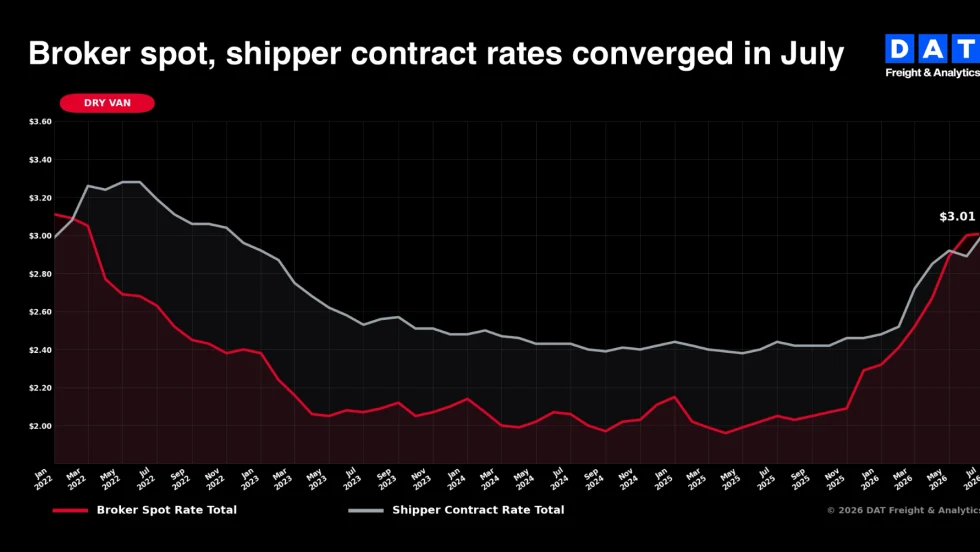
Tight Trucking Capacity Pushes Rates Higher Even as Freight Volumes Fall
“Spot rates moving ahead of contract rates have historically signaled a tightening market, but we haven’t seen a capacity-driven market quite like this one,” said DAT's Dean Croke.
Read More →