




Second Day Of NTSB Hearing Focuses On Latest Technology
The National Transportation Safety Board truck safety hearing continued in Nashville yesterday with a closer look at several existing and prototype truck safety technologies, including collision warning systems, new brake technology, and rollover warning and prevention
The National Transportation Safety Board truck safety hearing continued in Nashville yesterday with a closer look at several existing and prototype truck safety technologies, including collision warning systems, new brake technology, and rollover warning and prevention.
Electronic braking systems, also called "brake by wire," use an electronic treadle to activate the brakes for faster response time. Although these systems are getting good response in Europe, where they are paired with disc brakes for up to 40% better stopping distance, there are barriers to their acceptance in the United States. Current federal brake requirements mean that any EBS system must be put in on top of the existing dual pneumatic braking system. This keeps the cost higher than fleets are willing to pay.
Although the stopping distance with EBS alone is only 2% to 5% better, the system is important in its potential use as a platform for other new safety technologies. For instance, Eaton testified about new technology under development called the Electronic Stability Program or Vehicle Dynamic Control System. It works with electronic braking systems. In the case of loss of control that could lead to a rollover, the system can brake each wheel independently, without any action by the driver, to bring the vehicle back under control.
Scott Stevens with Oak Ridge National Laboratories said his consortium is taking a different approach to rollovers. "The point of our project is to avoid the drama," he said after the board viewed a dramatic demonstration of Eaton's system. The rollover warning system, to be tested in three U.S. Xpress trucks over the next year, uses information from trailer sensors and the engine ECU to tell drivers if an upcoming curve offers rollover danger.
U.S. Xpress' Max Fuller also testified about the company's experience with Eaton VORAD collision warning systems. All three trucks on display at the hearing were equipped with the units. Eaton's newest incarnation of the product includes a smart cruise feature that will automatically slow the truck if the radar warning system detects the truck is closing on an object ahead.
Chris Royan with Eaton VORAD testified that studies show a full extra second of warning can prevent up to 90% of rear collision accidents. Customers have reported reductions in rear-end and lane-change accidents from 35% to 100%. The system also offers an accident reconstruction feature that the board found interesting.
In the future, Royan predicts that the systems will become smaller and integrated into OEM driver displays. Backup sensors and side trailer sensors could be added. Smart braking could be used to slow the truck; currently the smart cruise uses defueling and the engine brake to do the job. And the information generated by the system could be sent through Qualcomm to fleet headquarters instead of requiring downloading with a diagnostic tool.
The NTSB hearing continues today with witness panels on technology to improve vehicle inspections, data recorders, and technology developments by vehicle manufacturers.
More Drivers

From One Generation to the Next: How Mentorship Builds Safer Truck Drivers
After three decades in trucking, Harold Perry shares what he's learned about driver safety, mentorship, and helping the next generation build confidence behind the wheel.
Read More →
Truck Drivers Need More Than Another Alert
Fleets have more visibility into truck health, safety events, and driver activity than ever. The next challenge is turning all that information into useful guidance for the person who has to decide what to do next.
Read More →
FMCSA Removes 110 Truck Driver Training Schools from Certified ELDT List
Federal regulators also are targeting more than 160 additional training providers and launching a nationwide audit of third-party CDL skills testers as part of a broader crackdown on trucking fraud.
Read More →
Hours of Service Pilot Programs: FMCSA Readies for 2027 Rollout
Two pilot programs could eventually reshape hours-of-service rules, giving truck drivers options to pause their 14-hour clock or use longer split sleeper rest periods.
Read More →
Medical Cards, English Proficiency Reshape Roadcheck Violations
Medical-card violations jumped to the top of the driver out-of-service list during CVSA’s 2026 International Roadcheck, while English-language proficiency violations appeared among the leading violations for the first time.
Read More →
Driver Trust Can Make or Break the Success of Fleet Safety Technology
New Teletrac Navman research suggests that onboarding, transparency about driver data, and positive feedback can play a significant role in how commercial drivers respond to safety and coaching technology.
Read More →
EEOC Sues KLLM Over Alleged Sex Discrimination in Driver Training
KLLM is facing a federal sex-discrimination lawsuit over policies the EEOC alleges put female truck driver trainees at a disadvantage.
Read More →
FMCSA Moves to Codify English Language Requirements for Commercial Drivers
By changing regulations on English-language proficiency requirements for commercial drivers, rather than relying on a guidance memo, the FMCSA said future administrations won't be able to walk back the Trump administration's stricter enforcement with just a memo.
Read More →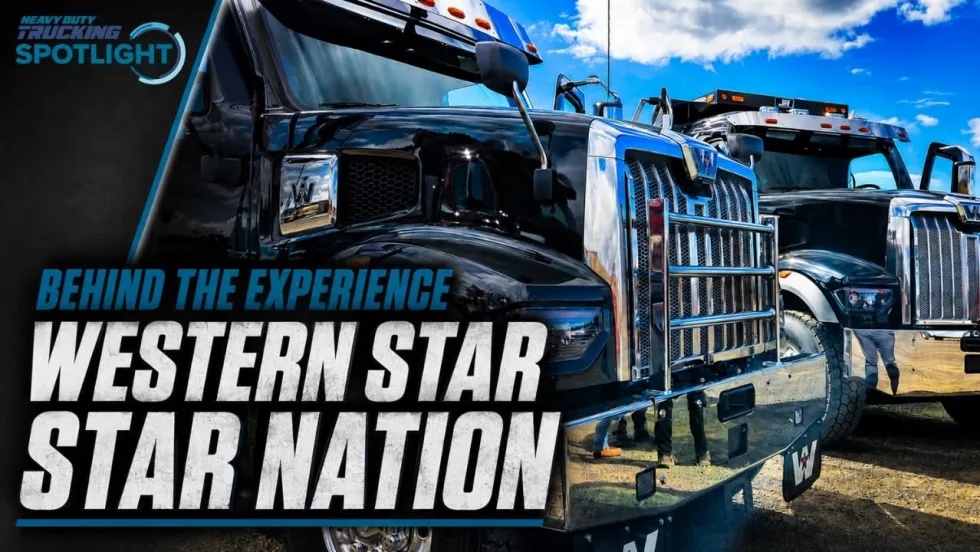
Drivers Put Western Star Trucks to the Test at Star Nation Experience
Watch to get an inside look at the Western Star trucks, technology, and community behind the Star Nation Experience 2026!
Read More →
Trump Administration Looks to Put More Veterans Behind the Wheel
The Freedom Haulers program pulls together existing and expanded programs at several federal agencies to recruit veterans to drive commercial heavy-duty trucks and cut the red tape for them to get a CDL, training, and employment.
Read More →