




Safety Groups May Accept Hours of Service Proposal
A spokesman for the organizations that sued the Federal Motor Carrier Safety Administration over hours of service rules said the agency's proposed changes might be enough to get them to drop their suit. Henry Jasney, general counsel of Advocates for Highway and Auto Safety, would not say the groups won't return to court, but said the changes in the proposed rule do correct some of the problems the court found in previous rulings against FMCSA

Even if the Advocates coalition does accept the final rule, industry says serious issues remain. ATA has not ruled out its own court challenge to the proposal.
A spokesman for the organizations that sued the Federal Motor Carrier Safety Administration over hours of service rules said the agency's proposed changes might be enough to get them to drop their suit. Henry Jasney, general counsel of Advocates for Highway and Auto Safety, would not say the groups won't return to court, but said the changes in the proposed rule do correct some of the problems the court found in previous rulings against FMCSA.
Jasney, speaking yesterday at an hours-of-service listening session hosted by the agency in Arlington, Va., indicated that Advocates and other groups in the suit -- Public Citizen, the Truck Safety Coalition and the Teamsters union -- are willing to accept the driving time cutback from 11 to 10 hours, although they would prefer an 8-hour limit. The 34-hour restart proposal is reasonable as far as it goes, but it does not do enough to ensure rest for drivers working longer weeks, he said.
"These reforms, in combination with electronic onboard recorders (which FMCSA has proposed for most of the industry) will have an important and positive impact on safety," Jasney said.
Even if the Advocates coalition does accept the final rule, however, serious issues remain, as comments at the session made clear.
American Trucking Associations has indicated that it thinks there are grounds for a suit against the proposal. Yesterday Dave Osiecki, senior vice president for policy and regulatory affairs at ATA, unveiled a study that he said casts serious doubt on the hours proposal.
The study, done for ATA by Edgeworth Economics, finds that the agency's calculations of the benefits of the proposal are based on "misapplication of available data" and outdated information.
"We find that FMCSA has overstated the net benefits of the proposed rule by about $700 million annually," the study concludes.
Osiecki told the panel of FMCSA staff, including Administrator Anne Ferro, that the agency is being pressured by external forces to make the changes it has proposed. But the proposed changes are not the best way to achieve better safety, he said.
The agency needs to do more research to support the idea of reducing driving time from 11 to 10 hours, as well as to justify the proposed requirement for two nights of midnight-to-6 a.m. sleep in the 34-hour restart, he said. Neither is there enough research to support the mandatory rest breaks the agency is proposing, he said.
The agency "relies on a completely different, less sophisticated method in its regulatory impact analysis than it had in the past in order to calculate the costs and dubious benefits of the proposed changes," he said.
He asked the agency to withdraw the proposal and stick with the current rules.
Industry Leaning Away from the Proposal
Among the speakers at yesterday's session was Don Osterberg, senior vice president of safety and security at Schneider National and a leading truck safety advocate.
"If I believed that the proposal improved safety I would support it but in some areas it won't improve safety," he said.
Osterberg said he believes the current rules can be improved but recommended that the first step should be to address non-compliance. Put the electronic onboard recorder mandate in place and use it to measure the impact of the current rules, he suggested. More safety improvement could be achieved by addressing sleep disorder issues and the current state of medical reviews than by changing the hours of service rules, he said.
Sleep apnea plays a much larger role in fatigue crashes than hours of operation, he said.
He said that according to Schneider's analysis, the hours proposal would reduce productivity by 4.72 percent. Drivers would lose 24 miles per day and 25 percent of their home time. The company would need to increase driver pay by $3,000 a year to make up for lost income. The pay improvement is needed in any event, he added.
Referencing the agency's support for a 10-hour limit on daily driving time, he said Schneider's data does not show elevated risk in the 11th hour of driving, and crash rates in the 11th hour are not overrepresented relative to other hours.
He does not see a significant issue with the agency's 34-hour restart proposal for Schneider. It is more of a nuisance than a drag on productivity, he said. The average restart break for Schneider drivers is 62 hours.
Real-world Experience
One speaker at the session has actual hands-on experience with the proposal. Alan Parker, a driver for Werner Continental, has been driving under the proposed rules for several weeks.
He said the 30-minute break requirement is inconvenient and hard to manage. He once had to stop 45 minutes from home to take his break.
The restart provision changes the 34-hour break to a 50-plus hour break, which reduces his weekly productivity compared to the current restart. Also, the restart proposal may create more time but it's not restful time - it creates stress because he needs to get on the road but cannot.
Likewise, the 10-hour daily driving limit leads to more stress because he has to scramble to get done on time. And once it threw him off schedule so he got home late for his weekend - which does not happen under the current rule.
Todd Spencer, executive vice president, of the Owner-Operator Independent Drivers Association, said his members have two major concerns about the proposal: its lack of flexibility and its failure to address the role shippers play in drivers' schedules.
A survey of OOIDA members found that they are unhappy with the reduction in driving time: few drivers use more than 10 hours but they need the 11th for flexibility, he said.
He also said the agency should not hold drivers responsible for rigid hours of service rules without changing the environment set by shippers. (In a related development, Rep. Peter DeFazio, D-Ore., yesterday introduced a bill that would require the Department of Transportation to study detention time and establish a maximum number of hours that drivers can be detained without being paid. See story.)
Industry Notes Potential Problems
Bob Petrancosta, vice president of safety for Con-way Freight, said the proposed rules would force the less-than-truckload carrier to realign its service center network, move its employees, hire more drivers, buy more trucks and put trucks on the road at times of higher risk - with no guarantee of improved safety.
Harry Haney, associate director of transportation planning at Kraft Foods and a spokesman for the National Private Truck Council, said the proposal would lead to as much as a 7 percent loss in productivity with no evidence of improved safety. Drivers would have to end their work days a short distance from home, and 8 percent of Kraft's shipments would require an extra day of transit.
Michael Frybarger, an owner-operator, called in to say - as a number of other drivers said - that the proposal will make it even harder to find a parking space than it already is.
Tim Smith, vice president of Tennessee Commercial Warehouse and Tennessee Express, said the proposed 10-hour daily driving limit will force carriers to manage to compliance rather than to safety.
Dean Riland, safety director for the Pennsylvania Motor Truck Association, has made a career out of teaching the hours of service rules and said that the proposal is simply too complex. He worries that enforcement officials will shy away from the complexity, which will result in less enforcement rather than improved safety.
FMCSA Administrator Ferro noted the strong interest the listening session drew from the industry. There were more than 100 people online, plus dozens on the phone and around 150 in person.
"The robustness of the comments will help drive the decision-making that the agency makes when it comes down to determining that final rule," she said.
Comments on the proposal are due by March 4.
Fo
More Drivers
Trucker Path Expands Reserved Parking Network
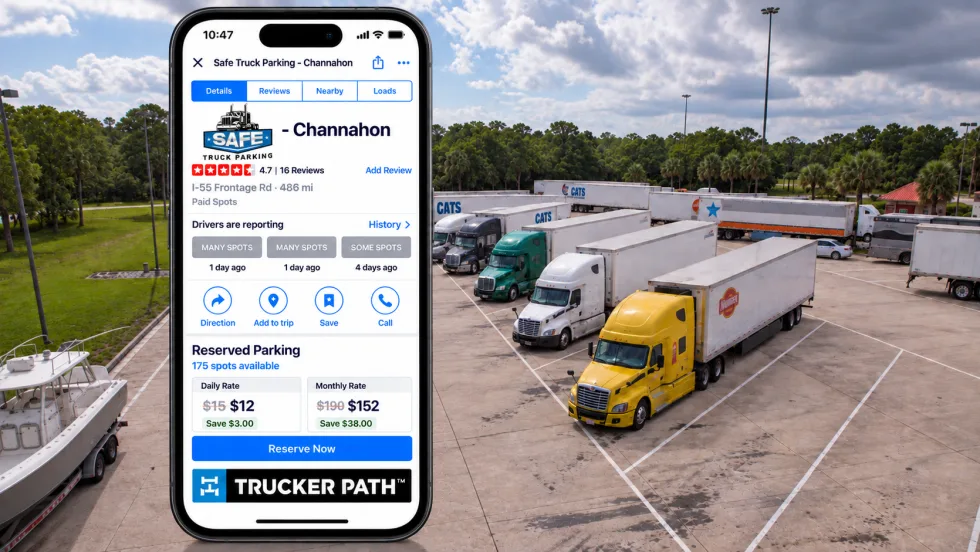
Trucker Path has added close to 6,000 more truck parking spaces to its Trucker Path Reserved Parking Network with the addition of Safe Truck Parking.
Read More →
EEOC Sues Texas Trucking Company Over Driver Age Limits
The agency says Trancasa USA rejected applicants over 65 and applied tougher driving-record standards to those over 60.
Read More →
Nussbaum, Roehl Announce Second Driver Pay Increase This Year
This year has seen a swath of major truck driver pay increases as freight capacity has tightened.
Read More →
From One Generation to the Next: How Mentorship Builds Safer Truck Drivers
After three decades in trucking, Harold Perry shares what he's learned about driver safety, mentorship, and helping the next generation build confidence behind the wheel.
Read More →
Truck Drivers Need More Than Another Alert
Fleets have more visibility into truck health, safety events, and driver activity than ever. The next challenge is turning all that information into useful guidance for the person who has to decide what to do next.
Read More →
FMCSA Removes 110 Truck Driver Training Schools from Certified ELDT List
Federal regulators also are targeting more than 160 additional training providers and launching a nationwide audit of third-party CDL skills testers as part of a broader crackdown on trucking fraud.
Read More →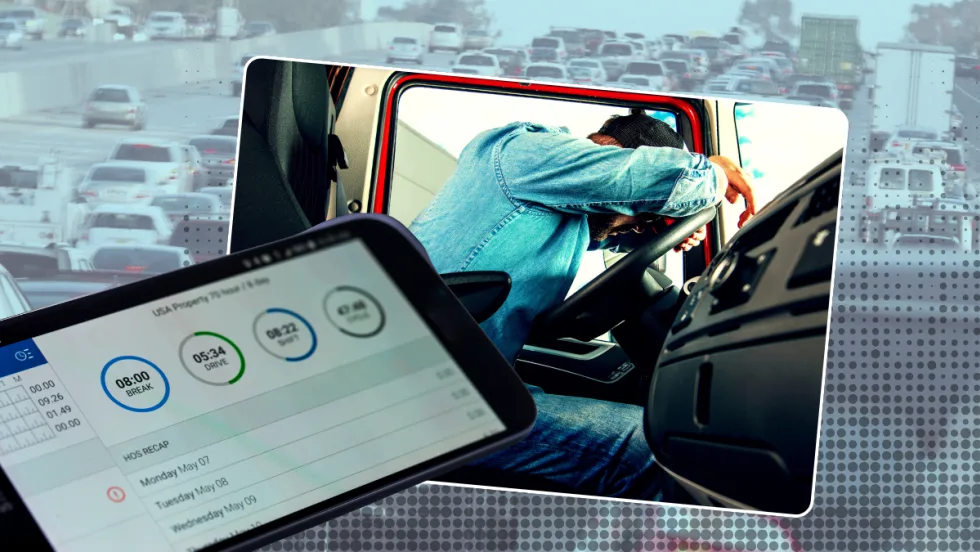
Hours of Service Pilot Programs: FMCSA Readies for 2027 Rollout
Two pilot programs could eventually reshape hours-of-service rules, giving truck drivers options to pause their 14-hour clock or use longer split sleeper rest periods.
Read More →
Medical Cards, English Proficiency Reshape Roadcheck Violations
Medical-card violations jumped to the top of the driver out-of-service list during CVSA’s 2026 International Roadcheck, while English-language proficiency violations appeared among the leading violations for the first time.
Read More →
Driver Trust Can Make or Break the Success of Fleet Safety Technology
New Teletrac Navman research suggests that onboarding, transparency about driver data, and positive feedback can play a significant role in how commercial drivers respond to safety and coaching technology.
Read More →
EEOC Sues KLLM Over Alleged Sex Discrimination in Driver Training
KLLM is facing a federal sex-discrimination lawsuit over policies the EEOC alleges put female truck driver trainees at a disadvantage.
Read More →