




Roadway, Reimer Express Sign Accord With Customs Agencies
Roadway Express Inc. of Akron, Ohio, and its Canadian subsidiary, Reimer Express Lines Ltd. of Winnipeg, Canada have signed the Customs-Trade Partnership Against Terrorism
Roadway Express Inc. of Akron, Ohio, and its Canadian subsidiary, Reimer Express Lines Ltd. of Winnipeg, Canada have signed the Customs-Trade Partnership Against Terrorism
(C-TPAT) with the U.S. Customs Service, as well as the Partners In Protection (PIP) memorandum of understanding with Canada Customs and Revenue Agency.
Both programs are part of the Free and Secure Trade (FAST) Highway carrier application process.
Last summer, Deputy Prime Minister John Manley and U.S. Director of Homeland Security Tom Ridge, announced a new program called Free and Secure Trade (FAST). Then in September, President Bush and Canada Prime Minister Jean Chretien announced new border security measures (FAST) at the Windsor/Ambassador Bridge in Detroit, Mich.
The purpose of FAST is to tighten border security while keeping the border open to the free flow of known, low-risk legitimate trade while enhancing the economic prosperity of both countries. The program offers expedited clearance processes for commercial shipments crossing the border both north and south and providing a FAST lane for trucks wherever possible. This will promote free and secure trade by using common risk-management principles, supply chain security, industry partnership and advanced technologies to improve the efficiency of screening and clearing commercial traffic at the shared border.
Next month, FAST will roll out at six border sites.
More Drivers

Nussbaum, Roehl Announce Second Driver Pay Increase This Year
This year has seen a swath of major truck driver pay increases as freight capacity has tightened.
Read More →
From One Generation to the Next: How Mentorship Builds Safer Truck Drivers
After three decades in trucking, Harold Perry shares what he's learned about driver safety, mentorship, and helping the next generation build confidence behind the wheel.
Read More →
Truck Drivers Need More Than Another Alert
Fleets have more visibility into truck health, safety events, and driver activity than ever. The next challenge is turning all that information into useful guidance for the person who has to decide what to do next.
Read More →
FMCSA Removes 110 Truck Driver Training Schools from Certified ELDT List
Federal regulators also are targeting more than 160 additional training providers and launching a nationwide audit of third-party CDL skills testers as part of a broader crackdown on trucking fraud.
Read More →
Hours of Service Pilot Programs: FMCSA Readies for 2027 Rollout
Two pilot programs could eventually reshape hours-of-service rules, giving truck drivers options to pause their 14-hour clock or use longer split sleeper rest periods.
Read More →
Medical Cards, English Proficiency Reshape Roadcheck Violations
Medical-card violations jumped to the top of the driver out-of-service list during CVSA’s 2026 International Roadcheck, while English-language proficiency violations appeared among the leading violations for the first time.
Read More →
Driver Trust Can Make or Break the Success of Fleet Safety Technology
New Teletrac Navman research suggests that onboarding, transparency about driver data, and positive feedback can play a significant role in how commercial drivers respond to safety and coaching technology.
Read More →
EEOC Sues KLLM Over Alleged Sex Discrimination in Driver Training
KLLM is facing a federal sex-discrimination lawsuit over policies the EEOC alleges put female truck driver trainees at a disadvantage.
Read More →
FMCSA Moves to Codify English Language Requirements for Commercial Drivers
By changing regulations on English-language proficiency requirements for commercial drivers, rather than relying on a guidance memo, the FMCSA said future administrations won't be able to walk back the Trump administration's stricter enforcement with just a memo.
Read More →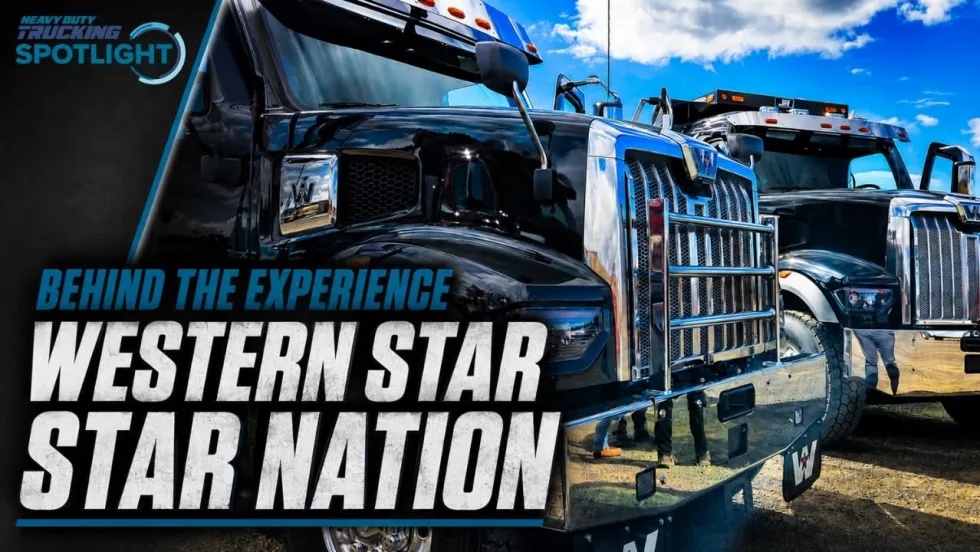
Drivers Put Western Star Trucks to the Test at Star Nation Experience
Watch to get an inside look at the Western Star trucks, technology, and community behind the Star Nation Experience 2026!
Read More →