




Revised Trust Fund Proposal Drops Truck Tax Hike
In an effort to prevent a shutdown of the federal transportation program, the Senate Finance Committee has drafted a proposal to keep the Highway Trust Fund solvent through the end of the year. The original version of the proposal included an increase in the heavy vehicle use tax, but that provision was dropped in deference to Republican concern about the proportion of revenue raisers to spending cuts in the proposal.


Photo: Evan Lockridge

In an effort to prevent a shutdown of the federal transportation program, the Senate Finance Committee has drafted a proposal to keep the Highway Trust Fund solvent through the end of the year.
The fund is on track to run into the red within a month or so, and if that happens it will jeopardize some 6,000 road projects and 700,000 jobs, according to the Department of Transportation.
“Every Senator knows that it is crunch time,” said Sen. Ron Wyden, D-Ore., chairman of the committee, as he introduced a revised version of his proposal on Thursday.
The original version of the proposal included an increase in the heavy vehicle use tax, but Wyden dropped that provision in deference to Republican concern about the proportion of revenue raisers to spending cuts in the proposal.
Now the approximately $9 billion infusion to the Trust Fund would come from general revenues and offsets related to changes in tax compliance and enforcement policies.
Wyden said he and the ranking Republican member of the committee, Orin Hatch of Utah, will reach out to Rep. Dave Camp, R-Mich., for agreement on how the House will react to the Senate measure.
Camp, who chairs the House Ways and Means Committee, objected to the original version of the Senate’s plan because it included the increase in the heavy vehicle use tax. He said his committee will take up the issue in early July.
The Senate Finance Committee did not vote on the proposal. That will come the week of July 7, Wyden said.
Sen. John Thune, R-S.D., warned that it will be important for the committee to show bipartisan support for the proposal. If it’s a party-line vote, the measure will die on the Senate floor, he said.
Among the funding sources in the proposal is the transfer of $750 million from the Leaking Underground Storage Tank Trust Fund to the Highway Trust Fund.
Another provision changes the tax rate on liquefied natural gas. It’s now the same as the tax rate on diesel, 24.3 cents per gallon, but would be changed to 14.1 cents per gallon to reflect the lower energy content of LNG.
A key part of the proposal is a “Sense of the Senate” provision that Congress should move quickly to produce a long-term bill that will pay for the highway program through 2020.
More Fleet Management
Enhance Fleet Performance with High-Efficiency Auxiliary Power Units
Drive sustainable cost savings while increasing driver comfort during short- and long-haul logistics operations.
Read More →
Is Your Parts Procurement Process Reactive or Proactive?
Ready to revamp your parts procurement process? Learn how now with “Strategic Parts Purchasing: A Process Checklist”
Read More →
What Trucking Events are Happening in 2026?
Looking for trucking-related conventions, expos, and other events? Heavy Duty Trucking has developed this list of national and larger regional trucking shows and events.
Read More →
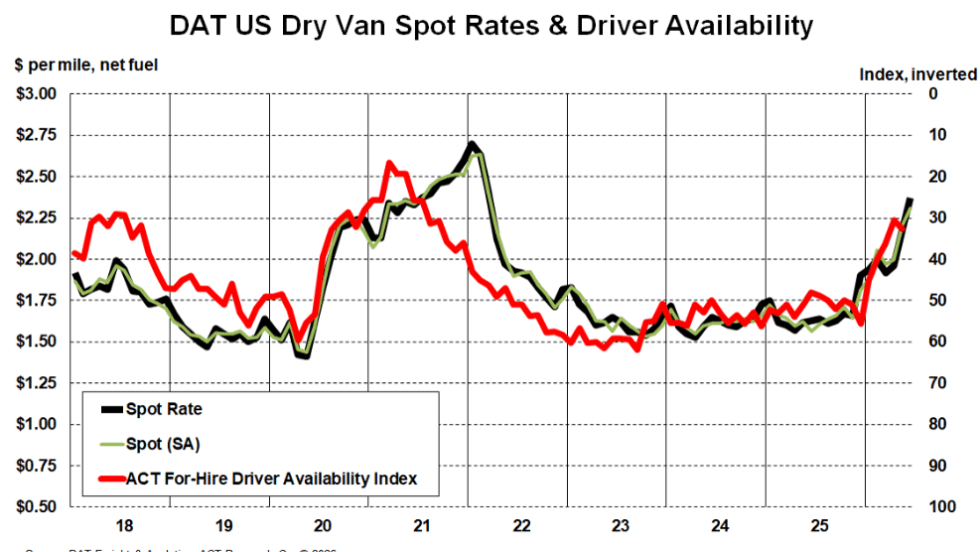
Truckload Rates Keep Rising as Tight Capacity Fuels Freight Market Recovery
Spot and contract rates continued climbing in May and June, not because freight demand is surging, but because fewer trucks and drivers are available.
Read More →
What Geotab's New AI Connector Means for Fleets
Fleets can now ask their usual AI assistants questions about maintenance, safety, fuel use, and vehicle performance, using their live Geotab data, and take action on the answers without leaving their preferred AI tool.
Read More →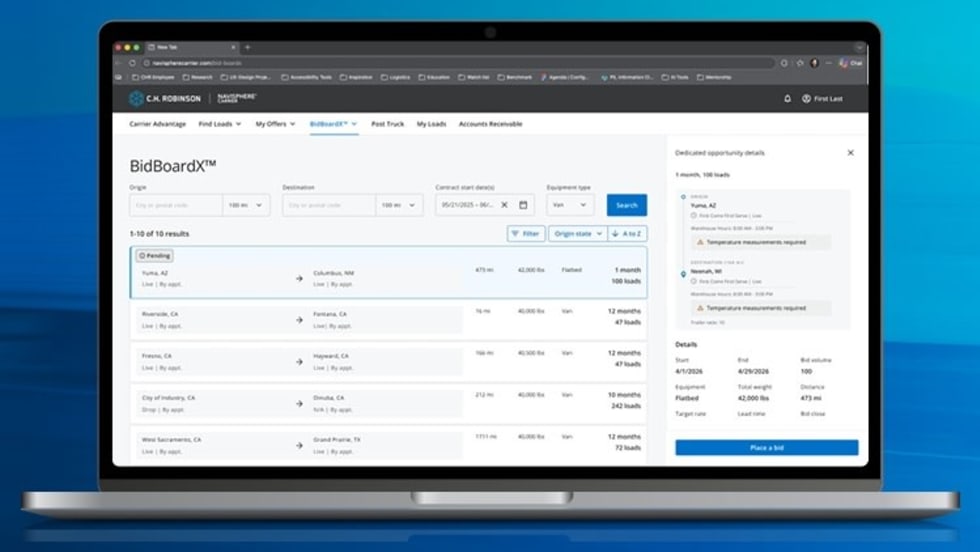
New C.H. Robinson Tool Opens Door to More Predictable Freight
BidBoardX lets carriers search, bid on, and secure committed freight opportunities through a single digital marketplace.
Read More →
New York City's Microhub Project is Delivering Results
Trucking, last-mile delivery companies, and environmental advocates like what they are seeing so far with New York's microhub program.
Read More →
Why Truck Detention Keeps Costing Fleets Time and Money
A 2024 ATRI study found detention affects nearly 40% of truckload stops and costs the industry more than $15 billion annually. Despite the toll on drivers, fleets, and supply chains, the problem remains stubbornly persistent.
Read More →
Time is Running Out to Apply for Exclusive HDT Event
Heavy Duty Trucking Exchange brings fleet managers and suppliers together for the deeper conversations that lead to ideas, partnerships, and solutions. Time is running out to apply for the September event.
Read More →
Amazon Launches Less-Than-Truckload Freight Offering for All Businesses
This launch is the latest addition to Amazon Supply Chain Services, a portfolio of supply chain capabilities from Amazon, including freight, distribution, fulfillment, and parcel shipping.
Read More →