




Retail Container Traffic to be Up 2.6% in October
Import cargo volume at the nation's major retail container ports is expected to increase 2.6% in October over the same month last year and should reach its highest level of the year as retailers stock up for the holiday season
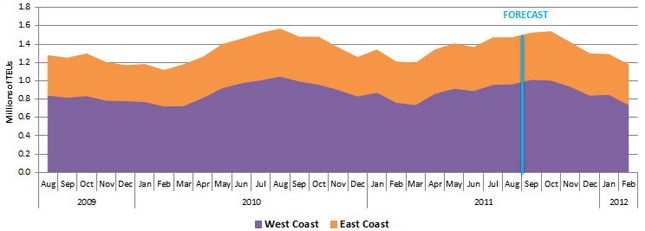
The Global Port Tracker report predicts October will be the busiest shipping month for 2011.
Import cargo volume at the nation's major retail container ports is expected to increase 2.6% in October over the same month last year and should reach its highest level of the year as retailers stock up for the holiday season.
The monthly Global Port Tracker report released by the National Retail Federation and Hackett Associates says shipping patterns are shifting back to normal, with October looking like another peak month.
"After a summer of trying to compare apples to oranges, retail cargo is back to normal," NRF Vice President for Supply Chain and Customs Policy Jonathan Gold said. "October is the historic peak of the shipping cycle each year, and retailers are bringing merchandise into the country on their usual schedule and at normal levels again instead of being forced to move cargo early. Retailers are poised to succeed in maintaining the careful balance between inventory and sales that keeps customers happy while keeping retailers profitable."
U.S. ports followed by Global Port Tracker handled 1.32 million Twenty-foot Equivalent Units in August, the latest month for which after-the-fact numbers are available. That was the same as July, but down 7% from August 2010. One TEU is one 20-foot cargo container or its equivalent.
The August figures followed year-over-year declines of 5% in June and 4% in July, but the statistics were skewed because of high-than-normal numbers in 2010 when fears of shortages in shipping capacity caused many retailers to bring holiday merchandise into the country earlier than usual. Global Port Tracker counts only the number of cargo containers imported, not the value of their contents, so cargo volume does not directly correlate with retail sales. Actual retail sales were up during the summer, and NRF is forecasting 2.8% growth in holiday sales this November and December over last year, for a total of $465.6 billion.
Year-over-year cargo growth resumed but was weak in September -- estimated at 1.37 million TEU, up 2.7% from last year. October is forecast at 1.39 million TEU, up 2.6% from last year, and is expected to regain its historical position as the busiest month of the year after last year's usual patterns shifted the peak to August.
November is forecast at 1.28 million TEU, up 4% from last year, and December is forecast at 1.18 million TEU, up 2.7%. January 2012 is forecast at 1.16 million TEU, down 3.6% from January 2011, and February, traditionally the slowest month of the year, is forecast at 1.1 million TEU, down 3.8%.
The total for 2011 is forecast at 15 million TEU, up 1.8% from 2010. Imports during 2010 totaled 14.7 million TEU, a 16% increase over unusually low numbers in 2009.
Hackett Associates founder Ben Hackett was optimistic despite mixed economic data.
"General economic indicators are giving us a mixed set of signals," Hackett said. "Yet at the same time there are indications that things are not quite that bad. We are of the opinion that the probability for economic growth is high than the probability of recession."
Global Port Tracker, which is produced for NRF by the consulting firm Hackett Associates, covers the U.S. ports of Long Angeles/Long Beach, Oakland, Seattle and Tacoma on the West Coast; New York/New Jersey, Hampton Roads, Charleston and Savannah on the East Coast, and Houston on the Gulf Coast.
The report is free to NRF retail members, and subscription information is available at www.nrf.com/porttracker, or by calling (202) 783-7971.
Subscription information for non-members can be found at www.globalportracker.com.
More Fleet Management

Motive Adds AI Agents for Fleet Operations
New tools automate follow-up on fleet data, from maintenance work orders to driver alerts, with two-way voice conversations planned for later this year.
Read More →
Can You Beat Our Trucking Trivia Challenge?
Test your truck knowledge with 19 trivia questions from Heavy Duty Trucking Exchange. Can you keep up with the fleet pros?
Read More →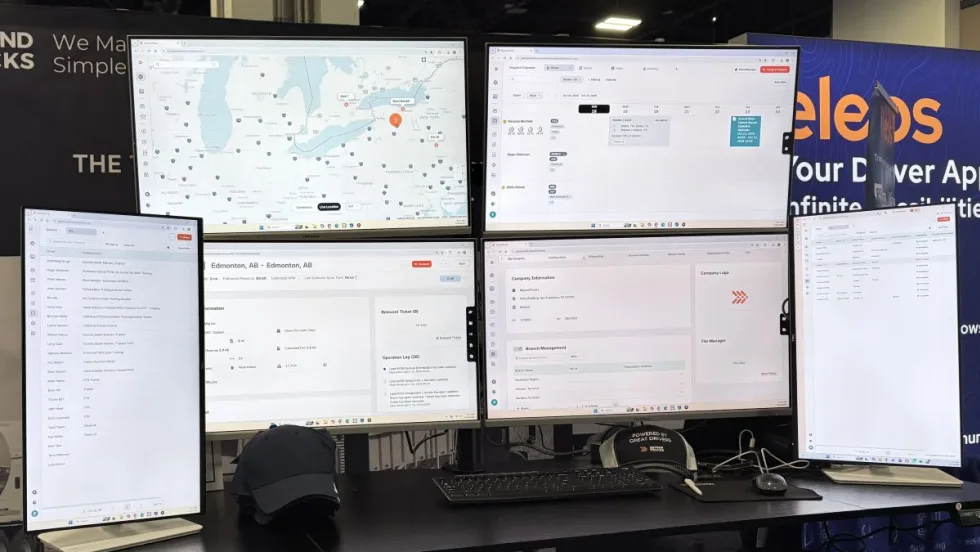
BeyondTrucks Adds Rules Checks to Dispatch
New Compatibility Engine checks driver qualifications, equipment requirements and fleet policies before loads are dispatched.
Read More →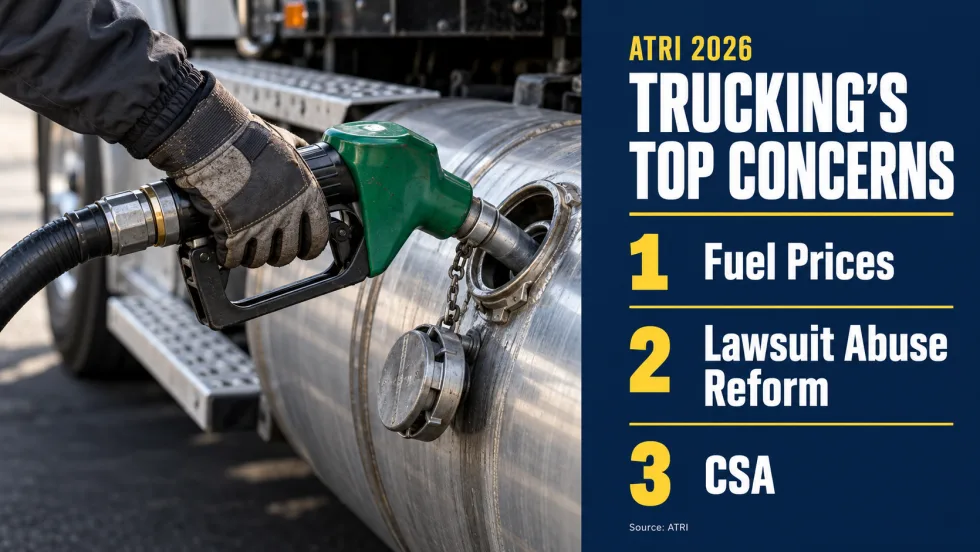
Diesel Prices Hijack Trucking’s Worry List
ATRI’s annual survey finds cautious optimism about freight, but diesel costs, litigation, and insurance continue to squeeze fleets. Drivers have different priorities on several issues.
Read More →
Nomination Deadline Extended for HDT Emerging Leaders
Just a few more days to nominate accomplished trucking fleet professionals under 40 who are making an impact and helping lead the industry forward for the HDT Emerging Leaders award. Deadline extended to October 20!
Read More →
What Will ATA’s New Leader Bring to Trucking's Table?
Incoming President and CEO Mark Colson’s record in Alabama offers clues about his priorities and approach following Chris Spear’s abrupt departure as the head of the American Trucking Associations.
Read More →
Volvo, Waabi Start Commercial Autonomous Operations in Texas
Volvo VNL Autonomous trucks, powered by the Waabi Driver, are hauling freight directly to third-party facilities for a customer in Texas.
Read More →
Samsara Launches Custom AI Agent Builder
Agent Studio lets fleets create AI tools for hours-of-service monitoring, reporting and driver support, including agents that communicate by phone.
Read More →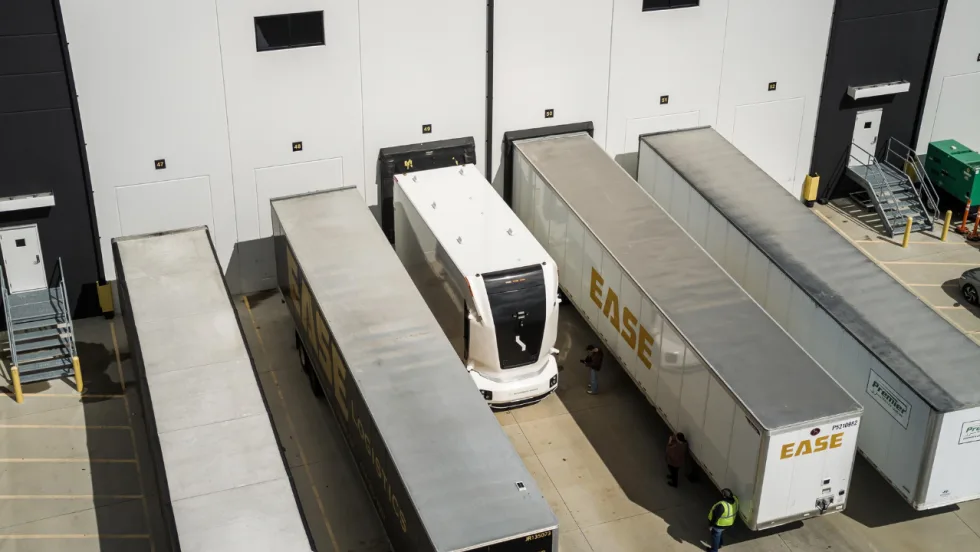
Einride Driverless Electric Trucks Begin Daily Freight Operations in Ohio
Two cabless electric trucks are hauling freight between EASE Logistics facilities in Marysville, Ohio, as part of a multi-state truck automation project.
Read More →
Geotab Links Fleet Card to Vehicle Data
The new card combines fuel discounts with telematics-based purchase controls. Geotab’s analysis also points to potential savings from choosing lower-priced fuel stops.
Read More →