




Restart Change Now in Effect
The pre-2013 34-hour restart rule is now in effect. On Tuesday President Obama signed the 2015 appropriations bill, which contains a provision suspending the more restrictive restart that went into effect as part of the hours of service rules enacted in July 2013.

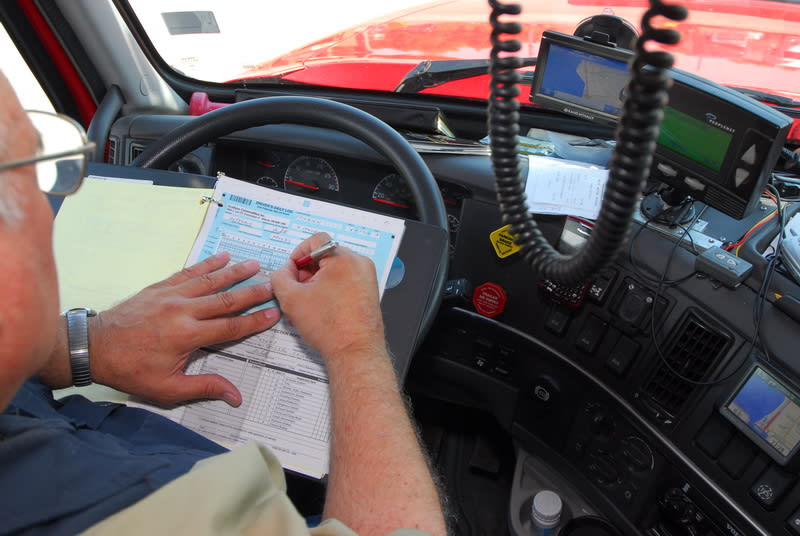

The pre-2013 34-hour restart rule is now in effect.
On Tuesday President Obama signed the 2015 appropriations bill, which contains a provision suspending the more restrictive restart that went into effect as part of the hours of service rules enacted in July 2013.
That provision required drivers to take two periods off between 1 a.m. and 5 a.m. during their 34-hour restart, and limited use of the restart to once a week.
The provision now in effect does not have these restrictions. It will stay in effect until the Federal Motor Carrier Safety Administration finishes a study of the provision or until September 30 of next year, whichever comes later.
It is apparent from the timeline Congress set that the study process will consume most of next year (see below).
The next step will be an announcement by FMCSA that the 2013 restart is suspended and the older restart is in effect.
The agency said in a statement that it is working to ensure that the 12,000 state and federal motor carrier enforcement personnel are prepared for the change. The enforcement community has expressed concern about this process.
Steve Keppler, executive director of the Commercial Vehicle Safety Alliance, warned that police will not be able to adjust quickly.
Inspectors need training, and the software they use for roadside inspections and compliance reviews must be changed, he said. He predicted that carriers will see uneven implementation of the new provision, which will affect data quality and CSA scores.
Timeline
The future of the restart appears to depend on what the study finds.
The law is specific about the timeline and about what the study should cover (see below), but it does not say what the Department of Transportation must do in response to the study.
Here’s the timeline.
The July 2013 restart was suspended as of Tuesday, January 16.
As soon as possible, FMCSA must publish a notice saying that the newer restart is suspended and the older one is in effect.
The Department of Transportation has 60 days from Tuesday to submit its plan for the study to the DOT Inspector General.
The Inspector General has 30 days from then to review the plan and report its findings and recommendations back to the Secretary of Transportation and the appropriations committees in the House and Senate.
FMCSA must begin the study within 90 days of Tuesday – no later than mid March.
The agency then has 210 days (seven months) to finish the study, which could push the finish line to late October.
When the study is done, the DOT Secretary must submit a final report, including recommendations, to the Inspector General. The recommendations must address the question of whether the more restrictive restart “provide a greater net benefit for the operational, safety, health and fatigue impacts of the restart provisions.”
The Inspector General then has 60 days to report back to the DOT Secretary and to the House and Senate appropriations committees on whether or not the study met all the requirements set forth in the law.
After the Inspector General submits his report, DOT must send the final report to the appropriations committees and make it public.
The law requires FMCSA to study the restart by comparing the work schedules and fatigue of drivers who operate under the old restart and the new one.
The study also must compare five months of work schedules and safety critical events, such as crashes and near-crashes, for fleets of all sizes and types of operations.
The agency must use electronic log data “to the extent practicable.”
An independent panel of medical and scientific experts must review the initial study plan and final report.
The law is silent on what happens when the study is done. Presumably, if it shows that one restart provides a greater net benefit than the other, then FMCSA will adopt that provision as part of the rule.
More Drivers

Truck Drivers Need More Than Another Alert
Fleets have more visibility into truck health, safety events, and driver activity than ever. The next challenge is turning all that information into useful guidance for the person who has to decide what to do next.
Read More →
FMCSA Removes 110 Truck Driver Training Schools from Certified ELDT List
Federal regulators also are targeting more than 160 additional training providers and launching a nationwide audit of third-party CDL skills testers as part of a broader crackdown on trucking fraud.
Read More →
Hours of Service Pilot Programs: FMCSA Readies for 2027 Rollout
Two pilot programs could eventually reshape hours-of-service rules, giving truck drivers options to pause their 14-hour clock or use longer split sleeper rest periods.
Read More →
Medical Cards, English Proficiency Reshape Roadcheck Violations
Medical-card violations jumped to the top of the driver out-of-service list during CVSA’s 2026 International Roadcheck, while English-language proficiency violations appeared among the leading violations for the first time.
Read More →
Driver Trust Can Make or Break the Success of Fleet Safety Technology
New Teletrac Navman research suggests that onboarding, transparency about driver data, and positive feedback can play a significant role in how commercial drivers respond to safety and coaching technology.
Read More →
EEOC Sues KLLM Over Alleged Sex Discrimination in Driver Training
KLLM is facing a federal sex-discrimination lawsuit over policies the EEOC alleges put female truck driver trainees at a disadvantage.
Read More →
FMCSA Moves to Codify English Language Requirements for Commercial Drivers
By changing regulations on English-language proficiency requirements for commercial drivers, rather than relying on a guidance memo, the FMCSA said future administrations won't be able to walk back the Trump administration's stricter enforcement with just a memo.
Read More →
Drivers Put Western Star Trucks to the Test at Star Nation Experience
Watch to get an inside look at the Western Star trucks, technology, and community behind the Star Nation Experience 2026!
Read More →
Trump Administration Looks to Put More Veterans Behind the Wheel
The Freedom Haulers program pulls together existing and expanded programs at several federal agencies to recruit veterans to drive commercial heavy-duty trucks and cut the red tape for them to get a CDL, training, and employment.
Read More →
Putting Mack’s Command Steer to the Test
A test drive of Mack’s Command Steer active steering system evaluates how it can make truck driving easier and less tiring.
Read More →