




Related: Congested Roads Run Up Trucking Costs Almost $50 Billion
Researchers: Big Data Could Move Trucking Better
Researchers at Iowa State University say that using real-time data collected by the U.S. Department of Transportation could help fleets save billions of dollars a year by avoiding congestion.
by Staff
March 2, 2017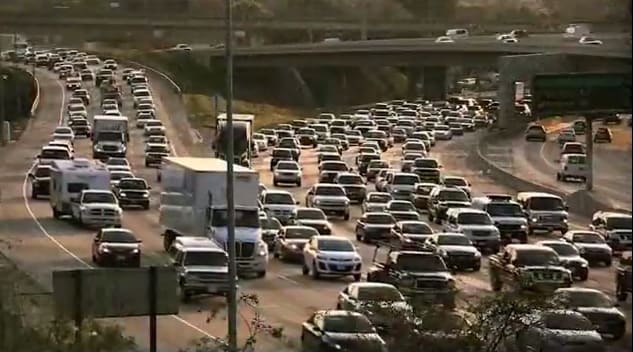
Photo: U.S. DOT
3 min to read
Photo: U.S. DOT
Researchers at Iowa State University contend that using real-time data collected by the U.S. Department of Transportation could help fleets save billions of dollars a year by avoiding congestion.
The university is working with the Iowa Department of Transportation to identify ways that fleets can increase productivity and improve safety. In doing so, they have determined that leveraging big data could play a pivotal role.
“The DOT has a lot of real-time data on the operating conditions of state highways and secondary roads, and it wants to make sure the data is of value to carriers,” said Dave Cantor, an associate professor of supply chain management at Iowa State. “With this data and information, we can improve on-time delivery performance, safe delivery of the freight and minimize idle time.”
While real-time data already being collected by DOT could help fleets refine routes and avoid idle time, the biggest problem that researchers found was that there is no easy way for all fleets to access the information. The data could relay up-to-date information on road conditions, traffic speeds, congestion, accidents and construction projects-- all of which can impede the flow of commerce.
Small fleets with fewer than 100 trucks were found to not have access to the technology or the manpower needed to receive and process DOT data. That puts these companies at a disadvantage compared to large fleets. Researchers surveyed around two dozen logistics and technology providers, large and small carriers and various types of haulers to collect data for the report.
“There’s no sense in sending a truck into Des Moines at 4 o’clock in the afternoon if we know the driver is just going to sit in traffic,” said Neal Foster, a former trucking company owner who is part of the research team. “Every truck line that I know wants to reduce accidents and increase safety, and congestion does nothing but enhance accidents. The industry wants to stay away from congestion and slowdowns to improve safety.”
One possible solution floated by the researchers would use electronic logging devices to disseminate information to all fleets. Because the devices will be required on all trucks starting at the end of this year, integrating navigation data into ELD systems would benefit every fleet.
The research group was examined truck parking data, which most trucking companies involved in the survey would like to have access to. The state of Iowa is currently working to provide the information to drivers through an app or another form of technology, rather than using electronic highway signs. Researchers found that while some data exists, information was inconsistent from state to state and would need to be a part of a broader national plan to be effective.
To address all of these concerns, the research team made four recommendations in its report to move forward on a real-time traffic data solution. Researchers recommended conducting a financial cost-benefit analysis to highlight potential savings from a new technology, developing partnership with DOTs in neighboring states, creating a coalition with industry and government leaders, and testing and marketing the technology in Iowa through partnerships with vendors.
“State DOTs have a lot of information that can benefit the industry,” said Neal Hawkins, associate director for the Institute for Transportation at Iowa State. “However, there is a limitation to this effort when you have just one DOT involved, because so many trucks travel across state borders. It really begs for a bigger coordinated effort.”
More Fleet Management

Sponsored•September 16, 2026
Color Match Smarter: Tools That Restore & Perform
For fleet managers and collision repair professionals keeping heavy-duty trucks on the road, getting the color right the first time isn't just about appearance — it's about efficiency, turnaround time, and bottom-line results. Discover how today's digital color tools are transforming the repair process from guesswork to precision.
Read More →
FMCSA Pauses Biennial-Update Enforcement Amid Motus Transition
Carriers whose updates were due on or after June 1 have more time, while FMCSA works to stabilize its new registration system and warns of phishing sites impersonating its new carrier registration system, Motus.
Read More →
Sponsored•September 14, 2026
2026 Blueprint for Countering Smarter Supply Chain Theft
Cargo theft is no longer just the cost of doing business. It's a multi-billion-dollar criminal enterprise exploiting vulnerabilities across your fleet, drivers, and supply chain.
Read More →


Sponsored•September 1, 2026
How Telematics Improves Visibility, Control, and Performance in Refrigerated Fleets
Explore how telematics help refrigerated fleets improve visibility, uptime, efficiency, compliance, and cargo protection across connected cold chain operations.
Read More →
What the U.S.-Canada Trade War Means for Trucking
Escalating U.S.-Canada tariffs could disrupt cross-border freight, reduce truck volumes, raise costs, and create new uncertainty for carriers on both sides of the border.
Read More →
What Are Trucking’s Top Concerns for 2026?
The American Transportation Research Institute wants to know what's worrying trucking fleet managers, drivers, and other stakeholders in its annual Industry Issues survey.
Read More →
American Trucking Associations Looks for a New Leader
ATA President and CEO Chris Spear abruptly left his job at the association on August 21, at a pivotal time for the trucking industry.
Read More →
Public Wi-Fi Cybersecurity Risks: How Truck Drivers and Fleets Can Protect Their Data
Public Wi-Fi can expose truck drivers and fleets to credential theft, malware, and other cyber threats. Here’s how to reduce the risk on the road.
Read More →
For Nicky Cupp, Fleet Innovation Starts With Frustration
HDT Truck Fleet Innovator Nicky Cupp turns everyday pain points at Fraley & Schilling into opportunities for better technology and smarter processes.
Read More →
Adam Buttgenbach’s Approach to Electric Trucks: Start With Where They Fit
HDT Truck Fleet Innovator Adam Buttgenbach helped PepsiCo build one of North America’s largest EV fleets by focusing on where electric trucks make operational sense.
Read More →