




Report: Highway and Bridge Spending Needs to Double Just to Keep Up
By 2015, a new report says, governments at all levels will need to more than double their spending on highways and bridges to keep up with increased traffic, freight congestion, the demands of aging highways and bridges
By 2015, a new report says, governments at all levels will need to more than double their spending on highways and bridges to keep up with increased traffic, freight congestion, the demands of aging highways and bridges,
and the growth of the nation's population.
These findings, among others, are included in the Bottom Line report, released last week by the American Association of State Highway and Transportation Officials and the American Public Transportation Association and presented to Congressman James Oberstar (D-Minn.), chairman of the House Transportation and Infrastructure Committee.
Smoother roads, less time lost to congestion, improved transit service and substantial savings in vehicle owner costs are the benefits Americans can expect in exchange for this investment.
In 2006, federal, state and local governments spent $79 billion on highways and bridges. However, investment of $166 billion a year is required, if the number of miles driven increases at an expected rate of 1.4 percent a year. If transit ridership grows yearly by 3.5 percent, investment would have to increase to $59 billion annually. In 2006, transit investment was $13.3 billion.
The report found that in 2006, the value of freight transported in America was $15 trillion. Freight volumes are expected to grow by 80 percent by 2035. In addition, between 1980 and 2005, international container traffic through United States ports grew six-fold. In 2006, 42 million containers were shipped. By 2020, the number of containers moving through our ports could reach over 100 million.
"We are a growing nation, adding 150 million people every 50 years," said John Horsley, AASHTO Executive Director. "Ninety percent of miles traveled by Americans in this vast country are on highways. To meet the nation's needs we must preserve the highway and transit systems built over the last century and add capacity to keep America competitive in the world economy and meet growing mobility needs here at home."
Get the Bottom Line report at bottomline.transportation.org.
More Drivers

Nussbaum, Roehl Announce Second Driver Pay Increase This Year
This year has seen a swath of major truck driver pay increases as freight capacity has tightened.
Read More →
From One Generation to the Next: How Mentorship Builds Safer Truck Drivers
After three decades in trucking, Harold Perry shares what he's learned about driver safety, mentorship, and helping the next generation build confidence behind the wheel.
Read More →
Truck Drivers Need More Than Another Alert
Fleets have more visibility into truck health, safety events, and driver activity than ever. The next challenge is turning all that information into useful guidance for the person who has to decide what to do next.
Read More →
FMCSA Removes 110 Truck Driver Training Schools from Certified ELDT List
Federal regulators also are targeting more than 160 additional training providers and launching a nationwide audit of third-party CDL skills testers as part of a broader crackdown on trucking fraud.
Read More →
Hours of Service Pilot Programs: FMCSA Readies for 2027 Rollout
Two pilot programs could eventually reshape hours-of-service rules, giving truck drivers options to pause their 14-hour clock or use longer split sleeper rest periods.
Read More →
Medical Cards, English Proficiency Reshape Roadcheck Violations
Medical-card violations jumped to the top of the driver out-of-service list during CVSA’s 2026 International Roadcheck, while English-language proficiency violations appeared among the leading violations for the first time.
Read More →
Driver Trust Can Make or Break the Success of Fleet Safety Technology
New Teletrac Navman research suggests that onboarding, transparency about driver data, and positive feedback can play a significant role in how commercial drivers respond to safety and coaching technology.
Read More →
EEOC Sues KLLM Over Alleged Sex Discrimination in Driver Training
KLLM is facing a federal sex-discrimination lawsuit over policies the EEOC alleges put female truck driver trainees at a disadvantage.
Read More →
FMCSA Moves to Codify English Language Requirements for Commercial Drivers
By changing regulations on English-language proficiency requirements for commercial drivers, rather than relying on a guidance memo, the FMCSA said future administrations won't be able to walk back the Trump administration's stricter enforcement with just a memo.
Read More →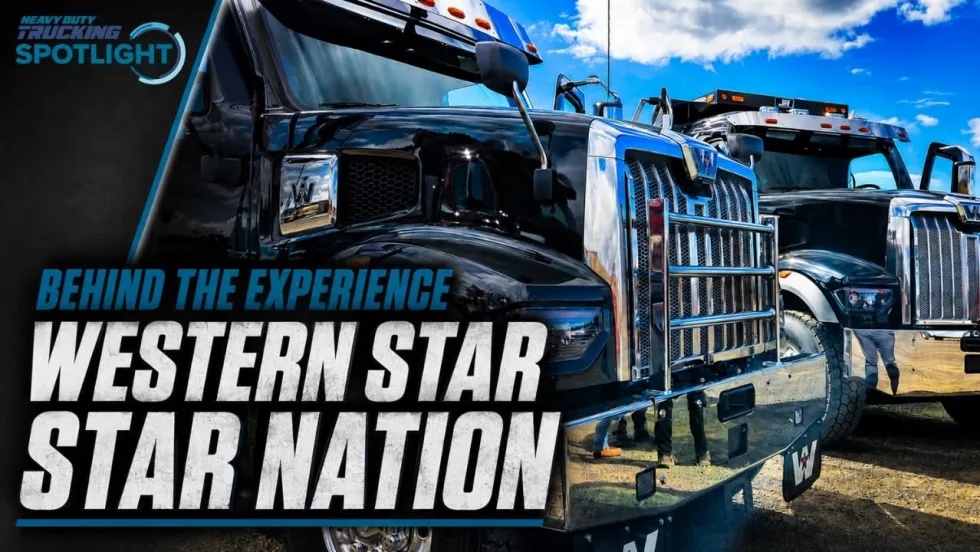
Drivers Put Western Star Trucks to the Test at Star Nation Experience
Watch to get an inside look at the Western Star trucks, technology, and community behind the Star Nation Experience 2026!
Read More →