




Record Number of Containers Roll Through Savannah Port
A record amount of containers and cargo moved through the Port of Savannah during the 2014 fiscal year that just ended, according to the Georgia Ports Authority.
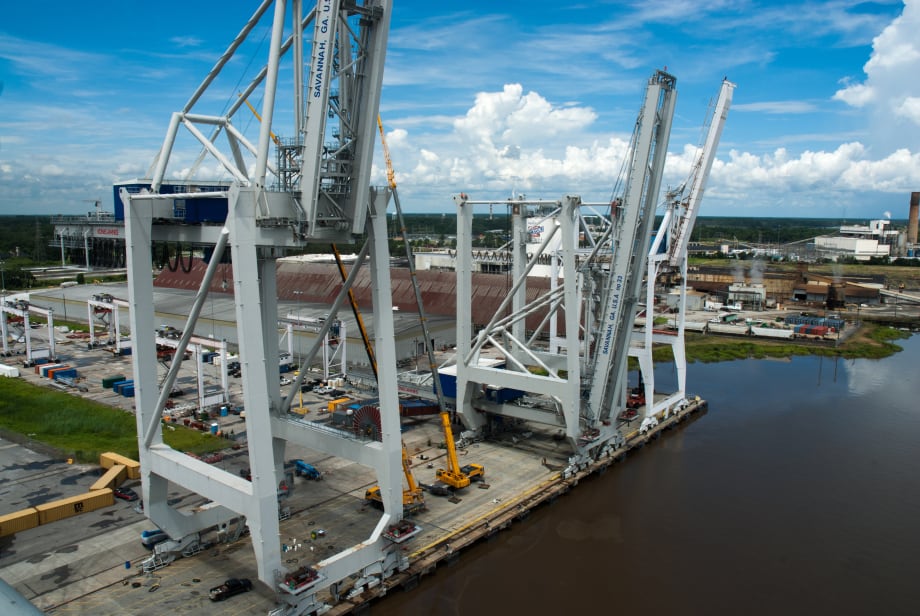
Photo: Courtesy of Georgia Ports Authority
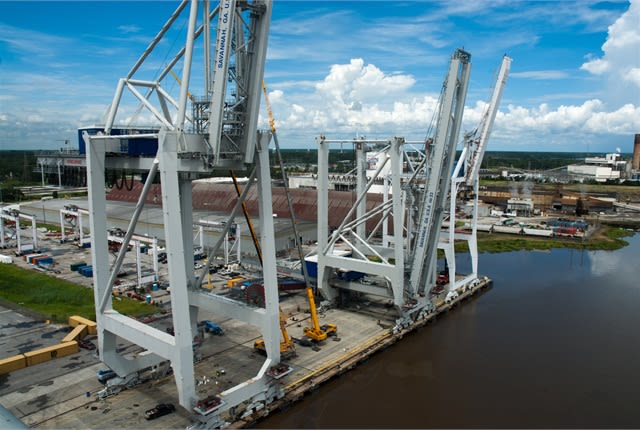
Photo: Courtesy of Georgia Ports Authority
A record amount of containers and cargo moved through the Port of Savannah during the 2014 fiscal year that just ended, according to the Georgia Ports Authority.
It handled 3.14 million twenty-foot equivalent container units, up by 6.3%, or 186,567 TEUs, compared to the previous fiscal year. It was also the first time for the port to move more than 3 million TEUs in a fiscal year.
The added volume contributed to a record year in total tonnage. In the 12 months ending June 30, GPA moved 29.4 million tons of freight, up by 8% or 2.17 million tons.
“Our ports support a broad range of industries, ranging from forestry and food production to auto manufacturing and retail,” said GPA executive director Curtis Foltz. “The additional cargo attracted to Georgia in fiscal year 2014 speaks to the powerful and growing impact Georgia’s ports have on the state and region.”
In roll-on/roll-off cargo, the Port of Brunswick’s dedicated auto and machinery terminal moved 674,327 units in fiscal 2014. Savannah’s Ocean Terminal added another 26,375 for a record total of 700,702 units. GPA roll-on/roll-off cargo improved by 63,760 units, or 10% on the year. Breakbulk cargo saw a gain of 5.2%, growing by 129,861 tons to reach 2.63 million tons. Meanwhile, bulk cargo expanded by 8.4%, or 212,086 tons, to reach 2.73 million tons of agricultural and other bulk goods moved across GPA docks.
The Port of Savannah handled 8% of the U.S. containerized cargo volume and 10.9% of all U.S. containerized exports in FY2013, according to the GPA.
More Fleet Management

How Telematics Improves Visibility, Control, and Performance in Refrigerated Fleets
Explore how telematics help refrigerated fleets improve visibility, uptime, efficiency, compliance, and cargo protection across connected cold chain operations.
Read More →
What the U.S.-Canada Trade War Means for Trucking
Escalating U.S.-Canada tariffs could disrupt cross-border freight, reduce truck volumes, raise costs, and create new uncertainty for carriers on both sides of the border.
Read More →
What Are Trucking’s Top Concerns for 2026?
The American Transportation Research Institute wants to know what's worrying trucking fleet managers, drivers, and other stakeholders in its annual Industry Issues survey.
Read More →

American Trucking Associations Looks for a New Leader
ATA President and CEO Chris Spear abruptly left his job at the association on August 21, at a pivotal time for the trucking industry.
Read More →
Public Wi-Fi Cybersecurity Risks: How Truck Drivers and Fleets Can Protect Their Data
Public Wi-Fi can expose truck drivers and fleets to credential theft, malware, and other cyber threats. Here’s how to reduce the risk on the road.
Read More →
For Nicky Cupp, Fleet Innovation Starts With Frustration
HDT Truck Fleet Innovator Nicky Cupp turns everyday pain points at Fraley & Schilling into opportunities for better technology and smarter processes.
Read More →
Adam Buttgenbach’s Approach to Electric Trucks: Start With Where They Fit
HDT Truck Fleet Innovator Adam Buttgenbach helped PepsiCo build one of North America’s largest EV fleets by focusing on where electric trucks make operational sense.
Read More →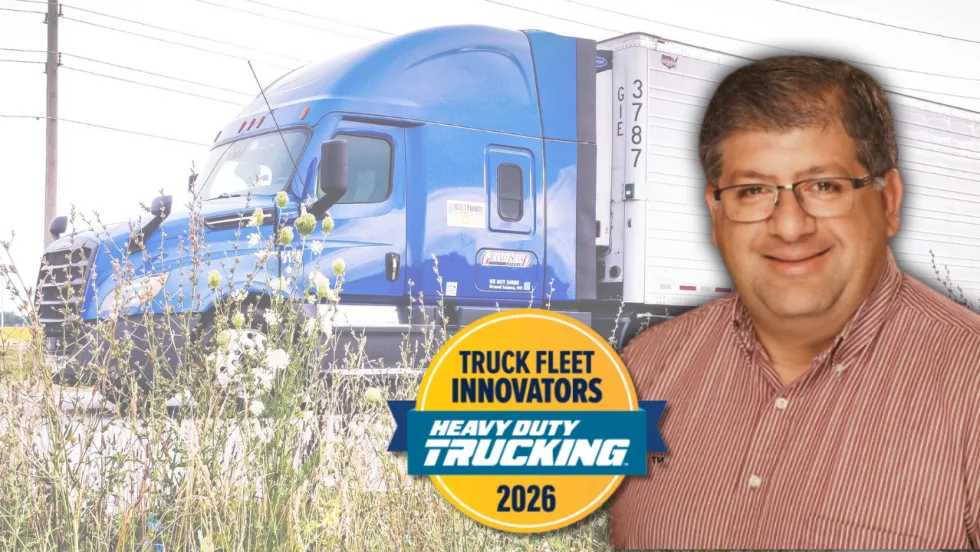
Deen Albert: Let Automation Do the Math, People Make the Decisions
HDT Truck Fleet Innovator Deen Albert makes sure people are still at the heart of operations at Grand Island Express, even while adopting artificial intelligence tools. AI-assisted dispatch helped boost revenue 25% with the same number of trucks.
Read More →
Trimble’s New AI Agent Takes Aim at Fleet Back-Office Busywork
Arc Agent works across Trimble TMS products to automate repetitive tasks such as freight orders, maintenance, invoices, fuel costs and more.
Read More →
How HDT’s 2026 Truck Fleet Innovators Are Rethinking Fleet Operations
Meet five trucking leaders who are challenging assumptions, solving operational problems, and putting innovative ideas to work.
Read More →