




Rail Management Services Goes Electric
Rail Management Services placed a follow-on order for nine additional Orange EV T-Series pure electric terminal trucks. The trucks are being worked into onsite fleets to supplement and replace RMS's diesel trucks.

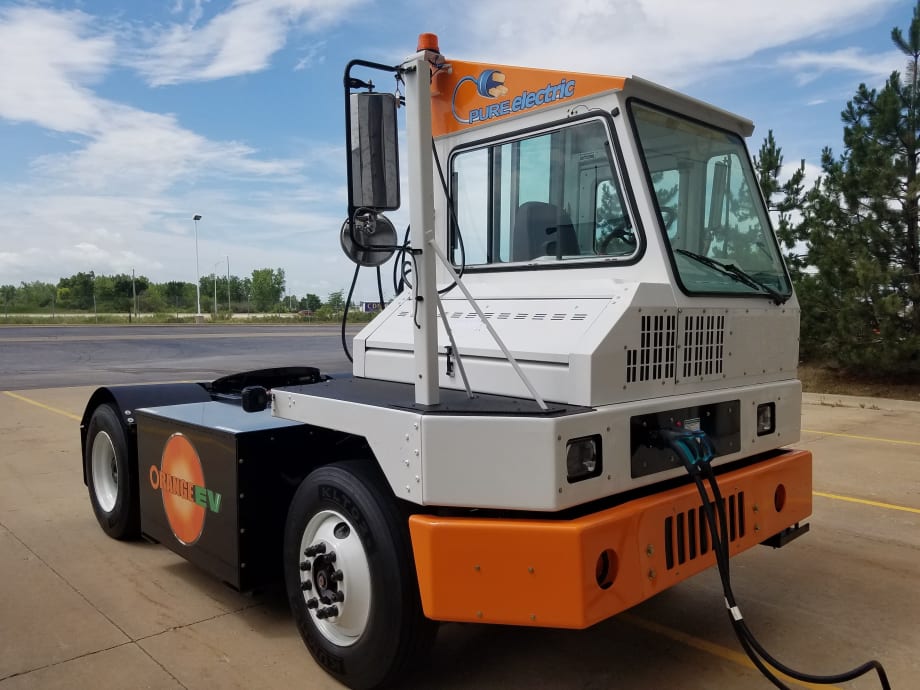
Orange EV's terminal truck. (Photo courtesy of Orange EV).
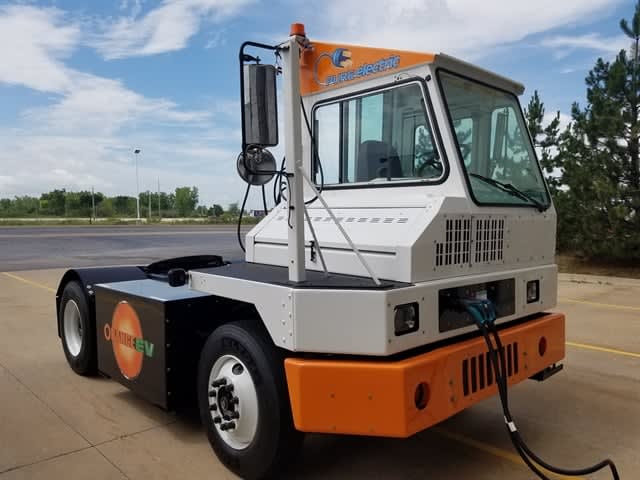
Orange EV's terminal truck. (Photo courtesy of Orange EV).
Rail Management Services (RMS) has placed a follow-on order for nine additional Orange EV T-Series pure electric terminal trucks. RMS, one of the largest rail intermodal yard operators in the United States, operates a fleet of more than 700 heavy-duty vehicles.
RMS purchased its first Orange EV truck in July 2016 for use at a Class 1 rail yard in Chicago.
"Based on the success of this first truck, RMS initiated a nine-truck reorder in January of 2017. The trucks are being worked into onsite fleets to supplement and replace RMS's diesel trucks. Five of the trucks will be deployed at the same Chicago rail yard while four will be utilized at rail sites in New York," said Mike Saxton, Orange EV chief commercial officer.
The trucks operate around 10 to 12 hours each day of "key on" work. According to Saxton, this is expected to increase as the fleet evolves and incorporates the fast-charging option.
Railyards and other container handling operations are often located in designated nonattainment areas. Switching from diesel yard trucks to electric provides immediate emissions reductions and health benefits for workers and surrounding communities. While figures vary by site, Orange EV estimated the per truck emissions eliminated in rail intermodal hub operations annually can be up to 160 tons of CO2, 1.7 tons of NOx, 1.6 tons of CO, and 80 kg of PM.
Ed Morgenthaler, VP of maintenance, safety, legal and operations for RMS, estimated that the Chicago yard ranks as one of the top five toughest sites of its 40-plus facilities across the U.S.
"We put the Orange EV truck in Chicago at one of our toughest ramps. It's one of the larger facilities in the country and has been active for decades making the terrain harsh on hostlers," Morgenthaler said. "The Chicago winters also play an important role in it being a difficult location. Frankly, I was surprised. I didn't expect the truck to be as reliable as it is."
Orange EV offers a range of configurations built to meet site-specific requirements while managing cost. The RMS re-order is made up of nine Extended Duty (160 kWh) trucks, each with galvanized frames but built to three different configurations: new, on-road (DOT compliant), with standard onboard charging; remanufactured (aka re-powered), off-road, with offboard fast charging; and re-manufactured, off-road, with standard onboard charging. The trucks are being worked into onsite fleets to supplement and replace RMS's diesel trucks. Five of the trucks will be deployed at the same Chicago rail yard while four will be used at rail sites in New York.
"Although we had hiccups at first, the Orange EV guys got right on it and quickly rectified the situation," Morgenthaler continued. "The New York sites are also difficult environments with lots of snow, ice, and rough ramps but after the Chicago pilot, I feel confident that the trucks will be very reliable."
While the overall total cost of ownership (TCO) and savings benefits need more time for analysis, the fuel savings are immediately quantifiable. For the initial truck, with standard charging operating 10-12 hours each day, the fuel savings, according to Saxton, are $56 a day or around $20,500 per year. Saxton noted that trucks operating with Orange EV's fast-charging solution can realize higher daily usage, which equates to higher annualized fuel savings.
“RMS has done an incredibly thorough job of evaluating and understanding our technology - why and how to use it - while making us better in the process," Saxton said. "Our goal with RMS and all customers is to ensure that Orange EV trucks deliver the promised value in a complete electric truck solution that does the job while making economic sense. It’s gratifying that 75% of our fleets have reordered within six months of receiving their first Orange EV truck.
For more information about Orange EV, visit www.orangeev.com.
More Fuel Smarts

Why Small Fuel Savings Matter in Trucking
Can better fuel economy help pay for driver raises? In this podcast, GP Transco explains how small efficiency gains create room to reinvest in its people.
Read More →
How GP Transco Cuts Trucking Fuel Costs, a Tenth of a Gallon at a Time
What’s another tenth of a mile per gallon worth? GP Transco shares how equipment upgrades and driver coaching turn small gains into meaningful fuel savings.
Read More →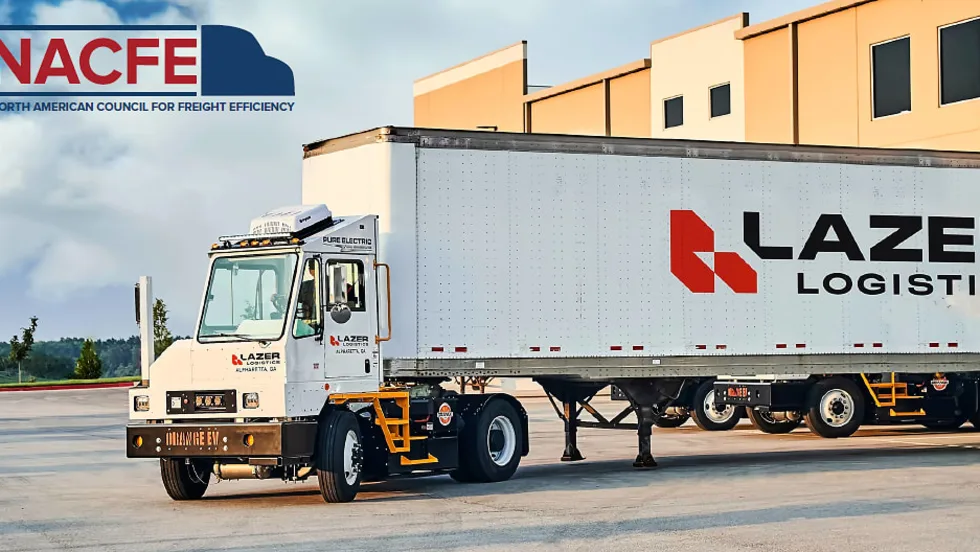
Electric Yard Tractors Move Beyond Pilots
Operating-cost savings have overtaken sustainability goals as the leading reason surveyed fleets are adopting battery-electric terminal tractors, according to new NACFE research.
Read More →
Geotab Links Fleet Card to Vehicle Data
The new card combines fuel discounts with telematics-based purchase controls. Geotab’s analysis also points to potential savings from choosing lower-priced fuel stops.
Read More →
Fleet Economics Shape Electric Truck Outlook
ACT Research expects costs, charging infrastructure, and technology improvements to drive zero-emission commercial vehicle adoption as federal regulations and incentives retreat.
Read More →
Wex Adds Cardless Fuel Payments for Over-the-Road Customers
A new fuel card feature for Wex customers offers convenience and security.
Read More →
New California Law Could Shed Light on Electric Truck Prices
Why do battery-electric Class 8 trucks remain so expensive? A California bill signed by Gov. Gavin Newsom would give fleets and state agencies more visibility into what manufacturers charge.
Read More →
How Volvo Updated Its D13 for EPA 2027 [Watch]
Volvo’s updated D13 promises lower emissions without sacrificing performance or fuel economy. Take a closer look at what changed inside the engine in this HDT Spotlight video.
Read More →
Diesel Price Spike Shortens Payback for Natural Gas Trucks, Report Says
Energy Vision estimates fleets could recover the higher purchase price of an RNG-fueled Class 8 tractor in 1.3 to 2.8 years under current fuel-price scenarios.
Read More →
Calstart Becomes Catalyst Mobility, Reflecting Broader Focus
Calstart is now Catalyst Mobility, reflecting the nonprofit’s growing national role in clean transportation, including zero-emission trucks, infrastructure and incentive programs.
Read More →