




Q&A: East Manufacturing's David de Poincy
Why a trailer maker specializing in aluminum is fielding orders for steel dump trailers and more.

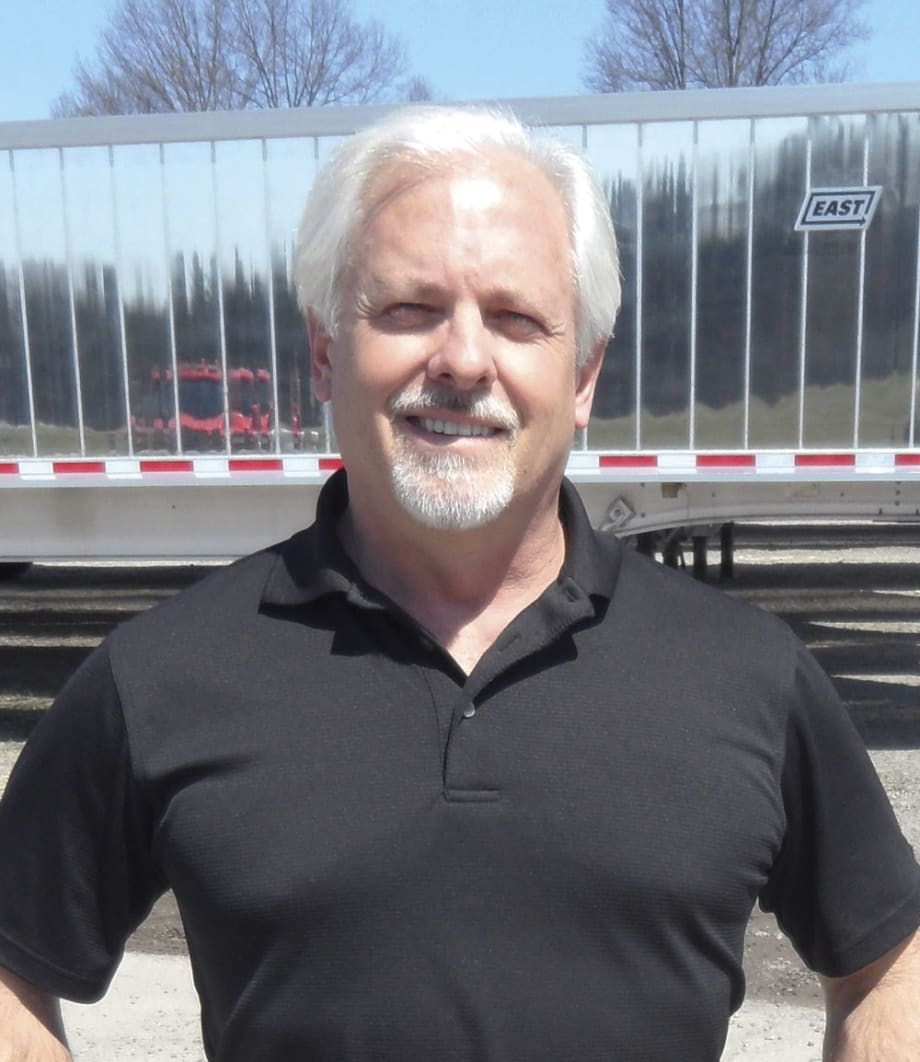

Dave de Poincy is president and CEO of East Manufacturing Corp., the aluminum trailer builder in Randolph, Ohio. He succeeded David Tate three years ago.
HDT: How’s business?
de Poincy: Very good. We’re very fortunate. On steel dump trailers, we don’t even market them and we’re booked way into next year. We’re looking to expand our facility hiring, to triple our capacity for steel end-dumps.
HDT: You’re known for aluminum trailers. Why are customers coming to you for steel dumps?
de Poincy: Other manufacturers are way out on orders, too, so customers are going wherever they can. They love our product – it’s a good one – even though we don’t advertise it.
HDT: What are the steel dump trailers being used for?
de Poincy: Scrap hauls and trash. Refuse is booming -- it’s enormous. The trash-transfer business is up 185% over last year. We’re 75% filled through next August and are booked solid through February. About 20% are going to Canada, because of an exchange rate that’s favorable to us, with the weaker U.S. dollar.
HDT: How about other trailer types?
de Poincy: Aluminum dumps are out through March, aluminum flatbeds through February. About half are smooth-sided dumps; we thought there would be more.
Flatbeds have grown 4-5% over last year, which was about the same growth over 2012. Flatbeds are driven by housing starts, which still aren’t very strong, but some are for hauling pipe from manufacturers in Ohio and Pennsylvania for oil and gas drilling. Dumps are all replacements for those built 20 years ago. We built ‘em too good.
There’s not much activity in the coal fields, but there is for aggregates and asphalt for road building, like temporary roads to fracking sites. The government isn’t spending enough on roads because Congress hasn’t fixed the funding of the Highway Trust Fund.
HDT: What do you think of the temporary Highway Bill?
De Poincy: There are two things – passing it and funding it. A temporary bill doesn’t support long-term highway construction and growth.
HDT:What’s the advantage of aluminum over steel?
de Poincy: Our market share in aluminum flats has grown from 6% in ’98 to 30% now, and it’s all because of corrosion. An aluminum flatbed will last 20 years versus six to eight years for steel. The aluminum flat, at $28,000 to $30,000, costs $10,000 more, but you can see that it’s a very good tradeoff.
HDT:Aside from aluminum, what makes East different from other trailer builders?
de Poincy: Eighty percent of our products are custom. There are hundreds of things – height, length, ladders, tire-down points, walk-up stairs. Custom means giving the customer what he wants, not what a manufacturer thinks he should have.
One thing we’ve started doing ourselves is rig testing. To test a DOT-rated bulkhead (against g-forces from a shifting load) with an outside lab is $17,000. I’m buying my own equipment and we’ve built our own rig and we’ll do it ourselves. The equipment cost $15,000, so we’re paying for it quickly.
HDT: What’s different here than where you were before?
de Poincy: When I was at Transcraft I was spending $250,000 a year on advertising. When I came here in August 2011 they were spending nothing – zero. We’re back to advertising now. We’re also set to open a new website in November to better reach younger people. The problem is, we’ve got these young guys coming up and they do things differently than their dads did. My two sons are that way. They’re all Internet savvy and they want things right away.
More Equipment

How Volvo Updated Its D13 for EPA 2027 [Watch]
Volvo’s updated D13 promises lower emissions without sacrificing performance or fuel economy. Take a closer look at what changed inside the engine in this HDT Spotlight video.
Read More →
Michelin Tire Improves Efficiency and Durability for Regional Fleets
The Michelin X Multi Energy D2 is a regional haul drive tire engineered to help fleets improve fuel efficiency, durability and traction in demanding stop-and-go operations.
Read More →
ZF Expands Commercial Vehicle Push in North America
ZF is expanding its North American commercial-vehicle presence with new transmission applications, electrification, trailer technology and autonomous-driving systems.
Read More →
Tesla Wants a Self-Driving Semi. Are Cameras Enough?
Could Tesla’s camera-only autonomous driving technology work on an 80,000-pound Semi? In this commentary, HDT's Deborah Lockridge takes a look at Tesla, Cybercab, and how autonomous trucks see the road.
Read More →
Kodiak: Driverless Long-Haul Truck Launch on Track for 2026
Kodiak AI says its driverless long-haul safety case is 93% complete and it remains on track to begin commercial operations by year-end 2026.
Read More →
What DOT’s Automated Vehicle Strategy Means for Trucking
The U.S. Department of Transportation issued a new automated-vehicle strategy that outlines plans for driverless-truck regulations, cross-state freight corridors, and federal safety standards.
Read More →
East Coast Port Launches $45M Electric Truck Push
The Port Authority of New York and New Jersey announced millions in incentives for zero-emission drayage trucks, yard tractors, and new charging hubs near the port.
Read More →
PlusAI Going Public to Fund Autonomous Truck Launch
A SPAC deal could provide PlusAI with up to $300 million as it works toward a 2027 commercial launch of factory-built autonomous trucks.
Read More →
NHTSA Moves to Rewrite Truck Fuel-Economy Rules
The National Highway Traffic Safety Administration says it lacks authority to regulate medium- and heavy-duty truck engines separately from complete vehicles, but the existing standards have not yet been eliminated.
Read More →
Detroit Opens Orders for EPA 2027 Engines
Detroit isn’t starting from scratch to meet EPA 2027 diesel emissions standards. Its Gen 6 DD13 and DD15 engines keep much of today’s platform while updating the fuel and aftertreatment systems.
Read More →