




Public Money May Be Used to Fund Railway Expansion
Railroads are becoming more brazen about accepting public money to fund track expansions. According to The Wall Street Journal, Norfolk Southern Corp. wants the state of Virginia to help it pay the projected $900 million to
Railroads are becoming more brazen about accepting public money to fund track expansions. According to The Wall Street Journal, Norfolk Southern Corp. wants the state of Virginia to help it pay the projected $900 million to add a second track to the company's mostly single-track route that parallels Interstate 81. The railroad would then be able to handle much of the freight that now travels by truck on I-81, easing traffic and putting off an expensive highway-widening project.
In the past, railroads shied away from such ideas, for fear that public funding would come with strings attached. "They were clearly reluctant to work with the government," Anthony Hatch, an independent analyst in New York told WSJ. "Now, they are beginning to realize there are lots of common interests."
Several years ago, Conrail and the state of Pennsylvania jointly funded expansion of rail tunnels to handle more efficient freight trains. And in California, a public-private partnership is building a 20 mile rail corridor from the ports of Long Beach and Los Angeles to freight yards near downtown Los Angeles. The railroads, Union Pacific Corp. and Burlington Northern Santa Fe Corp., will pay back $1.5 billion of the total $2.4 billion over a 30 year period through fees on the freight that's handled.
Some economists are supporting the railroad cause.
They acknowledge that trucks are faster and more reliable, but believe rail is generally more efficient than road for hauling freight long distances. And they say rail has some environmental advantages because trains generally consume less fuel and create less pollution to move freight than trucks.
"It's a pure productivity gain," David Wyss, chief economist of Standard & Poor's told WSJ. "If you can move more goods with fewer people and less oil, the economy can grow faster."
But other railroads are suspicious of government funding. "If you get into a situation where you are accepting public funds for freight infrastructure, it allows other parties to have a say in your core business. Obviously, we are opposed to that," said Mark Hallman, a spokesman for Canadian National Railway Co., which until recent years was owned by the Canadian government.
An official of Burlington Northern Santa Fe said the company has become more "receptive to exploring these types of possibilities." Analysts said the change reflects railroads' massive capital needs, as well as the fact that they have spent so much of their own money to buy each other.
"The returns in the railroad business are still not enough to sustain the country's track network," said Scott Flower, an analyst at Salomon Smith Barney. "The railroads must thoroughly rethink how they operate and potentially how they are funded."
In Virginia, Norfolk Southern's proposal comes as the state plans to spend $3.5 billion of federal and state funds to add a lane in each direction on I-81. One reason for the widening is the heavy truck traffic -- about five million tractor-trailers a year -- on the highway.
Officials of Norfolk Southern in Norfolk, Va., noted that one of the company's rail routes closely parallels I-81 through Virginia.
With the company's takeover of Conrail track in the Northeast, the route could haul trucks on rail cars between the Gulf States and the New York market. The route would need a second track, new freight terminals and some straightening for a total cost of about a third of widening the interstate.
"If we are ever going to be truly competitive, we have to have an even playing field," said Wiley Mitchell Jr., a senior general counsel of Norfolk Southern. "That is just as fair and should be just as much acceptable policy to invest money in a right-of-way for a railroad as it is to invest money in a right-of-way for trucks."
But trucking interests are skeptical of the Norfolk Southern proposal. "At this stage, we have a problem with diverting scarce highway construction resources to an untried endeavor," said Mike Russell, a spokesman for the American Trucking Assn. "Regardless of the response to the Norfolk Southern proposal, I-81 will need work."
Officials at the Virginia Department of Transportation said they will study the Norfolk Southern proposal. They will gather information about the origins and destinations of trucks on I-81 to help determine how many trucks the railroad could divert from the highway.
More Fleet Management
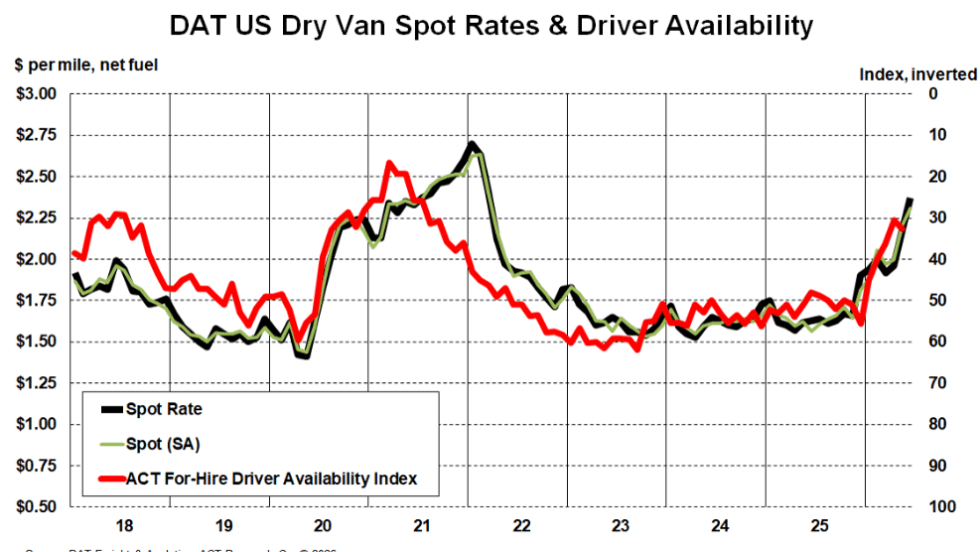
Truckload Rates Keep Rising as Tight Capacity Fuels Freight Market Recovery
Spot and contract rates continued climbing in May and June, not because freight demand is surging, but because fewer trucks and drivers are available.
Read More →
What Geotab's New AI Connector Means for Fleets
Fleets can now ask their usual AI assistants questions about maintenance, safety, fuel use, and vehicle performance, using their live Geotab data, and take action on the answers without leaving their preferred AI tool.
Read More →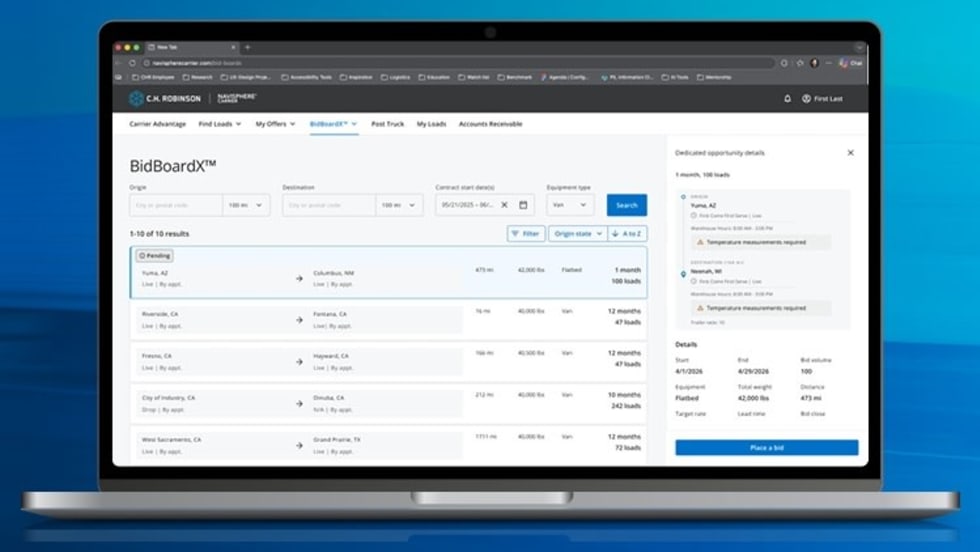
New C.H. Robinson Tool Opens Door to More Predictable Freight
BidBoardX lets carriers search, bid on, and secure committed freight opportunities through a single digital marketplace.
Read More →

New York City's Microhub Project is Delivering Results
Trucking, last-mile delivery companies, and environmental advocates like what they are seeing so far with New York's microhub program.
Read More →
Why Truck Detention Keeps Costing Fleets Time and Money
A 2024 ATRI study found detention affects nearly 40% of truckload stops and costs the industry more than $15 billion annually. Despite the toll on drivers, fleets, and supply chains, the problem remains stubbornly persistent.
Read More →
Time is Running Out to Apply for Exclusive HDT Event
Heavy Duty Trucking Exchange brings fleet managers and suppliers together for the deeper conversations that lead to ideas, partnerships, and solutions. Time is running out to apply for the September event.
Read More →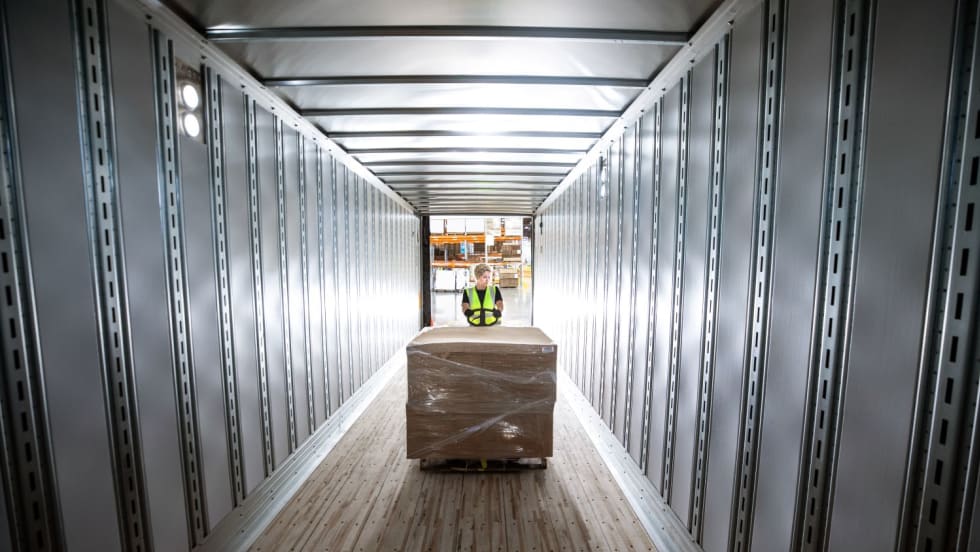
Amazon Launches Less-Than-Truckload Freight Offering for All Businesses
This launch is the latest addition to Amazon Supply Chain Services, a portfolio of supply chain capabilities from Amazon, including freight, distribution, fulfillment, and parcel shipping.
Read More →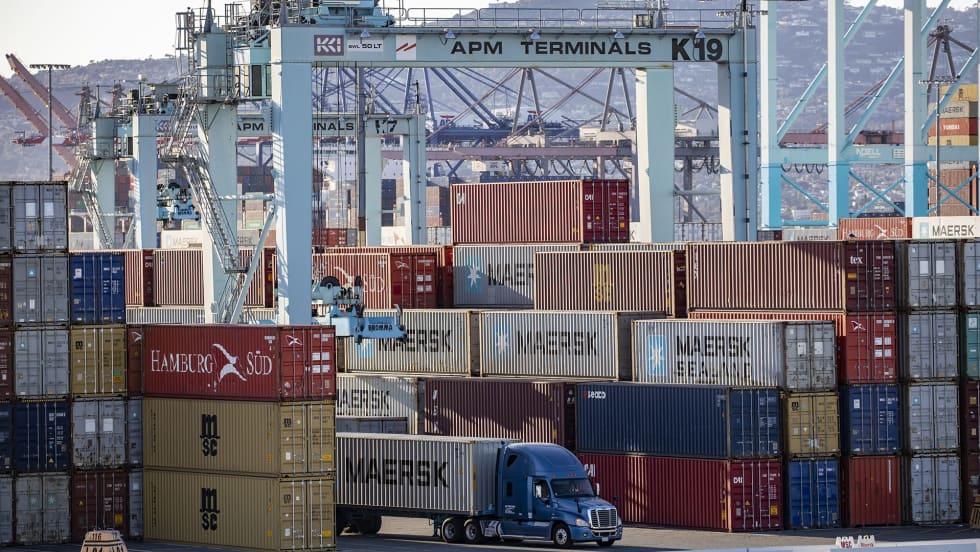
Import Cargo Volume to See Year-Over-Year Gain Again in June, Then Remain Below 2025 Levels Into Fall
After July, the report predicts a weakening in import volume as consumer uncertainty remains high and the impact of increasing inflation takes its toll.
Read More →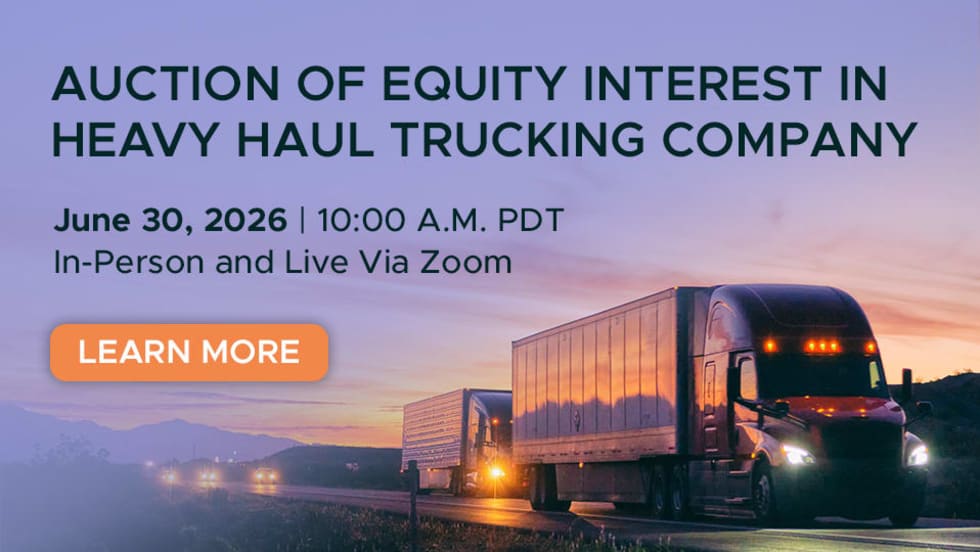
AUCTION OF EQUITY INTEREST IN HEAVY HAUL TRUCKING COMPANY!!
Mark your calendar: June 30, 2026 (10:00 a.m. PDT). A 37.5% ownership interest in MagnaTrans, LLC, a California limited liability company doing business as Magna Transportation Group, will be sold in an in-person and online auction to the highest bidder or bidders under Article 9 of the Uniform Commercial Code. The Rancho Cucamonga-based heavy haul and over-dimensional trucking company operates across California, Oregon, and Arizona.
Read More →
Volvo Trucks Adds Unattended Over-the-Air Software Update Capabilities
The latest evolution of Volvo’s over-the-air update technology allows software updates to run while trucks are parked, helping fleets keep vehicles current without disrupting operations.
Read More →