




President Calls for Cutting Oil Imports
Noting that international events have people thinking about energy safety and security, President Obama Wednesday called for slashing oil imports by one-third by 2025 as part of his administration's Blueprint for A Secure Energy Future.
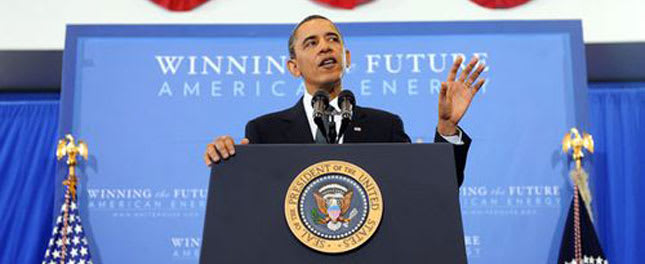
Noting that international events have people thinking about energy safety and security, President Obama Wednesday called for slashing oil imports by one-third by 2025 as part of his administration's Blueprint for A Secure Energy Future.
"As Americans, we're heartbroken by the lives that have been lost as a result of these events. We're deeply moved by the thirst for freedom in so many nations, and we're moved by the strength and the perseverance of the Japanese people. And it's natural, I think, to feel anxious about what all of this means for us," Obama said in a speech at Georgetown University.
"And one big area of concern has been the cost and security of our energy. Obviously, the situation in the Middle East implicates our energy security. The situation in Japan leads us to ask questions about our energy sources."
While those situations will likely lead to more short-term rises in the price of oil and fuel, Obama noted that worldwide demand is growing, so "it is absolutely certain that demand will go up a lot faster than supply."
Saying there are no quick fixes, Obama echoed the message of alternative-energy advocate T. Boone Pickens when he said, "Richard Nixon talked about freeing ourselves from dependence on foreign oil. And every president since that time has talked about freeing ourselves from dependence on foreign oil. Politicians of every stripe have promised energy independence, but that promise has so far gone unmet."
Obama notes that when he was elected, America was importing 11 million barrels of oil a day. By little more than a decade from now, he said, we can cut that by a third.
The president said we need to look at importing oil from more stable sources (Canada's already our biggest oil supplier), including new resources discovered in Brazil, and increasing the amount of oil produced domestically. He said the administration is "working to expedite new drilling permits for companies that meet ... higher standards" put in place in the wake of the BP oil spill lasts year.
Cutting Overall Oil Use
However, he said, it's crucial to use American ingenuity to reduce overall dependence on oil.
"America holds about 2 percent of the world's proven oil reserves," Obama said. "What that means is, is that even if we drilled every drop of oil out of every single one of the reserves that we possess -- offshore and onshore -- it still wouldn't be enough to meet our long-term needs. We consume about 25 percent of the world's oil. We only have 2 percent of the reserves. Even if we doubled U.S. oil production, we're still really short."
Obama called the potential for natural gas "enormous," noting that this is an area where there is bipartisan support. He did not, however, that it's important to make sure we are extracting natural gas safely, without poisoning water supplies. Many critics have said that the hydrofracking process used is contaminating the water table.
He also talked about biofuels, noting that on his recent trip to Brazil, he found that half of Brazil's fleet of automobiles can run on biofuels. Over the next two years, he said, the government will help entrepreneurs break ground for four next-generation biorefineries.
And, of course, we need to make cars and trucks that use less fuel in the first place. "This summer, we're going to propose the first-ever fuel efficiency standards for heavy-duty trucks. And this fall, we'll announce the next round of fuel standards for cars that builds on what we've already done."
He also talked about incentives to increase the use of electric cars, at the same time answering critics who point out that in many cases the plants generating the electricity aren't the most clean-air-friendly themselves.
Today, about two-fifths of our electricity come from clean energy sources. But we can do better than that. I think that with the right incentives in place, we can double our use of clean energy. And that's why, in my State of the Union address back in January, I called for a new Clean Energy Standard for America: By 2035, 80 percent of our electricity needs to come from a wide range of clean energy sources -- renewables like wind and solar, efficient natural gas. And, yes, we're going to have to examine how do we make clean coal and nuclear power work.
The president also announced he is directing government agencies to purchase 100 percent alternative fuel, hybrid, or electric vehicles by 2015.
"Unfortunately, some folks want to cut critical investments in clean energy," Obama said. "They want to cut our research and development into new technologies. They're shortchanging the resources necessary even to promptly issue new permits for offshore drilling."
Praise from Alternative Energy Supporters
Responding to the president's speech, Clean Energy Fuels Corp. issued a statement saying it has pledged to increase its program to provide natural gas fueling services and infrastructure across the United States. Clean Energy says it is the nation's largest provider of natural gas fueling services for transportation. The company focuses on fueling heavy-duty vehicles, such as freight trucks, transit buses and refuse trucks.
NGVAmerica, the trade association that represents the U.S. natural gas vehicle industry, hailed the president's call for the passage of the NAT GAS Act as part of his new federal energy blueprint. Although he did not call out the bill by name, Obama said,
"Last year, more than 150 Members of Congress from both sides of the aisle proposed legislation providing incentives to use clean-burning natural gas in our vehicles instead of oil. They were even joined by T. Boone Pickens, a businessman who made his fortune on oil. So I ask them to keep at it."
Douglas Clark, chairman of NGV and president of the Municipal Utility District of Omaha, Neb., noted, "Last year, natural gas vehicles displaced 360 million gallons of petroleum in the U.S. With encouragement and incentives from the federal government, this could grow to 1.6 billion gallons by 2015."
The National Biodiesel Board also applauded Obama's call to increase domestic fuel production. "The biodiesel industry is already poised for a record year in which we will displace nearly a billion gallons of petroleum with a renewable fuel produced right here in the United States," said Manning Feraci, NBB's vice president of Federal Affairs, in a statement. "We are ready and able to meet the nation's Advanced Biofuel goals and in the process create new jobs, improve the environment and enhance the nation's energy security."
Read the president's full remarks here or watch the video:
More Drivers

Platform Science Adds Dispatch and Safety Tools
Four additions to PS Fleet help fleets monitor loads, manage driver coaching, share truck locations and adjust video system settings.
Read More →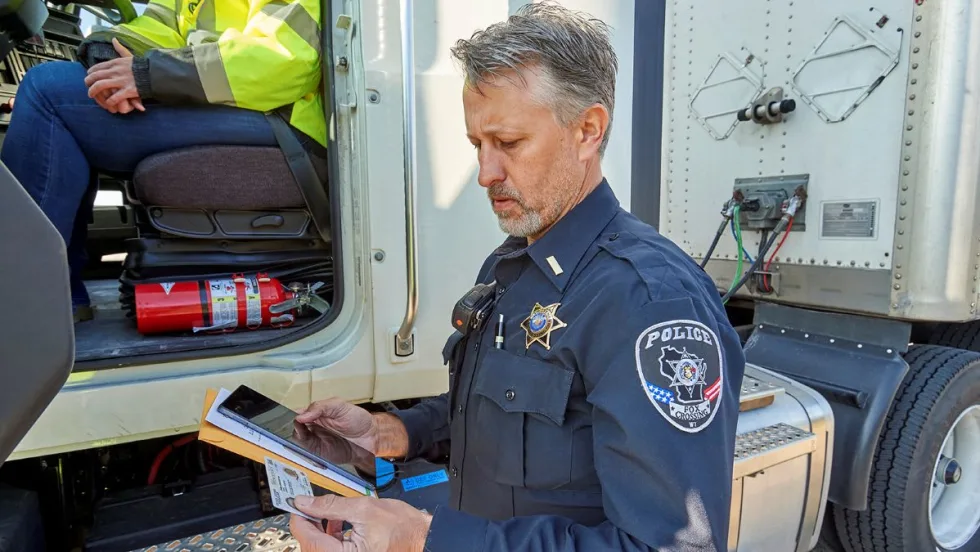
When Language Stops the Truck: The Return of ELP Out-of-Service Orders
English language proficiency rules for commercial drivers aren’t new, but renewed out-of-service enforcement has raised the stakes. Here’s what carriers need to know before a driver reaches a roadside inspection.
Read More →
Samsara Launches Custom AI Agent Builder
Agent Studio lets fleets create AI tools for hours-of-service monitoring, reporting and driver support, including agents that communicate by phone.
Read More →
Trucker Path Expands Reserved Parking Network
Trucker Path has added close to 6,000 more truck parking spaces to its Trucker Path Reserved Parking Network with the addition of Safe Truck Parking.
Read More →
EEOC Sues Texas Trucking Company Over Driver Age Limits
The agency says Trancasa USA rejected applicants over 65 and applied tougher driving-record standards to those over 60.
Read More →
Nussbaum, Roehl Announce Second Driver Pay Increase This Year
This year has seen a swath of major truck driver pay increases as freight capacity has tightened.
Read More →
From One Generation to the Next: How Mentorship Builds Safer Truck Drivers
After three decades in trucking, Harold Perry shares what he's learned about driver safety, mentorship, and helping the next generation build confidence behind the wheel.
Read More →
Truck Drivers Need More Than Another Alert
Fleets have more visibility into truck health, safety events, and driver activity than ever. The next challenge is turning all that information into useful guidance for the person who has to decide what to do next.
Read More →
FMCSA Removes 110 Truck Driver Training Schools from Certified ELDT List
Federal regulators also are targeting more than 160 additional training providers and launching a nationwide audit of third-party CDL skills testers as part of a broader crackdown on trucking fraud.
Read More →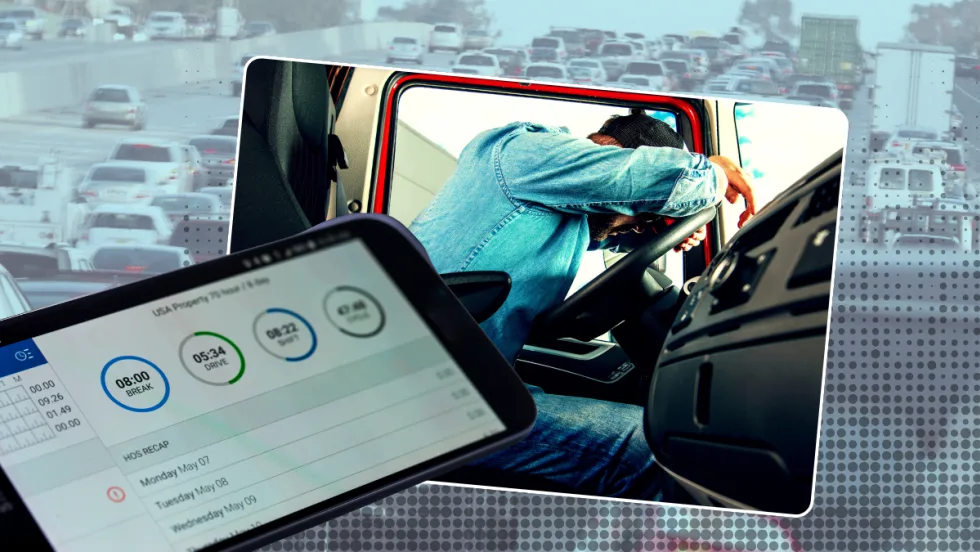
Hours of Service Pilot Programs: FMCSA Readies for 2027 Rollout
Two pilot programs could eventually reshape hours-of-service rules, giving truck drivers options to pause their 14-hour clock or use longer split sleeper rest periods.
Read More →