




Port of Tacoma Unveils Fee-Free Truck Emissions Program
The Port of Tacoma authorized a new, fee-free, market-based program to reduce emissions from trucks that serve the Port
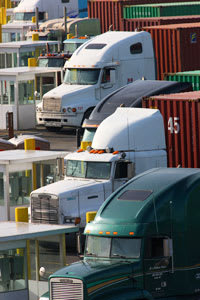
Trucks at the Port of Tacoma
The Port of Tacoma authorized a new, fee-free, market-based program to reduce emissions from trucks that serve the Port.
Heavy-duty trucks represent 1 percent of maritime industry diesel emissions at the Port of Tacoma. To reduce this impact, the Port Commission recently authorized a market-based program to reduce over-the-road emissions.
The Port of Tacoma Truck Emissions Improvement Program is designed to improve air quality, increase gate efficiency and be environmentally sustainable. The program, which is fee-free, was developed collaboratively with the trucking industry and other port customers.
The plan calls for the port to:
* Develop a list of pre-qualified drayage trucking companies. The port will promote companies that meet set fleet modernization goals.
* Partner with public and private organizations to identify funding opportunities and options for fleet modernization.
* Work with customers to improve terminal gate operations. This may include enhancing operational efficiency, implementing anti-idling policies and practices, encouraging gate congestion management initiatives, and more.
* Develop a communication and outreach strategy for the regional trucking community. This effort may include a new website that allows truck operators to find specific information, such as turn times at terminals and vessel arrivals.
* Explore operational and technological innovations that might improve efficiency, such as tracking technologies, a chassis pool or secure, pre-gate parking.
* Establish a transparent and accountable system to track the progress of the program toward meeting 2010 and 2015 truck emission goals.
* Continue partnering with the Port of Seattle to implement common components of each port's truck program and coordinate efforts to expedite transportation infrastructure improvements.
People who spoke in favor of the program included representatives of the Washington Trucking Association, Puget Sound Clean Air Agency, Washington Department of Ecology, Washington Retail Association, Washington Department of Transportation and the Port of Seattle.
The Port of Tacoma is among the largest container ports in North America, handling more than $33 billion in annual trade and about 1.9 million TEUs (20-foot equivalent container units) each year.
More Fleet Management

Nominations Open for HDT Emerging Leaders
Heavy Duty Trucking is looking for accomplished trucking fleet professionals under 40 who are making an impact and helping lead the industry forward.
Read More →
Why Private Fleets Are Taking More Freight
Private fleets are putting their own trucks on demanding customers and high-cost lanes as companies seek greater control over service, costs, and capacity.
Read More →
Color Match Smarter: Tools That Restore & Perform
For fleet managers and collision repair professionals keeping heavy-duty trucks on the road, getting the color right the first time isn't just about appearance — it's about efficiency, turnaround time, and bottom-line results. Discover how today's digital color tools are transforming the repair process from guesswork to precision.
Read More →


FMCSA Pauses Biennial-Update Enforcement Amid Motus Transition
Carriers whose updates were due on or after June 1 have more time, while FMCSA works to stabilize its new registration system and warns of phishing sites impersonating its new carrier registration system, Motus.
Read More →
2026 Blueprint for Countering Smarter Supply Chain Theft
Cargo theft is no longer just the cost of doing business. It's a multi-billion-dollar criminal enterprise exploiting vulnerabilities across your fleet, drivers, and supply chain.
Read More →
How Telematics Improves Visibility, Control, and Performance in Refrigerated Fleets
Explore how telematics help refrigerated fleets improve visibility, uptime, efficiency, compliance, and cargo protection across connected cold chain operations.
Read More →
What the U.S.-Canada Trade War Means for Trucking
Escalating U.S.-Canada tariffs could disrupt cross-border freight, reduce truck volumes, raise costs, and create new uncertainty for carriers on both sides of the border.
Read More →
What Are Trucking’s Top Concerns for 2026?
The American Transportation Research Institute wants to know what's worrying trucking fleet managers, drivers, and other stakeholders in its annual Industry Issues survey.
Read More →
American Trucking Associations Looks for a New Leader
ATA President and CEO Chris Spear abruptly left his job at the association on August 21, at a pivotal time for the trucking industry.
Read More →
Public Wi-Fi Cybersecurity Risks: How Truck Drivers and Fleets Can Protect Their Data
Public Wi-Fi can expose truck drivers and fleets to credential theft, malware, and other cyber threats. Here’s how to reduce the risk on the road.
Read More →