




Port of L.A. to Spend $400 Million on Capital Improvements
The Los Angeles Harbor Commission has adopted a 2013-14 fiscal year (FY) budget of approximately $1.1 billion for the Port of Los Angeles, including one of the largest annual Capital Improvement Programs - $399.9 million or 37% of the total budget - in the port's history.
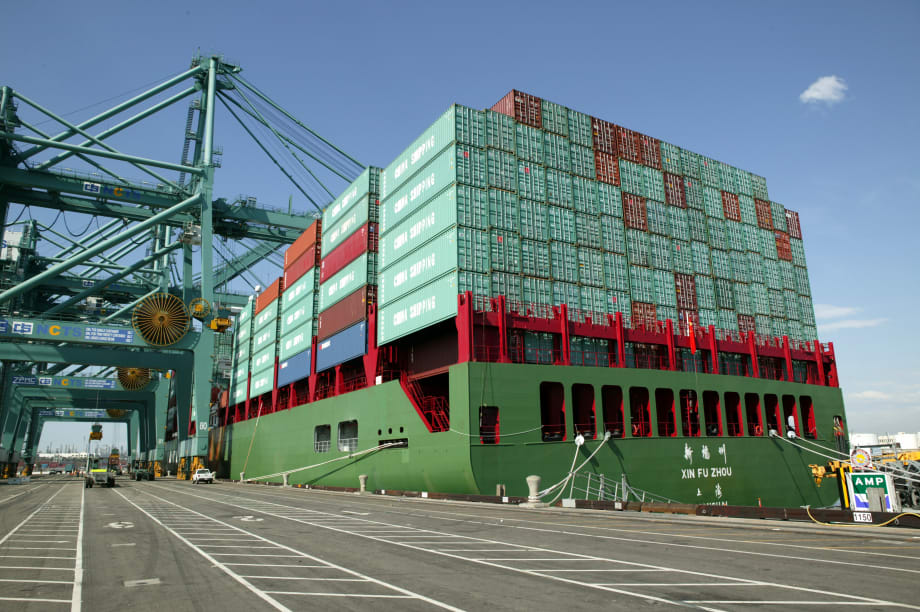
The Los Angeles Harbor Commission has adopted a 2013-14 fiscal year (FY) budget of approximately $1.1 billion for the Port of Los Angeles, including one of the largest annual Capital Improvement Programs - $399.9 million or 37% of the total budget - in the port's history.
The budget supports more than 8,500 jobs, 6,870 of which are attributable to construction project spending in the coming fiscal year which begins July 1.
“Capital improvements and improved efficiency are essential if we’re to maximize cargo flow as well as maintain our position as the nation’s number one container port," said Harbor Commission President Cindy Miscikowski.
The capital spending budget earmarks more than $380 million for container terminal and transportation upgrades, including:
More than $99 million at the TraPac container terminal for backland improvements to support future terminal automation as well as construction of a facility to provide on-dock rail capabilities, which will result in all Port of L.A. container terminals equipped with on-dock rail.
$41.5 million in construction at China Shipping Terminal, which includes completion of 375 linear feet of expanded wharf and backland improvements.
Almost $96 million for the installation of Alternative Maritime Power stations at major container terminals including APMT, APL, Evergreen, Yang Ming and China Shipping. These stations reduce emissions from container vessels by “plugging in” to shore side power instead of running on diesel power.
$8.2 million for the audit, design, and construction of required upgrades at liquid bulk oil cargo handling facilities throughout the Port, pursuant to requirements of the State Lands Marine Oil Terminal Engineering Maintenance Standards.
Over $15 million for other terminal projects including wharf and backland development at APL, equipment and wharf upgrades at Evergreen, and pavement replacement at APMT.
Almost $78 million related to construction at the Berth 200 rail yard, a pivotal piece of the Port’s overall goods movement plan to facilitate more fuel-efficient, faster and safer rail operations throughout the Port complex.
$33.2 million for the South Wilmington Grade Separation project, which will provide unimpeded grade-separated vehicle access to businesses throughout the Wilmington Waterfront while allowing public safety vehicles unobstructed access to the area.
Another $8.8 million for additional transportation projects including Harry Bridges Boulevard Improvements, the Advanced Transportation Management Information System, and the C Street/I-110 Access Ramp Improvements.
More than $31 million also has been allocated to L.A. Waterfront projects, including $20 million to construct a new waterfront promenade, plaza and town square as part of the new Downtown Harbor project that is slated for completion next summer. Also included in the budget is $8.7 million for a fiber optics project that will enhance the interconnectivity of vital security information throughout the port complex.
The newly adopted budget’s operating revenues of $413 million are relatively flat over the previous year, a modest increase of 3.1%. Proposed operating expenses are slightly lower by 1.9% to $209.1 million, with no significant increases in Port employee headcount.
More Fleet Management

Trimble: Taking Artificial Intelligence in Trucking Beyond Faster Tasks
At Insight 2026, Trimble executives argued that fleets may need to redesign workflows to get more from AI as it introduced new products and enhancements. AI’s value will depend on how fleets combine automation with their people's knowledge.
Read More →
Nominations Open for HDT Emerging Leaders
Heavy Duty Trucking is looking for accomplished trucking fleet professionals under 40 who are making an impact and helping lead the industry forward.
Read More →
Why Private Fleets Are Taking More Freight
Private fleets are putting their own trucks on demanding customers and high-cost lanes as companies seek greater control over service, costs, and capacity.
Read More →


Color Match Smarter: Tools That Restore & Perform
For fleet managers and collision repair professionals keeping heavy-duty trucks on the road, getting the color right the first time isn't just about appearance — it's about efficiency, turnaround time, and bottom-line results. Discover how today's digital color tools are transforming the repair process from guesswork to precision.
Read More →
FMCSA Pauses Biennial-Update Enforcement Amid Motus Transition
Carriers whose updates were due on or after June 1 have more time, while FMCSA works to stabilize its new registration system and warns of phishing sites impersonating its new carrier registration system, Motus.
Read More →
2026 Blueprint for Countering Smarter Supply Chain Theft
Cargo theft is no longer just the cost of doing business. It's a multi-billion-dollar criminal enterprise exploiting vulnerabilities across your fleet, drivers, and supply chain.
Read More →
How Telematics Improves Visibility, Control, and Performance in Refrigerated Fleets
Explore how telematics help refrigerated fleets improve visibility, uptime, efficiency, compliance, and cargo protection across connected cold chain operations.
Read More →
What the U.S.-Canada Trade War Means for Trucking
Escalating U.S.-Canada tariffs could disrupt cross-border freight, reduce truck volumes, raise costs, and create new uncertainty for carriers on both sides of the border.
Read More →
What Are Trucking’s Top Concerns for 2026?
The American Transportation Research Institute wants to know what's worrying trucking fleet managers, drivers, and other stakeholders in its annual Industry Issues survey.
Read More →
American Trucking Associations Looks for a New Leader
ATA President and CEO Chris Spear abruptly left his job at the association on August 21, at a pivotal time for the trucking industry.
Read More →