




PlusAI Charts Roadmap to 2027 SuperDrive Launch
PlusAI has released key performance indicators it says demonstrate that its SuperDrive autonomous control system has the safety, performance, and operational efficiency required for real-world commercial deployment.

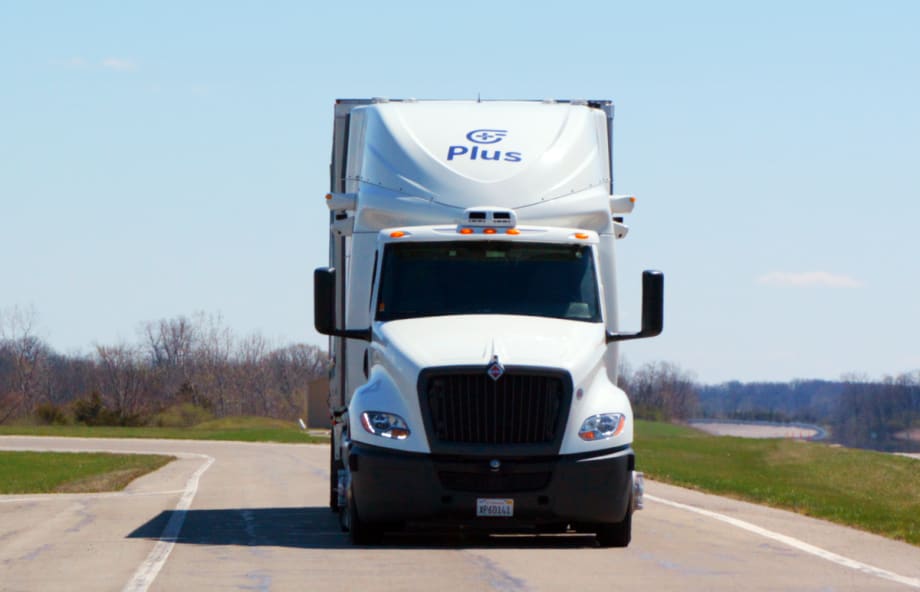
PlusAI has released new key performance indicators it says show the company is on track for the commercial launch of its SuperDrive autonomous system in 2027.
Photo: PlusAI
PlusAI has announced new key performance indicators (KPIs) designed to track progress towards commercial readiness of its SuperDrive autonomous control system.
In the first half of 2025, PlusAI said it achieved significant advancements in autonomous performance metrics.
These include reaching 86% Safety Case Readiness (SCR), 98% Autonomous Miles Percentage (AMP), and 76% Remote Assistance Free Trips (RAFT).
These figures are up from 75%, 97%, and 69%, respectively, in the second half of 2024.
As PlusAI transitions to a public company, it intends to report these KPIs regularly to provide transparency on its path to commercial launch in Texas in 2027.
Critical Performance Metrics
For commercial launch, PlusAI is targeting 100% Safety Case Readiness, and more than 90% Remote Assistance-Free Trips.
According to the company, achieving these milestones will demonstrate that SuperDrive has the safety, performance, and operational efficiency required for real-world commercial deployment. It will also enable trucking fleet operators to complete entire routes without human intervention.
PlusAI is currently conducting public road testing in Texas and Sweden, with customer fleet trials scheduled for the fall of 2025.
“We have a clear roadmap to the commercial launch of SuperDrive,” said David Liu, CEO and Co-Founder of PlusAI. “By publicly sharing these performance metrics on a regular basis, we’re demonstrating our unwavering commitment to the safe and scalable deployment of factory-built autonomous trucks. We believe it’s essential for partners, customers, regulators, and all road users to have visibility into our safety-driven progress and our disciplined approach toward commercializing autonomous driving technology.”
PlusAI has deployed autonomous driving technology across over five million miles of driving in the U.S., Europe, and Asia.
These real-world operations have generated a proprietary dataset that fuels PlusAI’s technology development.
Leveraging this data and advanced generative AI models, PlusAI has built a generalizable “driving intelligence” platform using auto-labeling, model distillation, and highly optimized in-vehicle neural networks.
Safety Case Readiness
PlusAI uses the safety case approach that is a standard best practice in safety-critical industries including aviation, nuclear, automotive, and oil and gas.
The PlusAI Safety Case Readiness (SCR) metric measures how mature and complete its underlying Safety Case Framework (SCF) is for SuperDrive to operate safely.
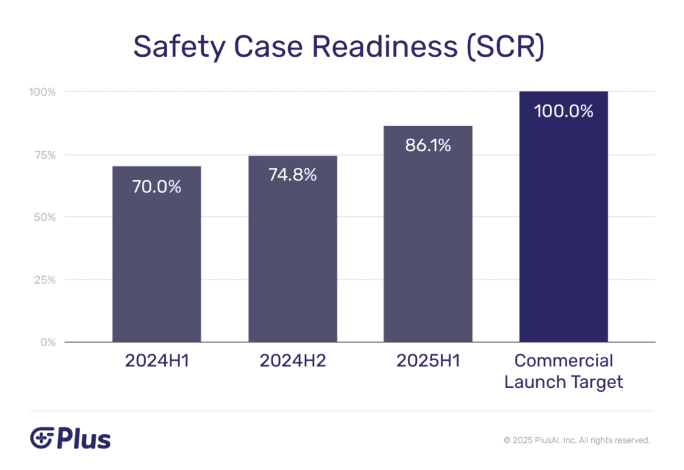
PlusAI Safety Case Readiness KPI metric.
Graphic: PlusAI
According to PlusAI, the SCF is built on a multi-tiered structure of safety claims, sub-claims, and supporting evidence, organized around five core pillars that cover underlying architecture, processes, performance, and maintenance needed for safe operations.
Specifically SCF helps PlusAI engineers:
Understand – Establishes safety foundations through structured analysis, system definition, and hazard identification.
Design – Integrates safety principles, redundancy, and fault tolerance into the AV system’s architecture and software.
Develop – Verifies and validates system performance using simulation, bench tests, closed-course, and public road testing.
Prove – Measures safety performance through data analysis and continuous improvement of metrics and safety cases.
Deploy – Ensures safe deployment and maintenance through configuration control, release management, and in-field monitoring.
PlusAI said the Safety Case Framework also supports transparency and accountability by sharing key elements of the framework with stakeholders. It also aligns with industry standards and best practices in automated vehicle safety assurance. It also provides the basis for PlusAI’s risk-based approach to safety validation and helps inform regulatory engagement, operational readiness, and product maturity.
Autonomous Miles Percentage
To assess the performance of its autonomous system, PlusAI uses the Autonomous Miles Percentage (AMP) metric.
AMOP is defined as the percentage of total distance driven by SuperDrive on a specified route that is completed under full autonomous control, without intervention from a remote operator or onboard safety driver.
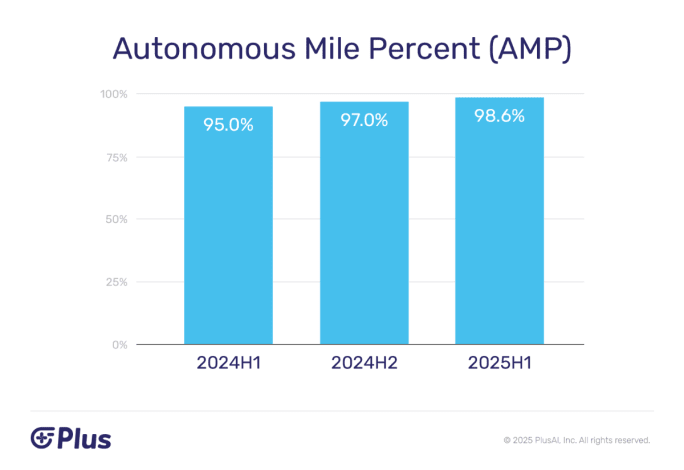
PlusAI Autonomous Mile Percent KPI metric.
Graphic: PlusAI
AMP reflects SuperDrive’s ability to sustain autonomous operation across varying conditions along a commercial corridor. The metric is also a route-specific measure that quantifies the extent and reliability of SuperDrive in real-world operations. It complements PlusAI’s Remote Assistance Free Trips metric by providing a continuous measure of autonomous engagement across distance traveled and supports readiness assessments, regulatory engagement, and system maturity evaluation.
Remote Assistance Free Trips
PlusAI’s Remote Assistance Free Trips (RAFT) measure captures the percentage of autonomous trips completed without any intervention from a remote operator or an onboard safety driver on a specified commercial route.
A trip is considered RAFT-compliant if SuperDrive maintains full control from departure to arrival—without any human assistance to control the vehicle.
While remote assistance will always be available if needed, this metric highlights SuperDrive’s operational independence, technical maturity, and readiness for scaled deployment.
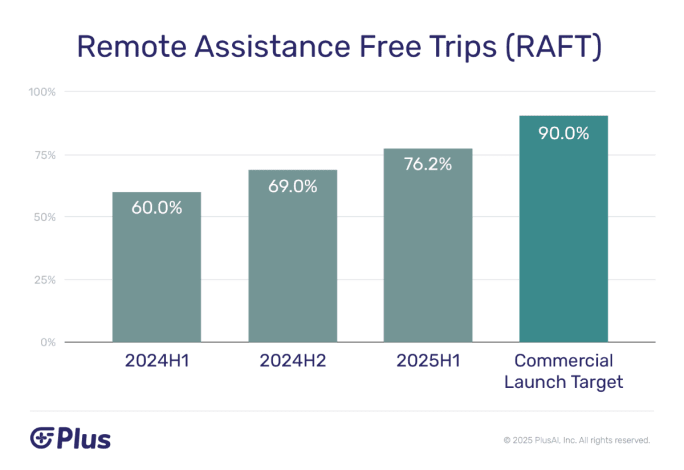
PlusAI Remote Assistance Free Trips KPI metric.
Graphic: PlusAI
“Our AV 2.0 architecture marks a major shift in how we design and deliver autonomous driving systems,” said Tim Daly, Chief Architect at PlusAI. “By replacing hand-written components with end-to-end AI models, we've simplified the overall system and accelerated performance improvements. This approach ensures we'll be ready for broad deployment as soon as our factory-built autonomous trucks begin production in 2027. We're excited to be at the forefront of autonomous driving technology."
More Fleet Management

Color Match Smarter: Tools That Restore & Perform
For fleet managers and collision repair professionals keeping heavy-duty trucks on the road, getting the color right the first time isn't just about appearance — it's about efficiency, turnaround time, and bottom-line results. Discover how today's digital color tools are transforming the repair process from guesswork to precision.
Read More →
FMCSA Pauses Biennial-Update Enforcement Amid Motus Transition
Carriers whose updates were due on or after June 1 have more time, while FMCSA works to stabilize its new registration system and warns of phishing sites impersonating its new carrier registration system, Motus.
Read More →
2026 Blueprint for Countering Smarter Supply Chain Theft
Cargo theft is no longer just the cost of doing business. It's a multi-billion-dollar criminal enterprise exploiting vulnerabilities across your fleet, drivers, and supply chain.
Read More →


How Telematics Improves Visibility, Control, and Performance in Refrigerated Fleets
Explore how telematics help refrigerated fleets improve visibility, uptime, efficiency, compliance, and cargo protection across connected cold chain operations.
Read More →
What the U.S.-Canada Trade War Means for Trucking
Escalating U.S.-Canada tariffs could disrupt cross-border freight, reduce truck volumes, raise costs, and create new uncertainty for carriers on both sides of the border.
Read More →
What Are Trucking’s Top Concerns for 2026?
The American Transportation Research Institute wants to know what's worrying trucking fleet managers, drivers, and other stakeholders in its annual Industry Issues survey.
Read More →
American Trucking Associations Looks for a New Leader
ATA President and CEO Chris Spear abruptly left his job at the association on August 21, at a pivotal time for the trucking industry.
Read More →
Public Wi-Fi Cybersecurity Risks: How Truck Drivers and Fleets Can Protect Their Data
Public Wi-Fi can expose truck drivers and fleets to credential theft, malware, and other cyber threats. Here’s how to reduce the risk on the road.
Read More →
For Nicky Cupp, Fleet Innovation Starts With Frustration
HDT Truck Fleet Innovator Nicky Cupp turns everyday pain points at Fraley & Schilling into opportunities for better technology and smarter processes.
Read More →
Adam Buttgenbach’s Approach to Electric Trucks: Start With Where They Fit
HDT Truck Fleet Innovator Adam Buttgenbach helped PepsiCo build one of North America’s largest EV fleets by focusing on where electric trucks make operational sense.
Read More →