





Related: Peterbilt Unveils Model 579 UltraLoft Integrated Sleeper Truck
Peterbilt Sales Soar, Truck Maker Eyes Growth and Autonomous Tech
After reaching new market-share highs in Class 8 and vocational truck sales for 2017, Peterbilt has kicked off 2018 with an addition to its on-highway truck family and plans to continue to grow its market share as it also works on developing the next generation of advanced driver assistance systems.
February 15, 2018
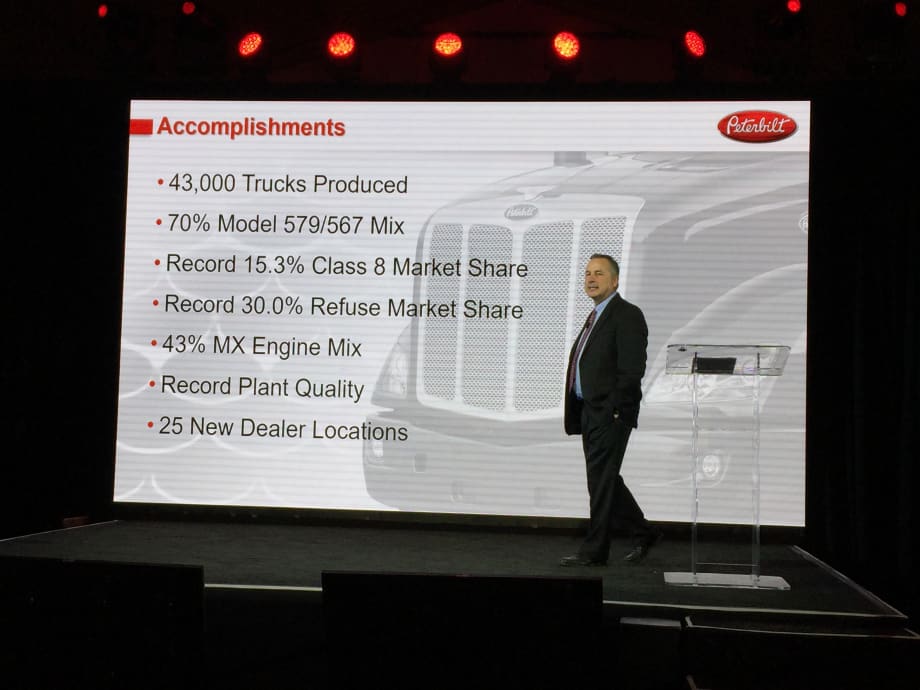
General Manager Kyle Quinn talks about Peterbilt's 2017 accomplishments. Photo: Deborah Lockridge
6 min to read

After reaching new market-share highs in Class 8 and vocational truck sales for 2017, Peterbilt has kicked off 2018 with an addition to its on-highway truck family and plans to continue to grow its market share as it also works on developing the next generation of advanced driver assistance systems.
Peterbilt hit a record 15.3% market share in Class 8 for 2017, eclipsing its previous high of 14%. It also set a new vocational market share record of 20%, and a 30% market share in the refuse truck portion of that vocational market.
For 2018, the company is predicting the total Class 8 market for the U.S. and Canada to be 235,000 to 265,000 trucks, and medium-duty at 85,000.
HDT spoke with Peterbilt executives during this week's launch of the Model 379 UltraLoft, an integrated high-roof sleeper designed to appeal to long-haul and team drivers.
Strong economy, industry
Peterbilt General Manager Kyle Quinn said a strong economy is driving truck sales growth, noting a GDP that’s expanding by more than 2.5%, business investment that’s up 4% since 2016, a strong manufacturing environment, and growing motor vehicle sales. Unemployment is low, and recent changes in U.S. tax laws will create new opportunities for customers, he said. “All in all, a very healthy environment.”
Freight tonnage is at record levels, driven by multiple industries and e-commerce activity, he added. And crude oil prices above $60 per barrel are making a difference of their own, especially for Peterbilt, which is a strong player in the oil-field market.
“We started to see a little bit of strength last year,” Quinn said, referring to oilfield-related investments. “We’ve seen strength return in the Canadian oil patch, the Midwest oil patch, and even some in Pennsylvania.” It has led smaller oil service fleets to begin adding trucks as they prepare for idled production to return. “Anything north of $60 per barrel is healthy,” he said of the economic conditions that drive truck sales. “Many of our energy customers are getting ready for growth, but some of that growth has already arrived.”

Growing fleet, vocational, refuse business
The new Model 579 UltraLoft will help Peterbilt continue to grow its business with larger fleets, said Robert Woodall, assistant general manager of sales and marketing.
“This fully integral cab really closes a gap that we had in our product lineup, and it’s going to provide access to new customers that demand the spaciousness of the UltraLoft product.”
The company has been working over the last several years to grow its large fleet business, while at the same time continuing to serve its traditional core audience of owner-operator, small fleet and vocational customers.
The fuel efficiency of the Model 579 Epiq fuel-economy package, Woodall noted, especially combined with Paccar’s new integrated powertrain, means Peterbilts are the most fuel-efficient trucks in some customers’ fleets. “That’s allowed us to grow with larger fleets,” Woodall said, such as FedEx, Cowan, R&L and Central Transport. “Those are fleets that four years ago we didn’t sell.”
In the on-highway marketplace, Paccar’s integrated powertrain, completed with the introduction of the 12-speed Paccar Automated Transmission last year, is also a strong force, officials said. Paccar MX engines are now found in 43% of the new trucks that roll off the Peterbilt assembly line.
“We’ve seen steady growth of adoption through 2017, and we expect that momentum to continue to grow this year,” he said of the proprietary powertrain.
In addition, the vocational market is very strong, Woodall said. “The mixer business has grown tremendously over the past 12 to 15 months, and that’s continuing,” with strong housing starts and other investment. “Unfortunately natural disasters create demand as well, so there’s lots of activity in Texas and Florida, which has pushed demand for dump trucks, flatbeds, that type of equipment.”
The Model 520 refuse truck is also coming on very strong. “We’ve made significant investment in that product over the last two years and that’s why we’re able to grow in the low-cab-forward business.” It competes against Mack and Autocar in that market, he said, and has earned a number two market share spot. “Our goal is to take over the number one spot in 2018.”
And of course Peterbilt is still very popular with owner-operators, drivers and small fleets. Officials announced they will once again exhibit at the Mid-America Trucking Show in Louisville, Kentucky, next month. There they will have a presence specifically geared toward owner-operators and "brand enthusiasts," and will announce the SuperFan winner of its recently produced 1 millionth truck.

ADAS: Moving toward autonomous trucks
Peterbilt also showed reporters a video highlighting advanced driver assistance systems it’s working on, including traffic jam stop-and-go technology, lanekeeping assist, auto-docking, platooning and even autonomous trucks.
It’s emphasizing an open partnership approach to development of these technologies, and opened an innovation center in Silicon Valley to help enable that process.
Some of the things it’s working on:
Traffic jam assist. This is something Peterbilt says we’ll see in the near future, even this year. This essentially combines adaptive cruise control and emergency automatic braking for use in stop-and-go traffic situations. “What that does is at very low speeds, in heavy traffic, it can control the acceleration and braking, and can bring the truck to a complete stop if needed” – and then accelerate as the traffic ahead moves, explained Peterbilt Chief Engineer Scott Newhouse. “You’d be amazed at how wonderful that feature is in a traffic jam.”
Lane-keeping assist. This one’s probably about another year after the traffic jam assist. Peterbilt is working with several partners to evaluate torque overlay steering – electronic steering that takes some of the load off the driver, especially in slow maneuvering. You can literally turn the wheel with one finger. And in highway situations, it helps keep the truck in the lane without the driver having to make the constant small corrections that are part of a trucker’s everyday job.
Autodocking. While Peterbilt did not elaborate on this particular technology, we know companies such as Eaton and ZF are working on such systems, which would back a trailer up to a dock automatically.
Platooning, in partnership with Peloton. “Their intention is to begin the process of commercializing that solution this year,” Quinn said. “But it’s really going to come down to, do the initial fleets trying to prove that out for them see the benefit. And I think that’s important about all of these ADAS solutions – is it has to provide a solid benefit for the customer, whether it’s in fuel economy or improved safety.”
All these things can be stepping stones toward autonomous vehicles. How soon will that be? Quinn said, “My particular perspective is, it’ll be a while. It’s hard to define ‘a while.’ But I do think there’s a tremendous opportunity in the near term to dramatically improve the safety of vehicles and reduce the burden on drivers.
“There are a lot of tech companies in Silicon Valley and elsewhere working on level 4 autonomous, which means the driver can disengage in certain use cases like on highway,” Quinn said. “Those have a lot of promise, but they’re still out there a ways. I think one of the main things that’s going to stand in front of that is regulation. My belief is we’ll see something very similar to aerospace, a kind of autopilot with the driver watching.”
Newhouse agreed that “the timing will be decided by regulation, by when the customer needs it. Our focus is to make sure it’s right when they’re ready for it.”
More Equipment

Drivers Put Western Star Trucks to the Test at Star Nation Experience
Watch to get an inside look at the Western Star trucks, technology, and community behind the Star Nation Experience 2026!
Read More →
Atlas Expands Kodiak Driverless Truck Fleet in Permian Basin
Atlas Energy Solutions is expanding autonomous frac sand hauling in the Permian Basin with a second load-out location and plans for 100 driverless trucks by mid-2027.
Read More →
Putting Mack’s Command Steer to the Test
A test drive of Mack’s Command Steer active steering system evaluates how it can make truck driving easier and less tiring.
Read More →
Mack, Volvo Expand DEF Derate Software Updates
The updated software gives Mack and Volvo truck owners more time to address DEF-related issues before the engine derates or the vehicle goes into reduced-speed inducement, following new EPA guidance.
Read More →
Rush, MCT Team Up to Grow Refrigeration Service Network
The joint venture will operate MCT's network of Carrier Transicold dealerships and mobile service locations, with the companies promising greater service capacity and uptime for refrigerated fleets.
Read More →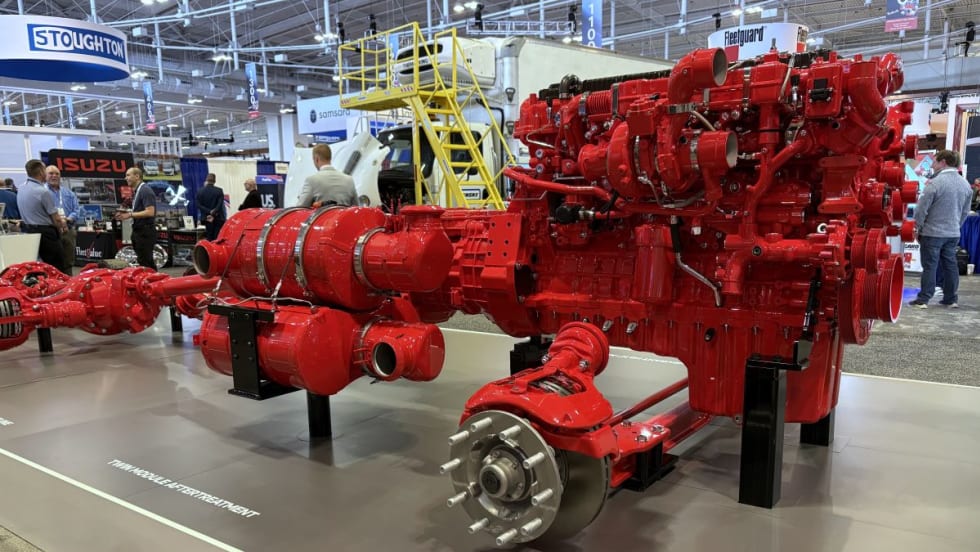
Cummins Adjusts 2027 Engine Rollout After EPA Proposal
The engine maker will gradually introduce its new Model Year 2027 diesel engines while continuing to offer current models during the transition, citing the EPA's proposed emissions rule changes.
Read More →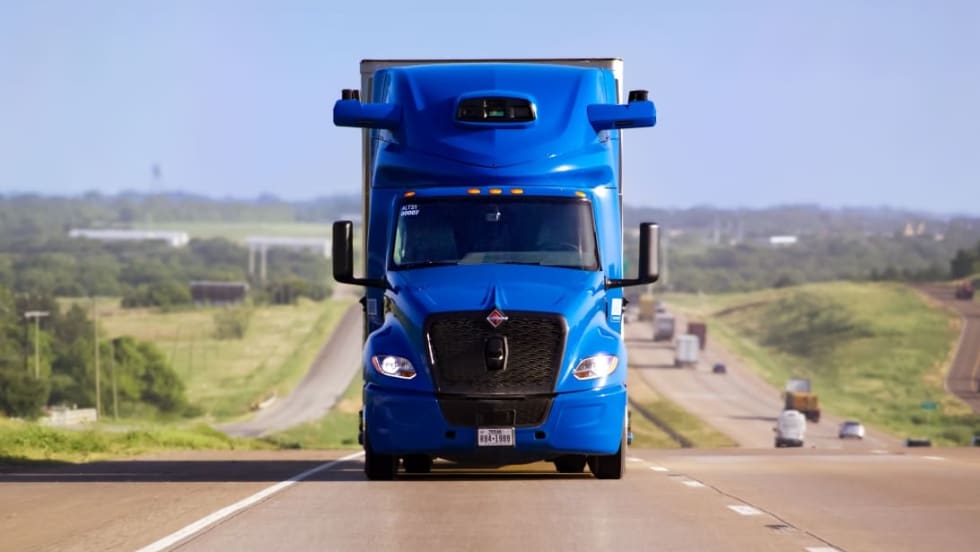
Aurora Rolls Out Next Generation of Driverless Trucks for Commercial Freight
Aurora's latest autonomous trucks it's rolling out with International feature lower-cost hardware designed for a million miles as the company expands commercial driverless freight operations across the U.S. Sun Belt.
Read More →
Peterbilt 589 Spotlight: A Close Look at a Custom Working Truck [Video]
There's more to this customized Peterbilt Model 589 and Great Dane refrigerated trailer than chrome and stainless (although there's plenty of that too!) A veteran driver explains the design choices and practical features behind this working truck.
Read More →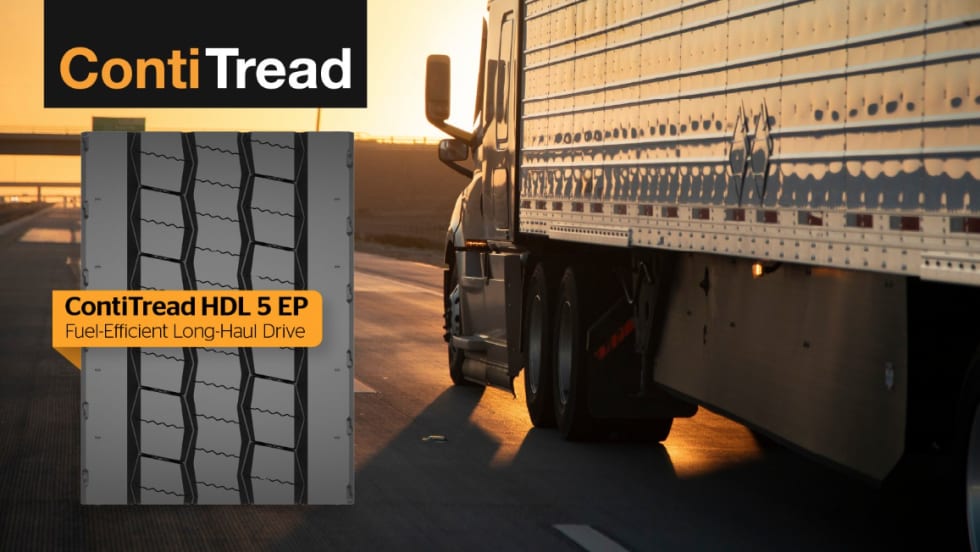
Continental Expands Retread Lineup With New ContiTread HDL 5 EP
New long-haul drive retread is designed to improve fuel efficiency, extend tread life, and lower fleets' cost per mile.
Read More →
EPA Proposal Could Ease 2027 Truck Costs and Buying Uncertainty
The proposal doesn't change the tougher NOx standard, but it would revise key implementation requirements that manufacturers say have driven up costs and complicated fleet purchasing decisions.
Read More →